
Introduction
Choosing between a pocket door and a swinging door isn't just a style decision. It's a layout decision.
One slides into your wall. The other swings on hinges into open floor space. That difference affects furniture placement, privacy, sound separation, framing, and long-term maintenance.
Space efficiency matters more than ever. The average new single-family home dropped to 2,411 square feet in 2023, down from 2,479 the year before, according to NAHB's 2024 report — the smallest footprint in 13 years.
Smaller homes mean every square foot of swing clearance counts. This guide breaks down both door types, where each one wins, and what to check before you order.
Key Takeaways
- Pocket doors slide into a wall cavity; swinging doors rotate on hinges and need open floor space
- Compact rooms, closets, and narrow hallways favor pocket doors; privacy-focused rooms favor hinged ones
- Clear, utility-free wall cavities and precise framing are required for pocket installs
- Compare installation disruption, sealing, and long-term access, not just upfront price
- Confirm wall conditions and measurements before ordering any custom door
Pocket vs. Swinging Doors: Quick Comparison
Cost
Pocket door pricing depends on far more than the slab. You're paying for the pocket frame kit, track and roller hardware, the wall opening itself, any utility relocation, and drywall repair on both sides.
Swinging doors carry fewer framing demands, but costs still stack up fast once you add the frame, hinges, hardware, finish work, and labor.
European Style Doors project data shows a typical hinged-door job costs more once you factor in:
- Moldings and separate hinge or extension purchases
- Framing adjustments
- Separately billed installer and painter labor
That's the hidden cost most buyers miss.
A complete, pre-finished kit (frame, casing, hinges, handles, and seals in one package) removes several of those line items entirely.
Space and Clearance
Pocket doors eliminate the swing arc completely. The panel disappears into the wall, freeing up the floor space a hinged door would otherwise claim.
The trade-off: the wall needs enough depth and a clear run roughly twice the door's width to house the pocket.
Swinging doors need:
- A clear arc path, usually 2-3 feet of unobstructed floor
- Room to avoid colliding with fixtures, furniture, or foot traffic
- Consideration of which way the door swings relative to the room's use
Installation and Renovation Impact
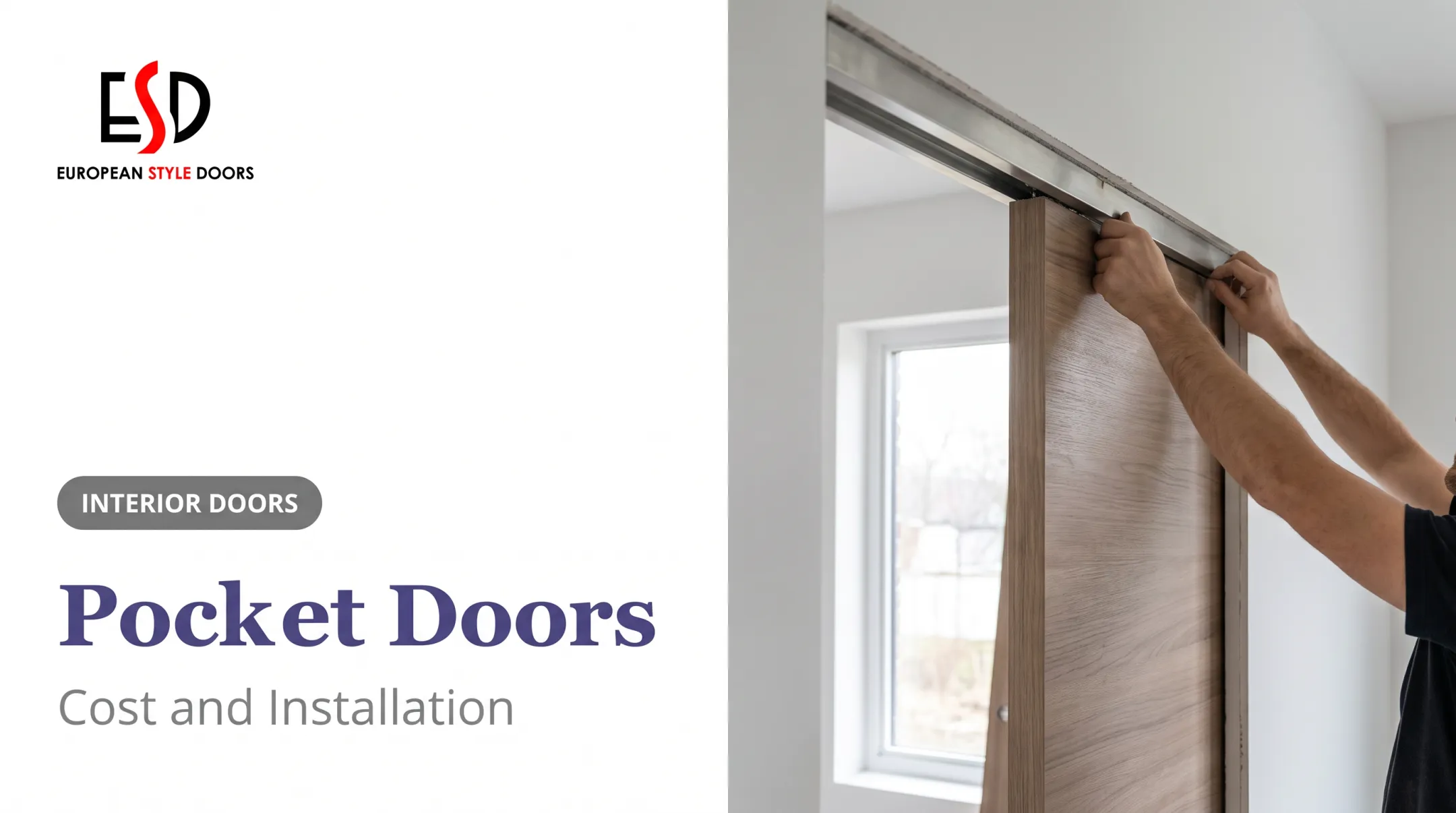
Pocket installs mean opening up the wall and confirming it's free of plumbing, wiring, and ductwork before the frame goes in. That's a bigger job in an existing home than in new construction.
Swinging doors are more forgiving. Most installers can retrofit a hinged door into an existing opening without touching the wall structure, assuming the frame is sound.
Privacy, Sound, and Sealing
A well-fitted swinging door often seals better. Continuous contact with the jamb, paired with weatherstripping, limits the gaps where sound escapes.
JELD-WEN's acoustic ratings list its solid-core Birkdale door at 32 STC and its flush solid-core model at 30 STC, figures that can shift based on hardware and installation.
Pocket doors vary more widely. Standard units rely on the slab, frame, and seal quality; specialty acoustic pocket systems exist but use different testing methods entirely, so the numbers aren't directly comparable.
European Style Doors builds a closed-position seal into every Pavone door, with the Elegance collection adding noise-preventive sealant at the frame — details that matter more than the door type alone.
Maintenance and Adaptability
Pocket doors hide their moving parts inside the wall. That's great for appearance, but track misalignment or a sticking roller can mean reopening finished drywall to fix it.
Swinging doors keep hinges, latches, and handles in plain sight. A sagging door or loose hinge is a quick adjustment, not a demolition project.

What Are Pocket and Swinging Doors?
Pocket Doors
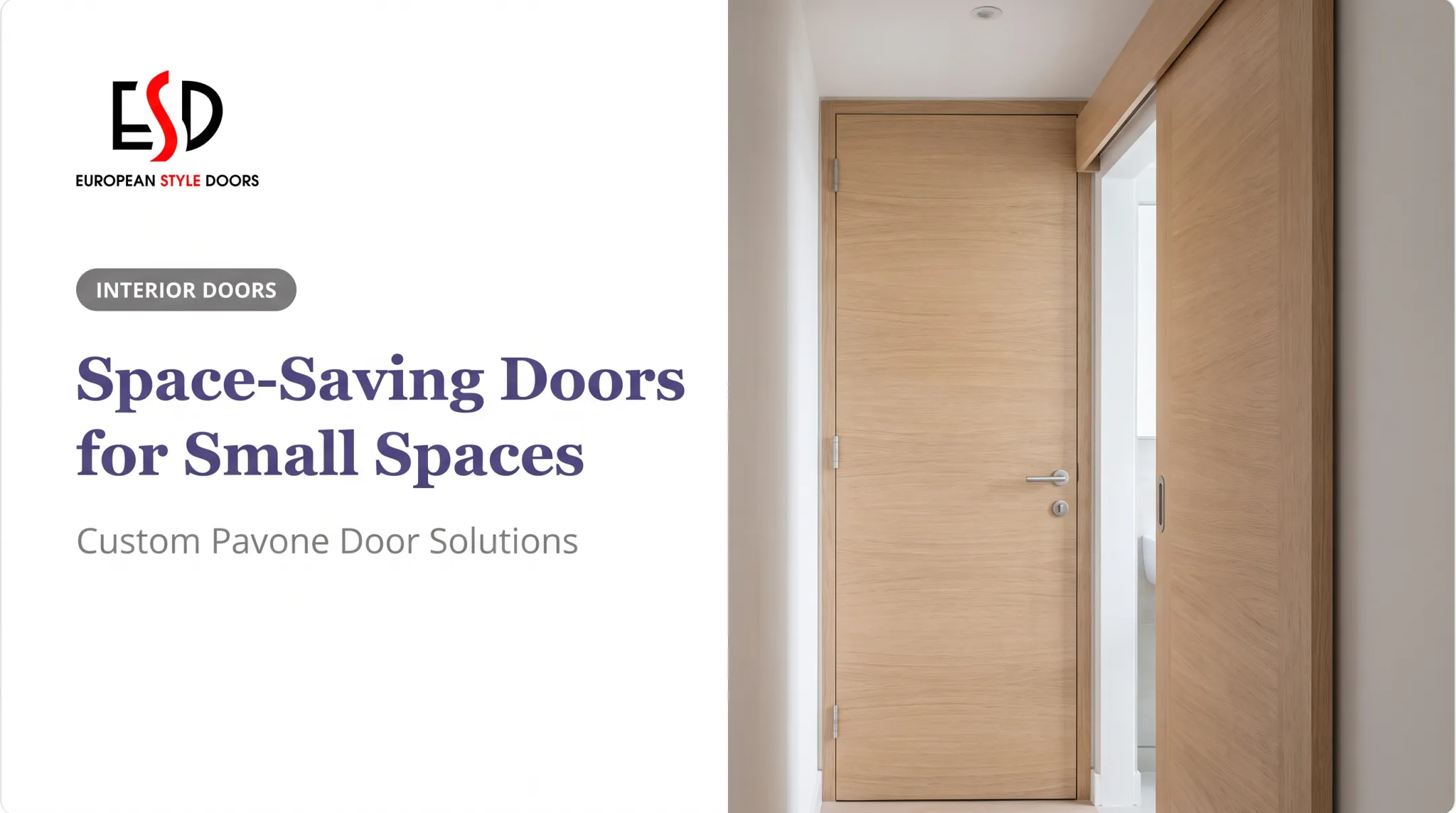
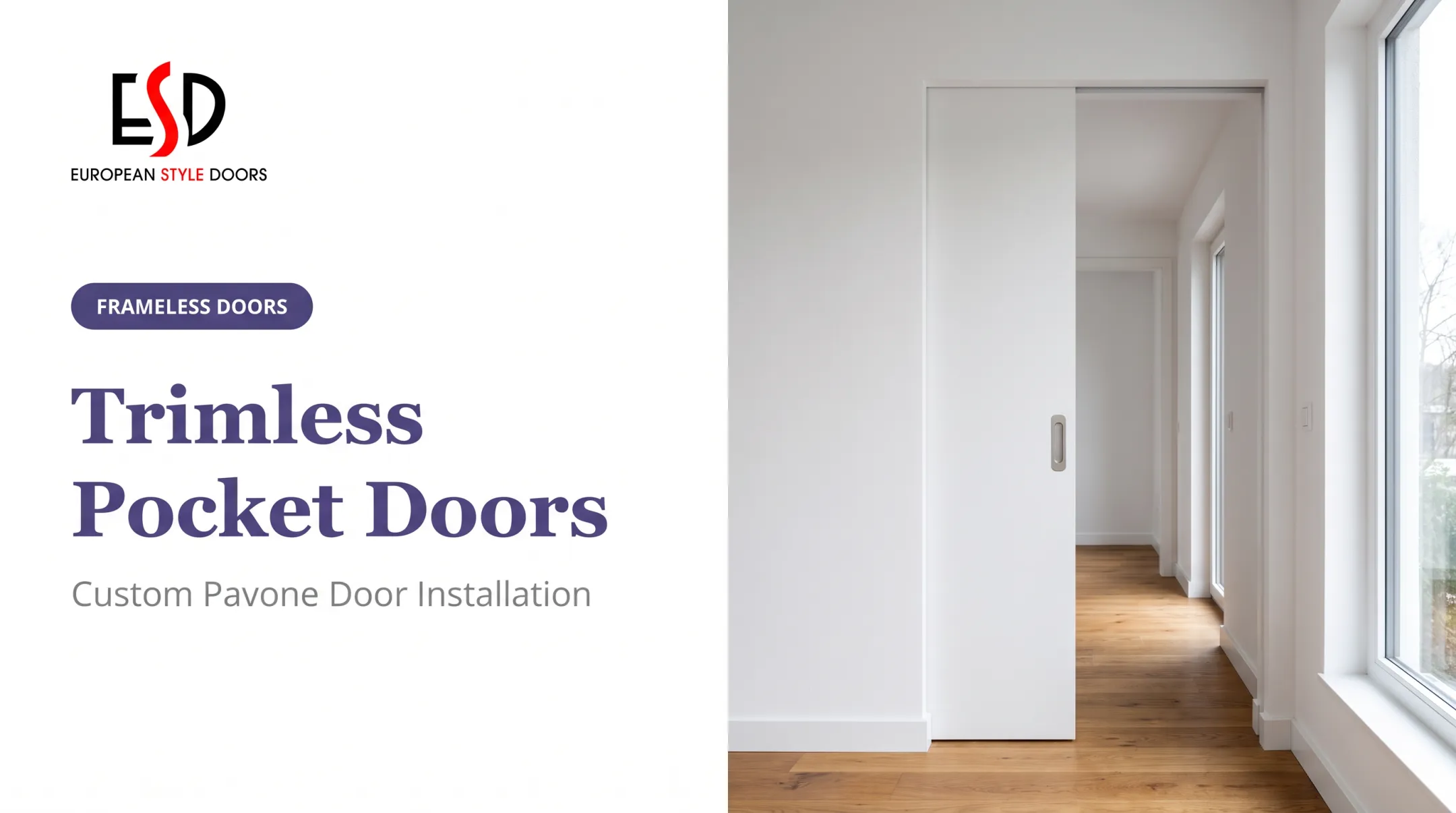
A pocket door slides along an overhead track and retracts fully into a framed wall cavity when open. The system includes the door panel, split-stud pocket frame, track and rollers, guides, jambs, and often a recessed pull instead of a protruding handle.
Advantages:
- Preserves floor clearance in tight rooms
- Leaves the passage completely unobstructed when open
- Allows flexible separation between open-plan spaces
- Creates a clean, minimal look with no visible door when stored
Limitations:
- Requires a wall cavity free of plumbing, wiring, and ducts
- Demands careful alignment during installation
- Makes future repairs harder once walls are finished
- Can't easily accommodate wall-mounted fixtures in the pocket zone
Swinging Doors
Also called hinged doors or conventional doors, swinging doors rotate inward or outward on hinge leaves or pivot hardware. Variations include inswing, outswing, single-leaf, double-leaf, French, solid-core, and hollow-core models.
Advantages:
- Familiar operation that any installer understands
- Wide hardware availability for repairs or upgrades
- Straightforward replacement without wall work
- Stronger perimeter sealing for privacy-sensitive rooms
Limitations:
- Needs a clear swing arc that can conflict with furniture
- Blocks circulation space when left open
- Can be awkward in small rooms or near fixtures
Best Use Cases for Each
Pocket doors tend to work best in:
- Bathrooms and powder rooms where swing space is tight
- Walk-in closets and pantries
- Narrow hallways
- Open-plan transitions needing flexible separation
Swinging doors tend to work best in:
- Bedrooms and bathrooms needing stronger privacy
- Rooms with insufficient wall length for a pocket
- Openings with utilities already running through the proposed cavity
- Projects prioritizing simple replacement over reconfiguration
A single-floor renovation might use a pocket door for a compact en-suite bathroom next to a bedroom, while keeping a swinging door on the bedroom itself for sound control. Accessibility matters too: the 2010 ADA Standards for Accessible Design call for a 32-inch minimum clear opening and specific maneuvering clearances on both sides of a swinging door. Those rules are written for public and commercial spaces, but they remain useful reference points for any home prioritizing wheelchair or walker access.

Pocket Doors vs. Swinging Doors: What Is Better?
Neither door wins across the board. The right call depends on the room, the wall, and what you're trying to solve.
Choose a pocket door when:
- Reclaiming floor area matters more than framing simplicity
- You need to avoid a swing arc near a toilet, vanity, or tight corner
- You want an adaptable opening between two living spaces
- A minimal, disappearing profile fits the design
Choose a swinging door when:
- Installation simplicity and lower disruption matter most
- Privacy or acoustic separation is the priority
- The wall you'd use for a pocket has utilities running through it
- You want conventional latching and easy hardware servicing
New construction gives you the freedom to plan a pocket door before drywall goes up. Mid-renovation, though, a hinged replacement usually causes far less disruption to a finished wall. Either way, check load-bearing conditions and local building code before committing.
Checklist before you decide:
- Measure the opening and confirm available wall length for a pocket run
- Confirm door material, weight, and hardware compatibility
- Review the wall cavity for plumbing, wiring, or ductwork conflicts
- Weigh long-term priorities: sound control, accessibility, durability, and resale value
If swinging is the right call, European Style Doors supplies complete, European-inspired door kits (slab, frame, casing, hinges, handles, and seals) built to custom sizes without requiring wall modification. That option fits when a hinged door is the better match for the room.
Real-World Examples and Project Scenarios
A 2024 carriage-house renovation outside Philadelphia put six pocket doors to work across a 4,000-square-foot home.
The Gerlingers installed pocket units at a first-floor laundry, a second-floor powder room, and within the primary suite. Tight hallway circulation and bathroom-bedroom privacy drove the choice, without stealing floor space.
Contrast that with a more common scenario: a homeowner swapping hollow-core interior doors for solid-core swinging doors specifically for better sound isolation. This Old House notes that denser cores cut down transmitted noise, though gaps around the frame can still leak sound without proper weatherstripping and a door sweep.
The lesson from both: the decision hinges on the room's constraints, not a universal rule.

- Tight circulation and fixture-adjacent openings favored pocket doors in the carriage house
- Privacy and sound control favored a solid-core swinging door in the retrofit example
- Neither project mixed approaches carelessly: each opening was evaluated on its own terms
If you're planning multiple interior doors across a home, compare the whole package rather than defaulting to one configuration everywhere.
European Style Doors works with homeowners, designers, and contractors on coordinated, custom-sized, finish-matched door packages with optional installation. That approach helps when consistency across several openings matters as much as the door type itself.
Conclusion
Pick a pocket door when eliminating the swing arc and creating a cleaner, more flexible opening outweighs the extra framing work. Pick a swinging door when simplicity, sealing, or an obstructed pocket wall makes the conventional option the safer bet.
Before ordering either, verify:
- Wall conditions and pocket cavity clearance
- Opening measurements and door weight
- Hardware needs and long-term maintenance access
A qualified installer, or a measurement and finish assessment, is the next logical step.
Frequently Asked Questions
What is a pocket pivot door?
A pocket pivot door is a hinged panel that pivots into a pocketed section of millwork rather than sliding on a track. It's distinct from a standard pocket door, so confirm the exact mechanism with the manufacturer before ordering.
What are swinging doors called?
Swinging doors are also known as hinged doors, conventional doors, or swing doors. They operate by rotating on hinges or pivot hardware rather than sliding.
Are pocket doors better than swinging doors?
Neither is universally better. The right choice depends on your floor-space needs, wall conditions, privacy requirements, sound control goals, and installation complexity.
Can you install a pocket door in an existing wall?
Yes, but the wall must be opened or inspected first. Check for load-bearing framing and conflicts with plumbing, electrical wiring, or ductwork before committing.
Are pocket doors more expensive than swinging doors?
Pocket doors often cost more due to framing, track hardware, and wall alterations, but exact pricing varies widely by project. Get a local quote rather than relying on fixed estimates.
Which door is better for privacy and soundproofing?
A well-fitted solid-core swinging door often provides stronger sealing against sound leakage. Pocket door performance varies significantly by slab quality, frame, and seal design, so don't assume either option guarantees soundproofing.