
The choice shapes your design language, your budget, your cleaning routine, and how consistent your doors look across a whole-home or multifamily project. Get it wrong and you're repainting touch-ups on recessed panels every year, or wondering why your "flush" door feels flimsy on its hinges.
This guide breaks down construction, appearance, durability, maintenance, installation, and room-specific suitability, so you can decide based on your actual project, not just a photo you liked on Pinterest.
Key Takeaways
- Flush doors suit modern interiors with smooth faces; panel doors add traditional depth with raised or recessed sections.
- "Flush" names the face only; hollow-core, solid-core, and engineered builds drive weight and sound control.
- Flush faces clean easily and suit repeated openings; panel doors deliver stronger decorative impact.
- Core, finish, dimensions, and hardware matter more than the style label alone.
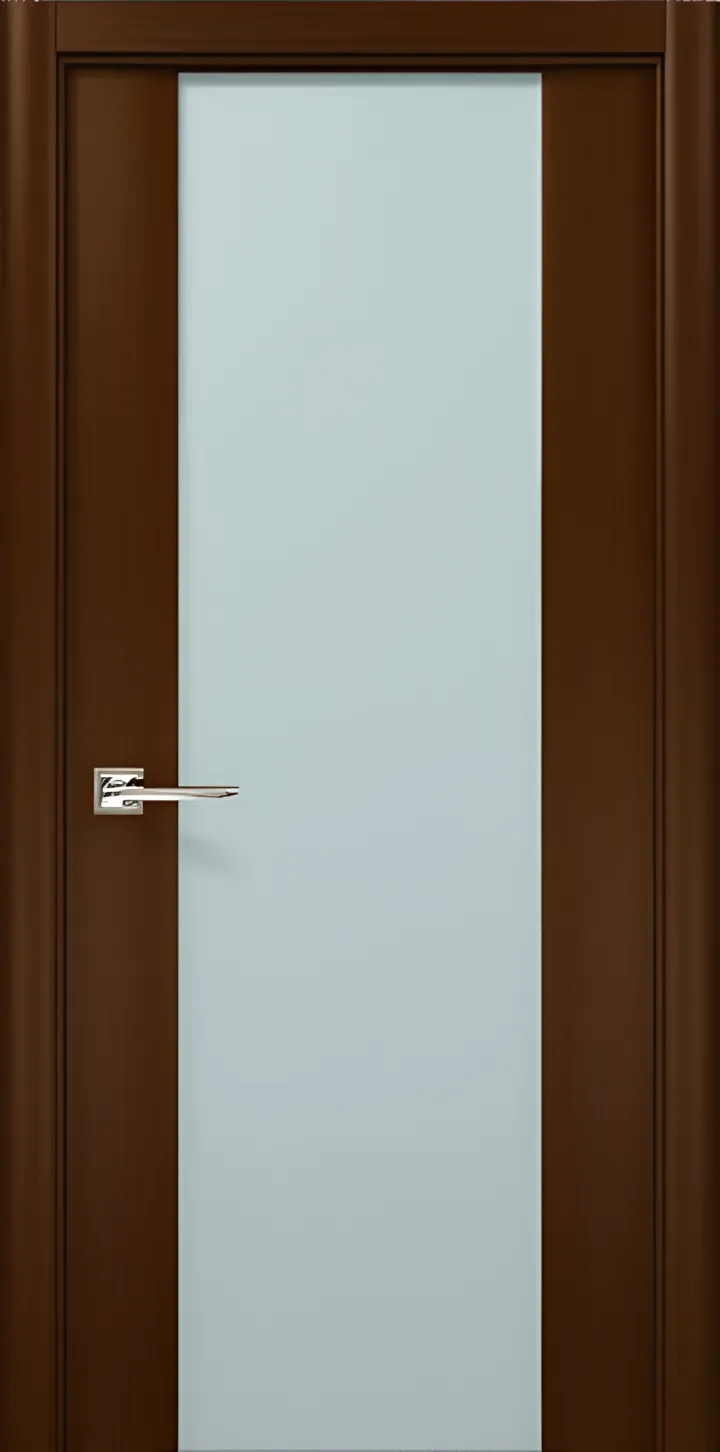

Flush vs Panel Doors: Quick Comparison
Cost
Flush doors often come with a lower starting price because their construction is simpler to manufacture.
- Hollow-core flush doors are typically the most budget-friendly option, with manufacturers like JELD-WEN marketing them as lightweight and affordable
- Solid-core flush and composite doors cost more than hollow-core but less than solid wood
- Panel doors can cost more upfront due to stiles, rails, raised or recessed detailing, glass inserts, and skilled joinery
- Custom sizing, premium veneers, and pre-hung configurations raise the price on either style
Exact pricing varies by manufacturer, material, and region, so get a current quote rather than relying on general estimates.
Construction
A flush door is defined by one thing: a flat, uninterrupted face. That face can sit over a hollow honeycomb core, an engineered laminated-strand-lumber core, or a solid substrate.
Panel doors are built differently. Vertical stiles and horizontal rails frame one or more panels, which can be solid wood, engineered wood, veneer, or glass. The WDMA even separates these into distinct industry standards: ANSI/WDMA I.S. 1A-21 for flush doors and I.S. 6A-21 for stile-and-rail construction.
Appearance and Maintenance
| Factor | Flush Doors | Panel Doors |
|---|---|---|
| Visual style | Contemporary, minimalist, streamlined | Traditional, transitional, craftsman, shaker |
| Finish options | Veneer, laminate, paint | Solid wood, veneer, glass, painted |
| Cleaning | Smooth surface wipes easily | Recesses and joints collect dust |
| Touch-ups | Fewer grooves to maintain | Molding details need more attention |
JELD-WEN's design guide notes that flush surfaces are easier to clean specifically because they lack grooves, while recessed-panel lines like Masonite's Calden use angled profiles designed to reduce dust buildup where possible.
Installation and Performance
Don't assume performance from the name. Sound, fire, and moisture ratings are product-specific, not style-wide.
- Sound control: JELD-WEN rates flush doors at STC 24 (hollow) to 30 (solid) and its Madison panel at STC 25–32, so panels are not automatically quieter
- Hinges: three hinges are standard for slabs up to 84 inches, four for taller slabs
- Moisture: interior doors need all six sides finished and inspected regularly in humid rooms, according to JELD-WEN's installation guide
- Weight: solid-core and solid-wood panel doors weigh more than hollow-core options, which affects hinge prep and trimming

What Are Flush and Panel Doors?
Flush Doors
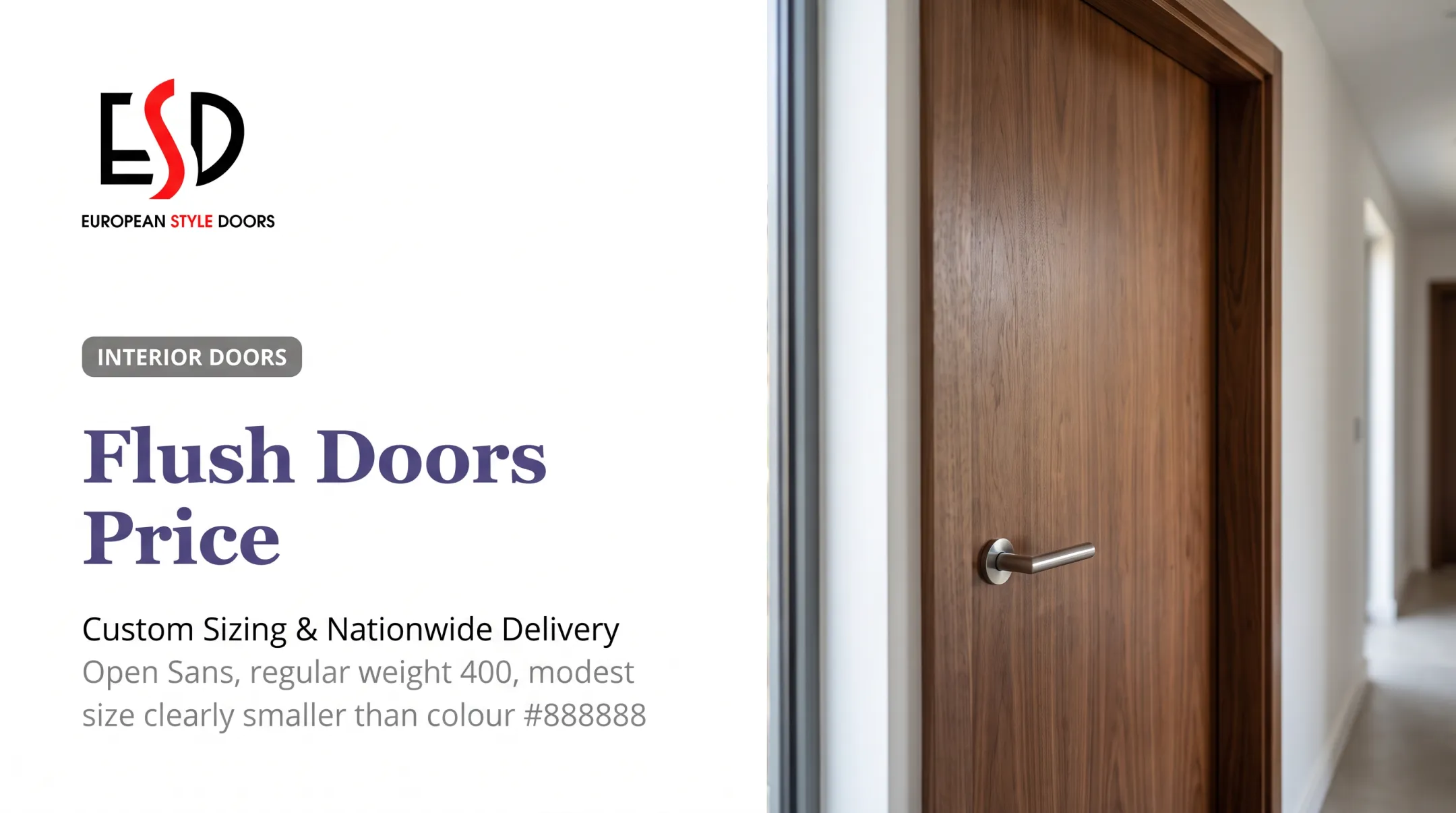
A flush door is an interior door with a smooth, flat face, no raised or recessed decoration. That face can be produced in wood veneer, laminate, paint-grade skin, or engineered material over MDF or plywood.
Hollow-core and solid-core flush doors can look identical from across the room but differ substantially in weight, feel, and sound-dampening potential.
A hollow-core flush door might use a corrugated cardboard or honeycomb interior. A solid-core version, like TruStile's engineered example, pairs an HDF-faced laminated strand lumber core with thin wood veneer. Always confirm core type, fire rating, and moisture approval from the manufacturer rather than guessing from appearance.
European Style Doors' Elegant collection includes several flush-style models, such as EL40, a minimalist flush door in a light gray finish with a subtle recessed border, and EL46, a black flush door with diagonal silver inlay detailing. These sit in laminate, veneer, or glass-combination finishes rather than one fixed material.
Flush doors work well for:
- Bedrooms, offices, and hallways where a clean, consistent look matters
- Apartment and rental upgrades where repeatable appearance simplifies installation
- Whole-home remodels where visual coordination across many openings is the priority
Before ordering, confirm:
- Opening width and height
- Jamb condition and depth
- Swing direction
- Slab versus a complete pre-hung unit
Panel Doors
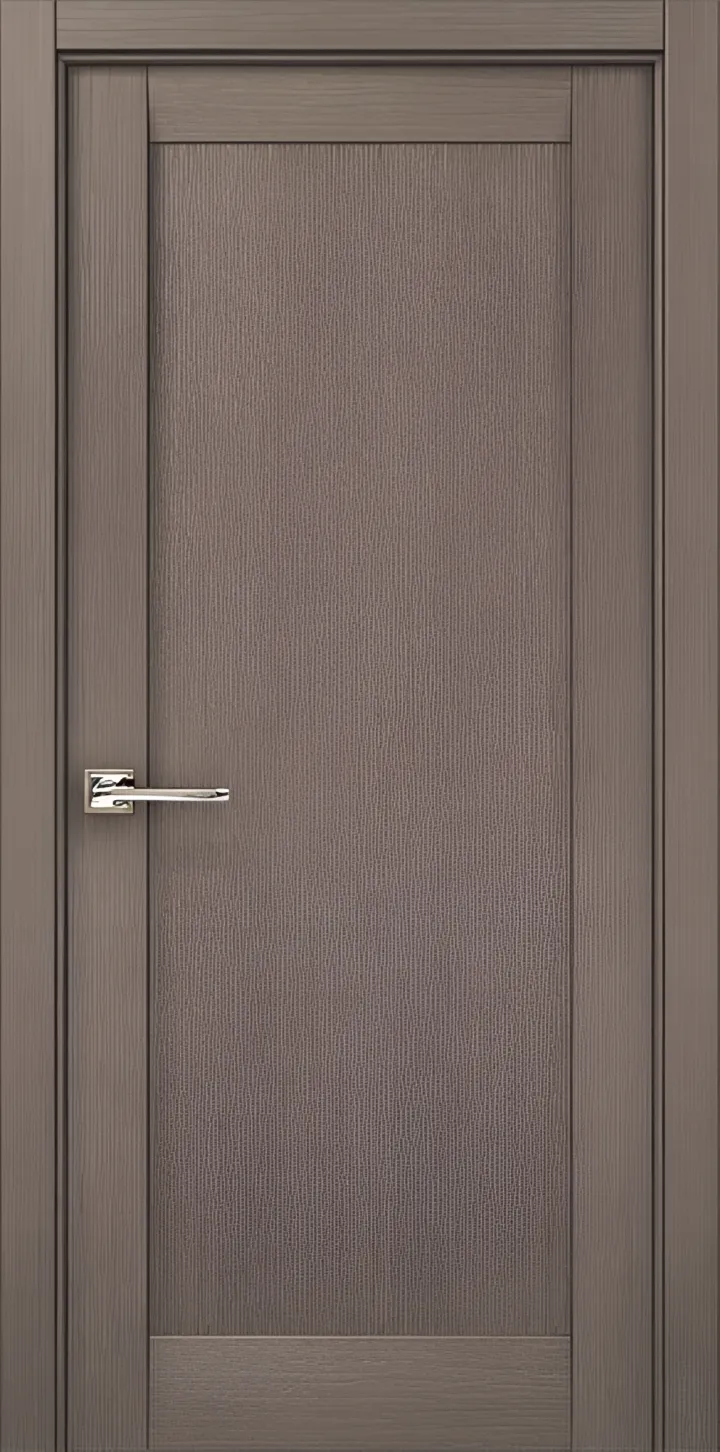
A panel door is assembled from stiles, rails, and one or more raised, recessed, or glazed panels. That framework creates visual depth that a flat slab simply can't replicate.
Materials vary widely. "Panel" describes the design structure, not a guarantee of solid wood. Engineered wood, molded composite skins, veneer, and painted finishes all show up in panel designs, including shaker layouts and multi-panel configurations.
European Style Doors' GL20 pairs a raised central panel with narrow top and bottom rails and warm reddish-brown veneer, a classic layout updated with contemporary hardware.
CA09 takes a different approach: two recessed rectangular panels in a gray wood-look laminate, a modern take on a traditional two-panel door.
Panel doors suit:
- Formal living and dining rooms where the door functions as a design feature
- Transitional or traditional homes coordinating with existing millwork
- Bedrooms where decorative character matters more than visual minimalism, provided the core still meets sound and privacy needs
TruStile's documented work on a 2017 remodel used TS3000 panel doors with glass inserts to give a traditional two-panel layout a cleaner, more modern profile, showing how panel detailing can bridge classic and contemporary design without one canceling out the other.
Choosing the Right Door for Your Project
Neither style wins outright. The right choice balances appearance against construction, performance needs, and your total installed cost.
Lean flush when you want clean lines, easy wipe-down maintenance, or a repeatable look across many doors in one project.
Lean panel when architectural detail, traditional character, or coordination with existing trim is the priority.
Room-by-Room Considerations
| Room | What to check |
|---|---|
| Bedrooms | Privacy, weight, latch compatibility, sound control needs |
| Bathrooms | Material, edge sealing, finish, ventilation, approved moisture exposure |
| Living/dining rooms | Whether the door should blend in or stand out |
| Offices/multifamily | Cleanability, repeatable specs, hardware durability across units |
Buyer Checklist
Before ordering any door, confirm:
- Exact core and construction (hollow, solid, engineered)
- Finish, color, and glass options
- Size, handing, and slab vs. pre-hung format
- Jamb and casing requirements for your wall thickness
- Lock and hinge preparation
- Lead time, delivery scope, and installation responsibility
- Warranty and any tested performance ratings
When you compare finish and customization options, European Style Doors, the exclusive US distributor for Pavone Designs Inc., supplies European-inspired interior doors manufactured domestically. Lines include wood veneer, German laminate, and Indian laminate across the California, Elite, Elegant, and Modern collections.
The Elite line, for example, pairs German or Indian laminate with brushed-steel edge bending and tempered-glass or Plexiglas inserts. Construction varies by collection, so confirm specs rather than assuming every line is built the same way.
Real-World Applications and Project Examples
Scenario one: a modern whole-home renovation. A homeowner replacing dated, mismatched doors across ten openings wants a consistent, low-maintenance look. Flush doors in a single laminate finish solve the coordination problem and simplify cleaning across bedrooms, hallways, and a home office.
Scenario two: a traditional remodel with existing millwork. A homeowner with original crown molding and wainscoting wants doors that reinforce that character. Panel doors with raised detailing, like European Style Doors' GL20, pick up the architectural language already in the room instead of fighting it.
Delivery format matters as much as the face style. European Style Doors ships custom-sized, pre-finished kits nationwide and offers professional installation. Kits arrive complete with:
- Frame and moldings
- Hinges and handles
- Pre-finished door leaf ready to install
One client, Kristin L, needed a distinctive office door with floor-to-ceiling glass in a gray wood finish. After cycling through a few contractors, ESD handled the measurement and sent its own installer. The finished doors drew attention at the project's ribbon-cutting event.

If you're planning a whole-home remodel, custom build, or multi-door replacement, compare styles, finishes, and installation requirements with European Style Doors before placing an order.
Conclusion
Flush doors fit best when you want streamlined, contemporary, low-maintenance interiors. Panel doors fit best when decorative depth or coordination with existing millwork matters more than a quiet, minimal look.
Either way, the real decision comes down to core, material, finish, dimensions, hardware, and installation plan, not just the words "flush" or "panel." Evaluate the complete door system before you buy, and you'll avoid regretting a choice made on looks alone.
Frequently Asked Questions
Are flush doors more expensive than panel doors?
Flush doors are often less expensive due to simpler construction, but solid cores, premium finishes, and custom sizing can close that gap quickly. Panel door pricing also varies widely by material and design complexity.
What is the difference between a flush door and a panel door?
A flush door has a smooth, uninterrupted face, while a panel door uses stiles, rails, and raised or recessed panels for dimensional detail. Neither label alone tells you the door's core, durability, or sound performance.
Are flush doors suitable for bedroom doors?
Yes, when the core, thickness, and hardware match the room's privacy and sound needs. Solid-core flush doors are a common choice when noise reduction matters. Check the product specs for sound and fire ratings.
What is a flush door used for?
Flush doors commonly serve bedrooms, offices, hallways, apartments, and contemporary whole-home remodels. Always check the finish, core, and any moisture or fire rating for the specific location before installing.