
There's no single "best" material. Solid wood, engineered wood, MDF, laminate, veneer, and glass-and-metal designs each solve different problems, and the right pick depends on the room, the door's construction, the finish, and how hard it gets used every day.
This guide breaks down the material options available to US homeowners and contractors, what each one is actually good at, and how to match a door to its job.
Key Takeaways
- Solid wood delivers natural grain and long-term repairability; engineered wood and MDF offer more predictable sizing and finish consistency.
- Solid-core construction beats hollow-core for privacy, weight, and noise reduction in bedrooms and offices.
- Veneer and laminate finishes expand design options without sacrificing durability when specified correctly.
- Match material to room function, moisture exposure, traffic, and total installed cost, not just the sticker price.
Overview of Interior Door Materials in the US Market
A door is really four separate decisions stacked into one. You choose the face material you see, the core that gives it weight and stability, the frame or jamb it hangs in, and the edge construction that holds hinges and hardware.
Two doors can look identical on the surface and perform completely differently once you check what's inside.
The main materials available to US buyers include:
- Solid wood - stiles, rails, and panels cut from hardwood or softwood
- Engineered wood - stave-core or laminated strand lumber faced with veneer
- MDF - compressed wood fibers for smooth, paint-ready surfaces
- Hardboard - lightweight, molded fiber panels for budget applications
- Wood veneer - thin real-wood skins over an engineered or composite core
- Laminate - manufactured decorative surfaces in consistent colors and patterns
- Glass and metal-framed systems - aluminum or steel frames with tempered or laminated glass panels
Material and construction together determine how much sound passes through, whether the door resists warping or dents, how easily it takes paint, and what maintenance it needs over the next decade.
A hollow-core door with a walnut veneer face can look like a premium wood door. It still won't deliver the weight or sound dampening of a true solid-core unit.
The sections below compare these materials against common priorities, organized around what matters for specific rooms and projects rather than ranked from best to worst.

Best Interior Door Materials
Picking a material comes down to eight practical factors: appearance, dimensional stability, durability, acoustic performance, moisture response, maintenance, customization options, and relative cost. Manufacturer pricing and specs change often, so confirm current numbers with the supplier before you buy.
Solid Wood
Nothing matches the grain variation and depth of a real wood door. Oak, maple, cherry, and alder each take stain differently, and because the panel is solid wood, scratches and dents can be sanded out and refinished instead of hidden or replaced.
Trade-offs to expect:
- Heavier than hollow-core or composite alternatives, which means stronger hinges and sometimes a sturdier frame
- Higher upfront cost than MDF or laminate options
- Periodic refinishing to maintain the stain or clear coat
- Expansion and contraction with seasonal humidity changes, since solid wood moves naturally
One important distinction: a "solid wood" door and a "solid-core" door are not the same thing. Solid wood means the slab is cut from actual lumber. Solid-core typically refers to a particleboard or composite-filled interior with a wood veneer or paint-grade skin on the outside - similar look, different behavior under humidity and weight.
Solid wood fits best in primary bedrooms and home offices where longevity matters, formal living and dining entries, and high-end whole-home renovations where natural character is part of the design brief. If a client wants furniture-grade character and is willing to maintain it, solid wood remains the benchmark other materials get compared against.
Engineered Wood and Composite Wood
Engineered wood doors use layered or bonded wood components instead of a single solid plank. Alternating grain direction in a stave core, or structural composite lumber bonded under pressure, resists the warping and splitting that solid lumber can develop over time.
Manufacturers build this a few different ways:
- Stave-core construction alternates wood grain direction to balance internal stress
- Laminated strand lumber bonded with dowel joints adds strength and stability
- Composite-core panels pair a stable interior with a real wood veneer face for appearance
The result looks like solid wood on the surface but holds its shape more predictably across seasons. That stability helps on multi-door projects where every opening needs to match.
European Style Doors' production reflects this approach. Its door bases are built from re-glued wood blocks, what the company calls "Euroblocks," with each layer running in a different fiber direction to prevent warping or cracking over time.
Performance still varies by manufacturer and construction spec, so "engineered" doesn't automatically mean premium. Best fit: homeowners and builders who want a wood look with consistent sizing across a whole-house door package, or anyone replacing doors in a climate with noticeable humidity swings.

MDF and Hardboard
MDF and hardboard often get lumped together because both start as wood fiber, but they're not interchangeable.
| Feature | MDF | Hardboard |
|---|---|---|
| Surface | Smooth, dense, paint-ready | Lightweight, molded |
| Best for | Flush, modern painted doors | Budget-friendly, lower-traffic doors |
| Construction | Can form structural rail/stile components | Primarily used as a face layer |
| Density | Compressed under heat and pressure | Classified at 31 lb/ft³ or more |
MDF resists splitting better than solid wood and takes paint smoothly without visible grain, making it a more budget-friendly alternative to solid wood for painted applications. The downside: MDF is heavier than hollow-core options, and its edges can chip or swell with prolonged moisture exposure.
Hardboard works well where budget matters more than long-term durability, such as closets or rental units getting a quick refresh. It's lighter than MDF but generally less impact-resistant.
Neither material is waterproof on its own. European Style Doors builds its MDF layer for resilience against mechanical damage and moisture absorption.
Even so, any MDF or hardboard door still needs proper finishing and should not sit in standing water or constant humidity without protection.
Where these fit: painted flush doors in contemporary interiors, closets and low-impact secondary rooms, and projects where matching color across many doors matters more than visible wood grain.
Wood Veneer and Laminate
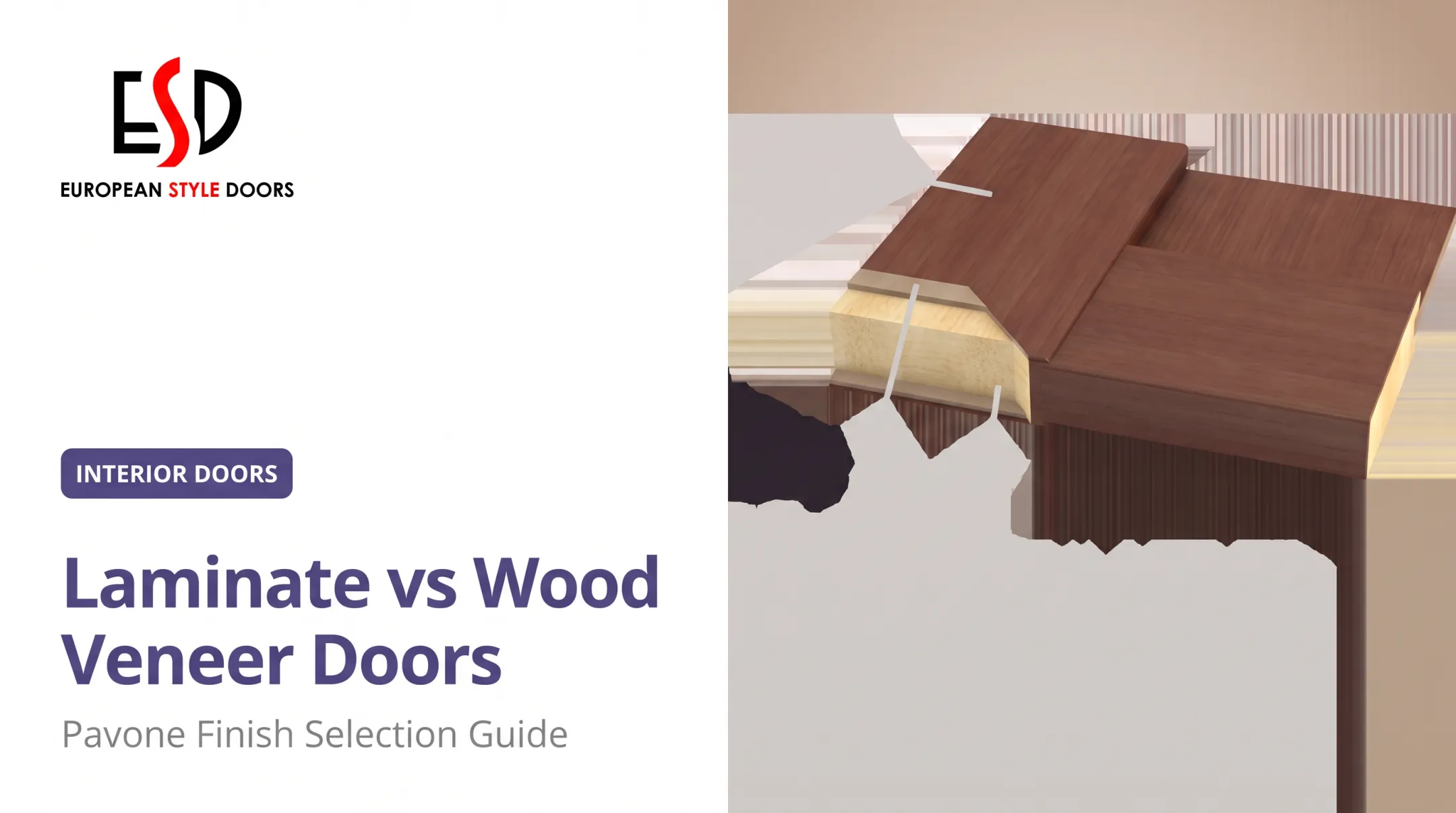
Veneer and laminate both create a decorative surface over an engineered or composite core, but they're built differently.
- Wood veneer - a thin slice of real wood, often around 1/16 inch thick, applied over a stable substrate. It shows genuine grain and can be stained, though repairs are limited to light sanding since the layer is thin.
- Laminate - a manufactured decorative layer bonded under heat and pressure. It delivers consistent color and pattern across every door in an order, with strong resistance to scratches and impact.
Both surfaces clean with a damp cloth and mild detergent; abrasive cleaners can damage either finish. Veneer shows natural variation between doors, since it comes from real logs. Laminate repeats identically across every slab, which matters most on multi-door projects.
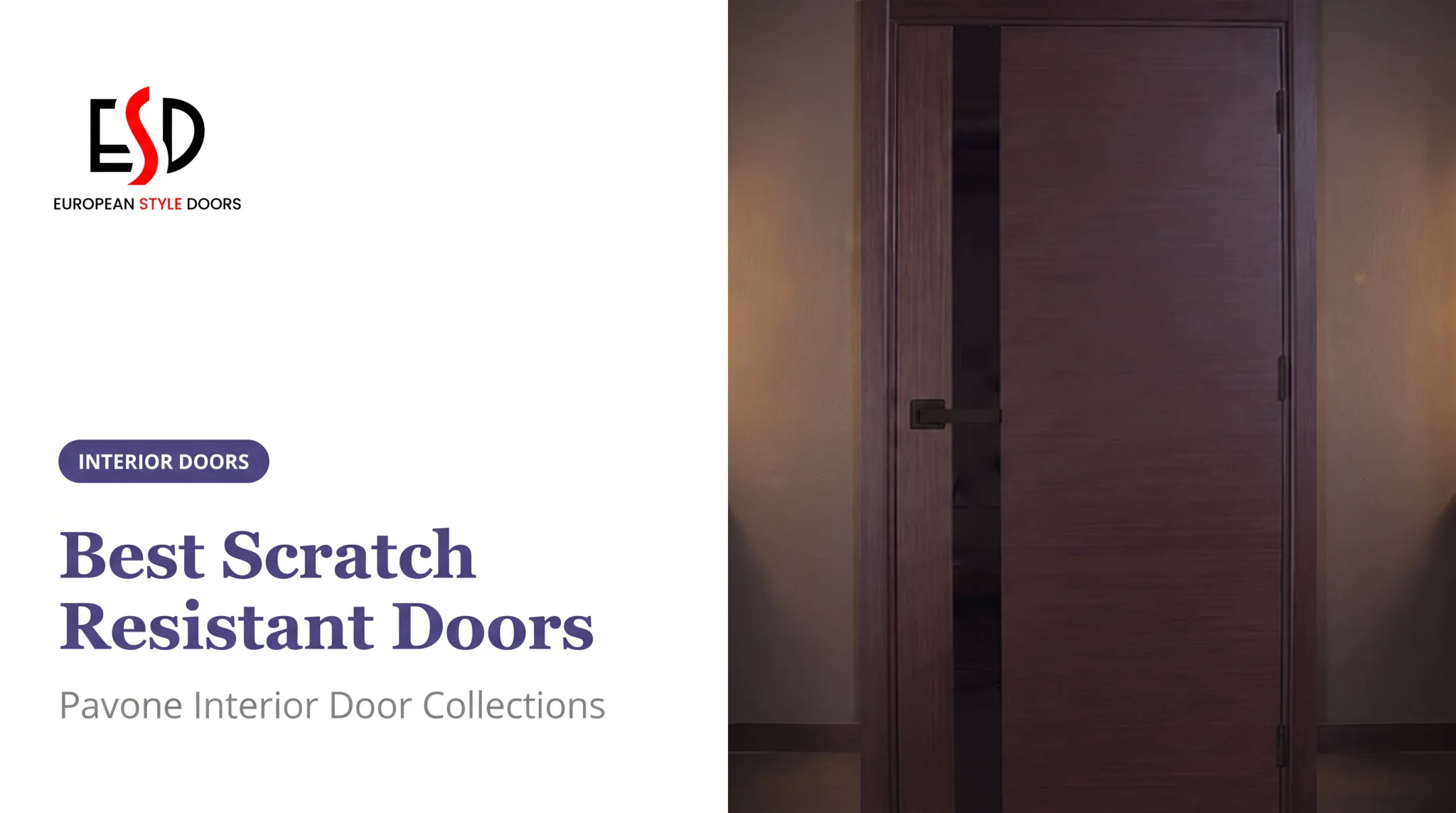
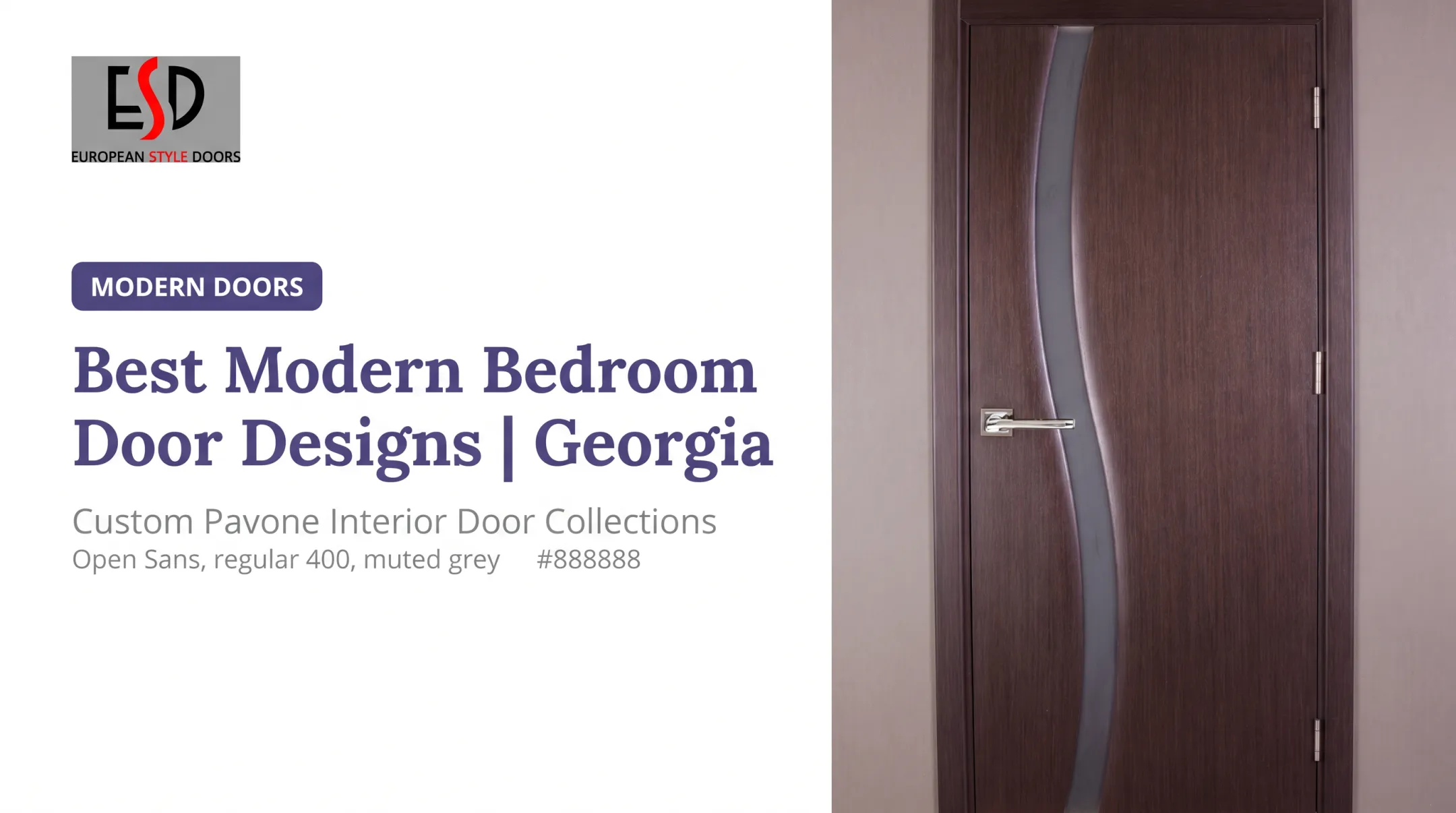
This is where European Style Doors' Pavone-manufactured doors sit. The company's collections use US-manufactured construction with wood veneer, German laminate, and Indian laminate, available in custom styles, sizes, colors, and finishes.
The California collection, for example, pairs laminate finishes like Wolfram-Gray or White-Ash with pre-finished frames and matching extension pieces, so no painting or priming is needed after installation.
Veneer and laminate suit contemporary homes pursuing a European or minimalist look, apartment and condo renovations needing repeatable finishes across many openings, and design-led projects where color consistency outweighs the appeal of natural wood variation. Always confirm specific performance claims, such as UV resistance or finish warranty, with the manufacturer of the product line you're considering.
Glass and Metal-Framed Interior Doors
Glass and metal-framed doors trade some privacy for light. A frosted or etched glass panel in an aluminum or steel frame lets daylight move between rooms while still blurring direct sightlines, useful between a kitchen and dining area, or a home office and hallway.
These systems aren't chosen for sound blocking; they're chosen for visual openness. Glass and paneled doors generally test lower on acoustic performance than solid-core options, so don't expect a glass door to match solid-core sound control.
Before specifying glass or metal doors, check:
- Glass type - tempered and laminated glass are both accepted safety glazing options, not just tempered
- Frame material - aluminum framing (commonly 6063-grade) is lighter than steel but still durable for interior use
- Hardware - hidden hinges and soft-close mechanisms are common on frameless glass designs
- Code compliance - glazing in doors is treated as a hazardous location under most residential codes
Glazing used in US interior doors falls under CPSC's safety standard for architectural glazing materials. The International Residential Code also classifies glazing in swinging, sliding, and bifold doors as a hazardous location requiring safety glazing, with limited exceptions for small decorative panels.
If kids are in the house, confirm the glass spec before ordering.
European Style Doors' Elite collection and frameless designs use tempered glass or Plexiglas inserts with a brushed-steel edge bender. They ship as complete installation-ready kits rather than a glass panel and frame bought separately.
Best fit: kitchen-to-dining sightlines, office partitions, hallway dividers, and contemporary interiors where light transfer matters more than full acoustic privacy.
How We Chose the Best Interior Door Materials
We evaluated materials against how they perform over years of actual use, not just what they cost on day one. Six factors drove every comparison in this guide.
Room Function, Sound, and Moisture
- Room function - Solid or solid-core doors suit bedrooms, bathrooms, and home offices where privacy matters. Lighter hollow-core or hardboard options work fine for closets and low-traffic spaces.
- Sound and privacy - Core density matters, but seals, gaps, and install quality matter too. JELD-WEN's acoustic ratings put hollow-core around STC 25 and solid-core versions of the same model at STC 29 to 32.
- Moisture and climate - Humidity makes wood expand; dry air shrinks it. JELD-WEN's installation guidance calls for 48 to 72 hours of acclimation, finishing all six sides, and solid ventilation in bathrooms and humid rooms.

Finish, Construction, and Budget
- Finish and maintenance - Painted MDF hides seams well but shows dents more visibly than wood grain does. Veneer can be touched up with light sanding; laminate generally can't be refinished, only cleaned.
- Construction and installation - Check hinge-edge reinforcement, slab-only vs. pre-hung supply, and hardware fit. Nonstandard openings usually need custom sizing, not a trimmed stock door.
- Budget and lifecycle value - Compare total installed cost, not slab price alone. Delivery, hardware, finishing, and labor add up; a cheap slab that needs paint and pro hanging can cost more than a pre-finished kit.
Common mistakes to avoid:
- Choosing by appearance alone without checking the core
- Assuming "solid-core" means solid wood
- Measuring standard openings without confirming nonstandard door sizes
- Ignoring humidity exposure in bathrooms and laundry rooms
- Comparing bare door slabs instead of complete installed assemblies
For multi-door projects, a supplier that handles custom sizing, pre-finished slabs, and installation in one package removes a lot of coordination work. That is the approach European Style Doors takes with its Pavone-manufactured kits. It matters for projects with many openings, not as an endorsement of one material over another.
Conclusion
The best interior door material is the one that matches the room's job, not the fanciest option on the showroom floor. Solid wood brings natural character and decades of repairability. Engineered wood and MDF offer more predictable sizing and finish consistency across multiple openings.
Hardboard works for budget or low-impact spaces. Veneer and laminate expand design options with repeatable color matching. Glass or metal-framed systems bring light into spaces where full privacy isn't the priority.
Before you order, compare complete door assemblies:
- Core material and construction
- Face finish and color options
- Frame and jamb compatibility
- Hardware and installation requirements
- Delivery timeline and total installed cost
A solid-core door with the wrong hinges, or a beautiful veneer slab that doesn't fit the opening, creates more problems than it solves.
If you're planning a whole-house door replacement, a remodel, or a new build, European Style Doors offers custom European-design collections. Options range from wood veneer and laminate finishes to glass-insert and frameless styles, with accurate sizing, nationwide delivery, and installation-ready kits for homeowners, designers, and contractors.
Frequently Asked Questions
What is the best material for interior doors?
It depends on the room. Solid wood suits bedrooms and formal spaces; engineered wood or MDF works better for consistent sizing across many doors. Solid-core construction wins on privacy and noise control.
What are some good quality interior doors?
Look for stable core construction, a durable finish, reinforced hinge areas, and accurate factory sizing. Pre-finished doors that fit without extra trimming or hardware sourcing tend to hold up better.
Is MDF or solid wood better for interior doors?
MDF takes paint more smoothly and costs less, making it a strong choice for flush, painted doors. Solid wood costs more but can be sanded and refinished repeatedly, suiting spaces where long-term natural character matters most.
Are solid-core doors worth it for bedrooms?
Yes, for most bedrooms. Solid-core doors feel heavier, block more sound, and resist dents better than hollow-core options. Just confirm your hinges and frame can support the added weight before installing.
What interior door material is best for humid rooms?
No single material is immune to humidity. Finishing all six sides and ensuring proper bathroom ventilation matter more than the material itself. Ask your supplier about moisture-resistant cores for bathrooms and laundry rooms.
How do I choose the right material for interior doors?
Match the material to the room's function, privacy needs, and moisture exposure first. Then factor in finish preference, hardware compatibility, door dimensions, and total installed cost before ordering.