
That's a missed opportunity. Interior doors shape how light moves through a home, how private a bedroom feels, and whether a hallway reads as cramped or open.
Scandinavian design offers a useful blueprint here: simplicity, natural materials, and genuine respect for daylight, as Architectural Digest lays out in its breakdown of the style. Applied to doors, these principles translate into clean profiles, light-reflecting finishes, and hardware that doesn't compete for attention.
This guide covers what actually defines a Scandinavian-style door, specific design ideas by room, and the practical details that turn a good idea into a door that fits your opening the first time.
Key Takeaways
- Clean profiles, light finishes, and restrained hardware define the Scandinavian door look
- White, pale oak, soft gray, and frosted glass all work when matched to a room's light
- Keep finishes consistent in connected spaces; vary configuration for privacy or tight floor plans
- Confirm measurements, glass safety rules, and wall thickness before ordering a custom door
What Defines a Scandinavian-Style Interior Door?
Scandinavian design grew out of practical need: long winters, limited daylight, and small housing. That history still shapes how interior doors look today, through a few consistent traits:
- Simplicity: flat or minimally detailed faces instead of heavy paneling
- Functionality: hardware and swing direction serve daily use, not just appearance
- Natural materials: wood veneer and matte finishes instead of glossy, synthetic surfaces
- Visual lightness: slim profiles and pale tones that don't weigh a room down
- Uncluttered proportions: balanced sightlines between door, trim, and wall
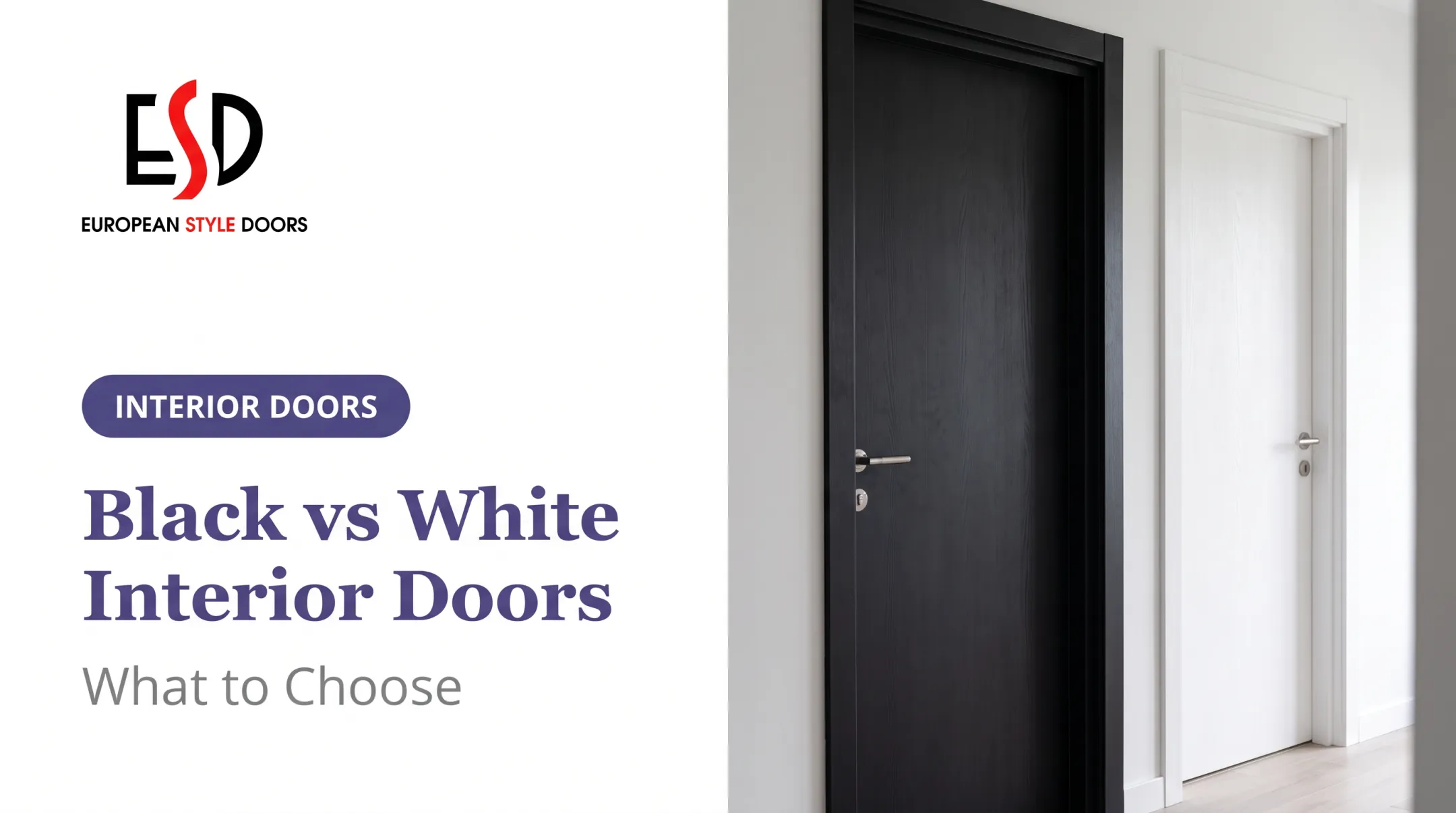
White, cream, pale gray, muted sage, and light natural wood dominate the Scandinavian palette because they bounce available daylight back into a room. Black still shows up, but sparingly, usually as a frame line or a hardware finish rather than the main event.
A flat white slab with zero texture can feel sterile, which is often mistaken for "Scandinavian." The real style leans on tactile warmth instead: visible wood grain, a soft matte sheen, subtle tonal variation between door and trim. That's the detail stark minimalism skips.
ESD's own design approach treats a door as more than a partition between two spaces, describing it as the entry point to an area of comfort. That framing fits Scandinavian thinking well: function and warmth were never supposed to be opposites.
Scandinavian Style Interior Door Ideas
Here's how these principles play out across common door types and room needs.
White and Soft-Neutral Doors
White remains the default Scandinavian door color for a reason. A flush or lightly paneled white slab reflects available light instead of absorbing it. According to Benjamin Moore, pale, high-reflectance colors can make a space read larger and brighter, a principle that applies to a door face just as much as a wall.
Not all white behaves the same way:
- Warm white (slight cream or beige undertone) suits rooms with natural wood floors or warm trim
- Cool white (true, slightly blue-white) pairs better with gray flooring or steel hardware
ESD's California collection includes a White-Ash laminate finish with minimal visible grain, a straightforward option for a flat, calm look. Pair it with colorful textiles or a dark wood console, and the door recedes while the room's personality does the talking.
Light Oak and Pale Wood Doors
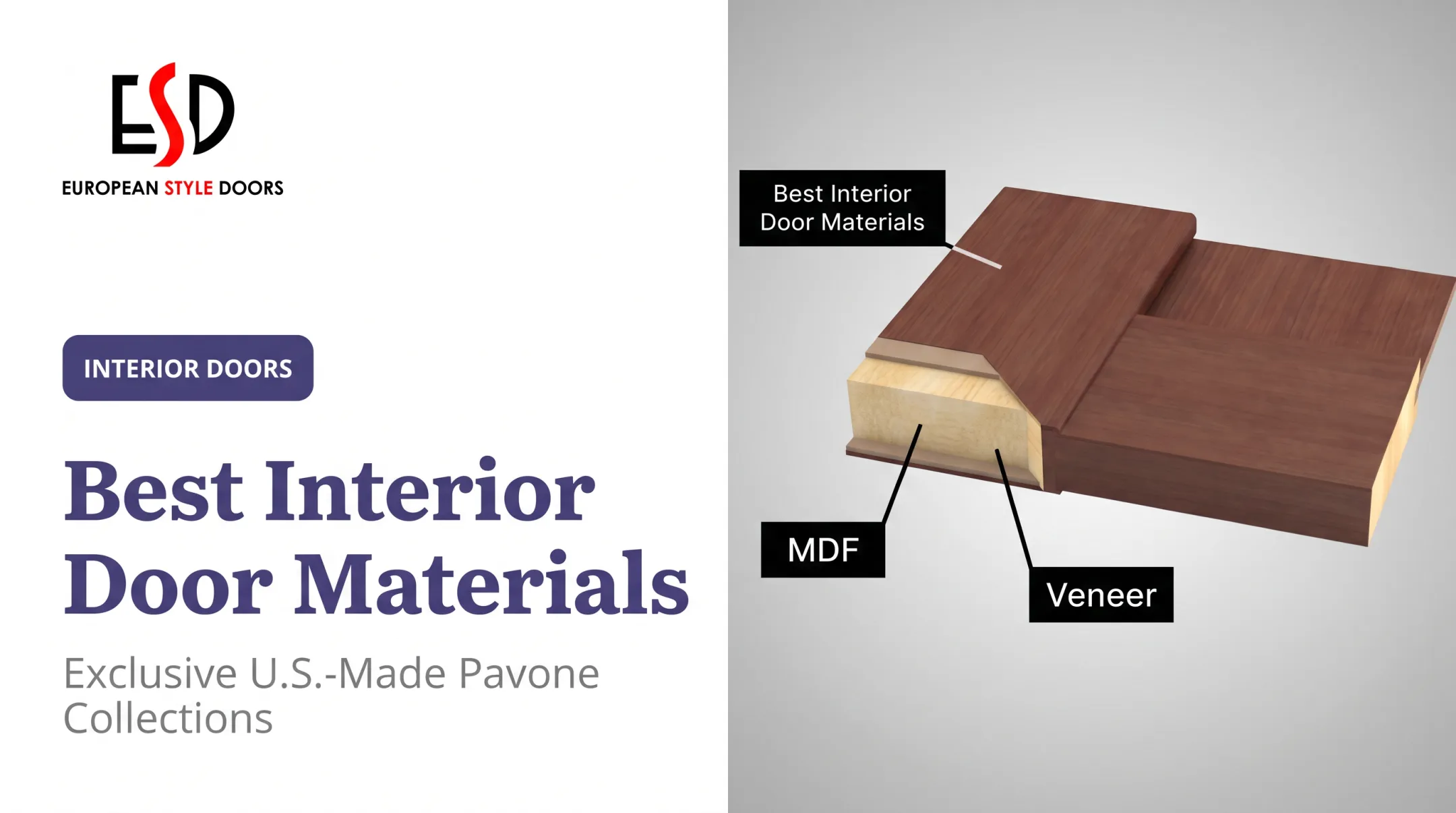
Pale wood softens a room that might otherwise feel clinical in all-white. Light oak, ash, or similar veneer finishes add warmth without weighing a space down. ESD's Modern collection, for example, offers White-Oak and Silver-Oak veneers with fine horizontal grain that reads as natural rather than rustic.
Matching isn't about uniformity:
- Keep grain direction consistent across adjacent doors in the same sightline
- Let trim run a shade lighter or darker than the door, not identical to it
- Skip matching cabinetry wood exactly; a near-match often looks more intentional than a perfect one
Glass, Frosted Glass, and French Door Designs
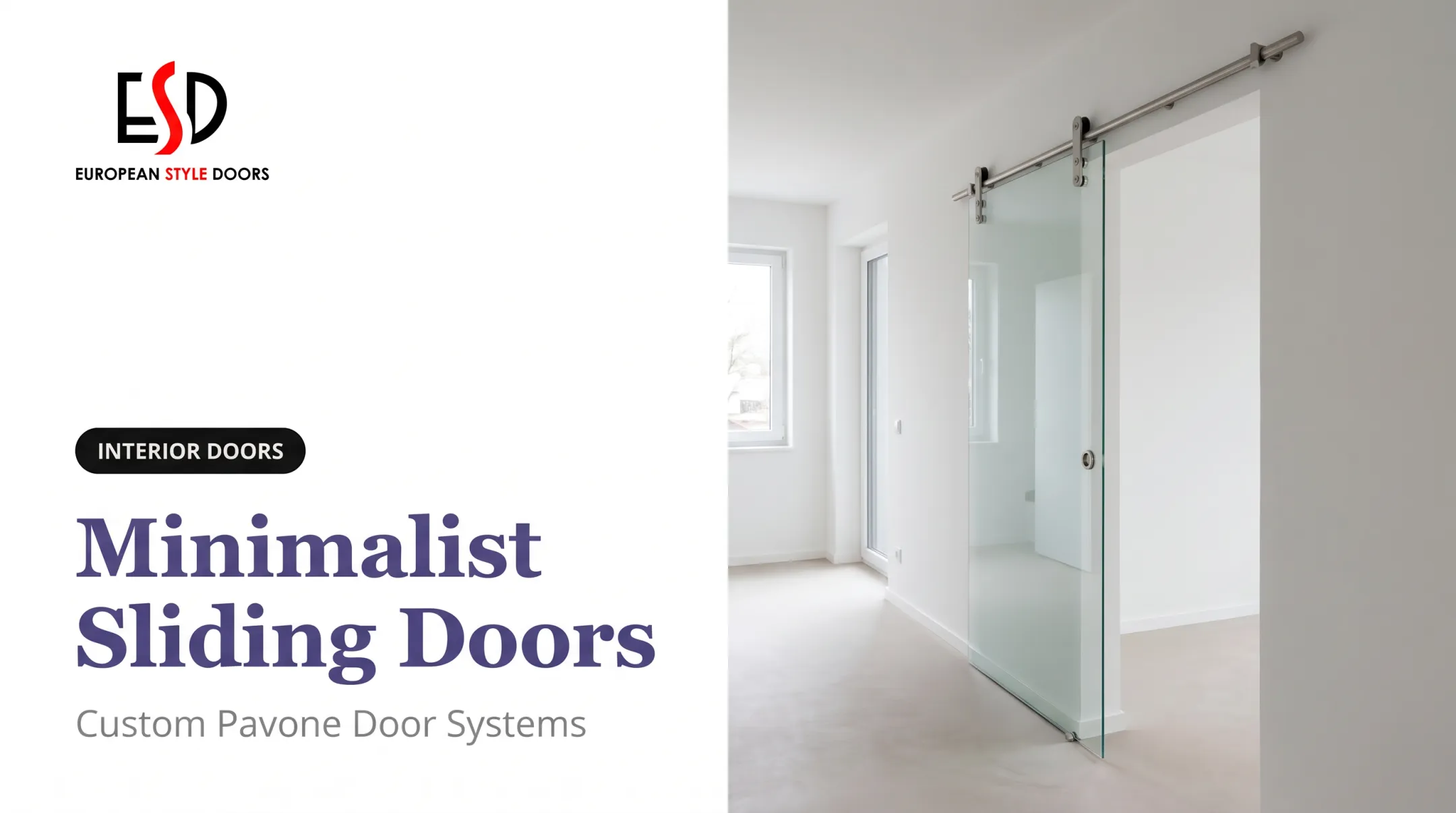
Glass panels let daylight move between rooms without fully opening the floor plan. Clear glass suits a home office where visibility matters; frosted or reeded glass fits bathrooms and bedrooms where privacy comes first.
Frame color changes the whole feel:
- White or light-wood frames keep things soft and recessive
- Slim black frames add graphic contrast, a popular move in kitchens and hallways
Glass selection isn't purely aesthetic, either. The 2021 IRC classifies glazing in most swinging, sliding, and bifold doors as a hazardous location requiring safety glazing, with narrow exceptions for small panes and decorative glass.
Check your local code before specifying glass in an interior door. ESD's Modern and Cosmopolitan lines use 8mm tempered glass across several models, which addresses this upfront.

Sliding, Pocket, and Space-Saving Doors
A swinging door needs floor clearance a pocket or sliding door simply doesn't. That makes sliding hardware a practical fit for small bathrooms, closets, and open-plan living areas.
Before choosing a slider, confirm:
- Whether the wall cavity can actually house a pocket door (plumbing and wiring sometimes get in the way)
- Sliding clearance alongside the opening, including handle projection
- Sound separation, since sliders typically seal less tightly than a hinged door
- Whether the existing header can support the hardware system you want
For a home office where sound matters, a well-sealed hinged door often beats a slider. For a closet or pantry, sliding hardware is usually the better trade.
Frameless, Slatted, and Subtly Textured Doors
Frameless doors drop the usual casing, so the door face sits nearly flush with the wall. The effect reads as quiet and architectural rather than decorative, which works well in hallways and minimalist bedrooms. ESD's frameless line pairs an invisible metal frame with hidden hinges, so the door nearly disappears into the wall plane.
Texture adds depth without clutter:
- Vertical slats break up a flat white or pale wood face
- Narrow grooves or reveal lines create shadow without pattern
- Limit textured finishes to one or two doors per sightline
Overdo the texture and the calm effect turns into visual noise fast.
Gray, Two-Tone, and Controlled Contrast Doors
Gray sits comfortably in the Scandinavian palette because it's neutral without feeling cold. Soft gray, muted blue-gray, or sage add personality while still reflecting daylight reasonably well. ESD's California collection includes Wolfram-Gray and Oak-Helinga-Gray finishes, both muted enough to avoid feeling heavy.
Two-tone doors or black-framed glass work well when you want rooms connected but not identical. The trick is balance: repeat any dark accent elsewhere nearby. A black door frame paired with black hinges and a black pendant light feels intentional. A lone black element surrounded by white finishes can look like an afterthought.
How to Choose Scandinavian Interior Doors for Your Home
Once you know the look you want, these four factors turn it into an actual order.
Match the Door Style to the Room's Function
Start with function, not finish:
- Bedrooms and bathrooms: solid doors for privacy and sound control
- Shared living spaces, home offices: glazed or partially glazed doors for shared daylight
- Laundry rooms, closets, tight hallways: sliding or pocket doors where floor space is limited
Also weigh frequency of use. A pantry door opened dozens of times daily needs hardware rated for heavy use, not a decorative latch meant for occasional access.
Select Materials and Finishes for the Desired Feel
Three finish categories cover most Scandinavian-style doors:
| Finish | Look | Maintenance |
|---|---|---|
| Painted | Flat, uniform color, no grain | Touch-ups show on high-traffic edges |
| Wood veneer | Visible grain, warm tonal variation | Occasional cleaning, avoid harsh chemicals |
| Laminate | Consistent texture, budget-friendly | Wipes clean easily, resists scuffing |
Screen colors lie. A "white oak" swatch on a laptop rarely matches the real finish once it's hanging under your home's actual light. Request physical samples before committing to a whole-house order.
Coordinate Hardware, Trim, and Surrounding Materials
Hardware is a small detail with an outsized effect. Simple lever handles read as Scandinavian; ornate knobs and heavy backplates don't. Stick to matte black for contrast, brushed metal or muted chrome for something quieter, and concealed hinges where the budget allows.

Beyond hardware, look at the whole opening. Casing, baseboards, wall color, flooring, and cabinetry either support the door or fight it. A pale door against dark, heavily grained flooring and ornate casing looks disconnected no matter how clean the slab itself is.
Plan Consistency Across Multiple Openings
Pick one primary door language for the house (white flush doors or pale oak slabs, for instance), then vary only glass or operation where a room genuinely needs it. A home office might get a frosted-glass version of the same door used as a solid slab elsewhere.
Matching every door works well in open-plan homes where sightlines run through multiple rooms at once. A controlled mix makes more sense when you want hierarchy: a slightly more detailed door for a primary suite, plain flush doors for closets and utility spaces.
If you're working from a European-inspired aesthetic, European Style Doors offers custom sizing, colors, and finishes across several collections. Confirm current specifications and lead times directly before finalizing a design.
Practical Planning and Installation Considerations
Before you order anything, know what you're actually buying:
- Door slab: just the panel, no frame or hardware included
- Pre-hung unit: door already mounted in its frame, ready to set into the opening
- Complete door kit: frame, trim, extensions, hinges, and seals, sized for your wall
ESD's Pavone kits fall into that third category, with jambs sized to cover wall thicknesses from 4½ to 8 inches and pre-finished moldings that skip the painting step entirely.
Measuring matters more than most people expect. Most manufacturers recommend checking rough-opening width at multiple points and using the smallest number, since framing is rarely perfectly square.
ESD's sizing guide adds roughly 3 inches to slab width and 1½ to 2 inches to slab height when calculating the opening. For whole-home replacements or odd openings, get a professional measurement rather than estimating.

Custom sizing solves a real problem: matching new doors to openings that don't fit standard stock sizes. Before ordering, confirm:
- Manufacturer tolerances for custom dimensions
- Lead times (ESD's typical turnaround runs one to two weeks)
- Installation requirements, especially for load-bearing or non-standard walls
- Warranty terms, not just a short defect policy
Finally, check local building, fire, accessibility, and glazing codes for your specific project. A decorative style doesn't override code requirements, and fire-rated assemblies or accessible clear widths may apply depending on the room.
Final Thoughts: Create Scandinavian Warmth Through Door Design
The best Scandinavian interior door is the one that makes your specific rooms brighter, quieter where needed, and easier to move through every day.
A few starting points cover most situations:
- White or pale wood doors for maximum light reflection
- Frosted or reeded glass where you need daylight without full visibility
- Sliding or pocket hardware for tight floor plans
- Subtle texture, like slats or reveal lines, for interest without clutter
- Simple lever hardware in matte black or brushed metal to tie finishes together
None of these work as a one-size-fits-all answer. That's the point: Scandinavian design has always been about matching form to actual need.
European Style Doors offers custom European-design interior doors across several collections, with free measurement and installation available throughout California, Nevada, Arizona, and Florida, plus nationwide delivery. Get a sense of what fits your opening before committing to a style.
Frequently Asked Questions
What is a classic interior door style?
Classic interior doors use familiar proportions, balanced paneling or simple flat profiles, and finishes that suit a wide range of interiors. A restrained classic design, in a light paint or wood finish, fits comfortably into a Scandinavian-inspired home.
What is a European style door?
European-style doors generally favor clean lines, engineered construction, and refined proportions, often with concealed or reduced detailing and options like custom sizing. Not every European door looks identical; the term describes a design sensibility more than one fixed look.
What does Scandinavian furniture look like?
Scandinavian furniture tends to be functional and streamlined, built from light woods with soft neutral upholstery and organic, rounded shapes. Those same qualities, simplicity and light materials, translate directly to doors that pair well with that furniture.
What colors are best for Scandinavian interior doors?
White, warm off-white, pale gray, light oak, and ash cover most situations, with muted blue or sage as accents and black reserved for frames or hardware. The right choice depends on your room's natural light and existing undertones.
Are Scandinavian interior doors suitable for small rooms?
Yes. Light finishes, glazed panels, and sliding or pocket doors all help a small room feel more open and connected to adjacent space. Just confirm the wall structure can support a pocket door and that privacy needs are still met.