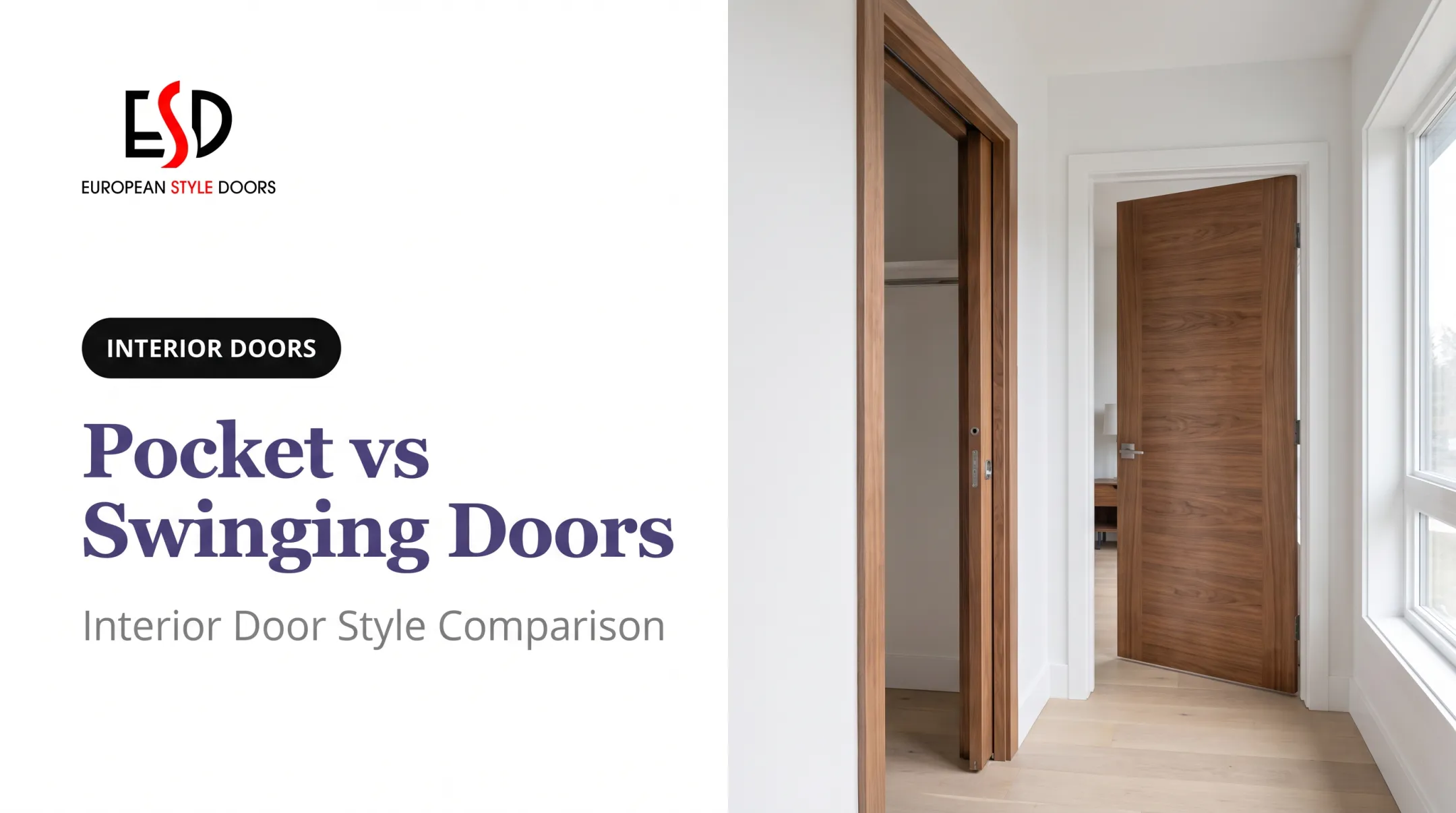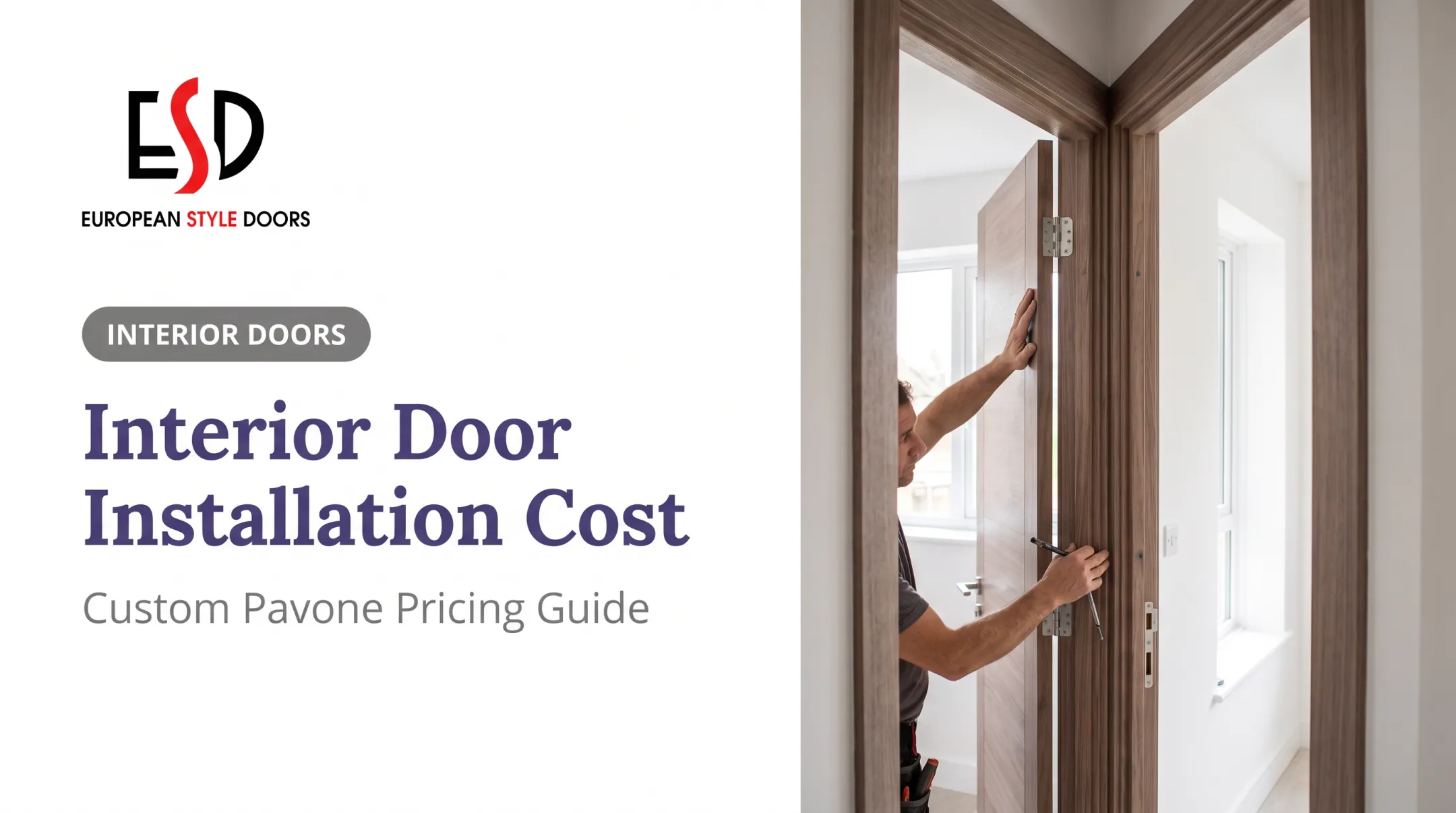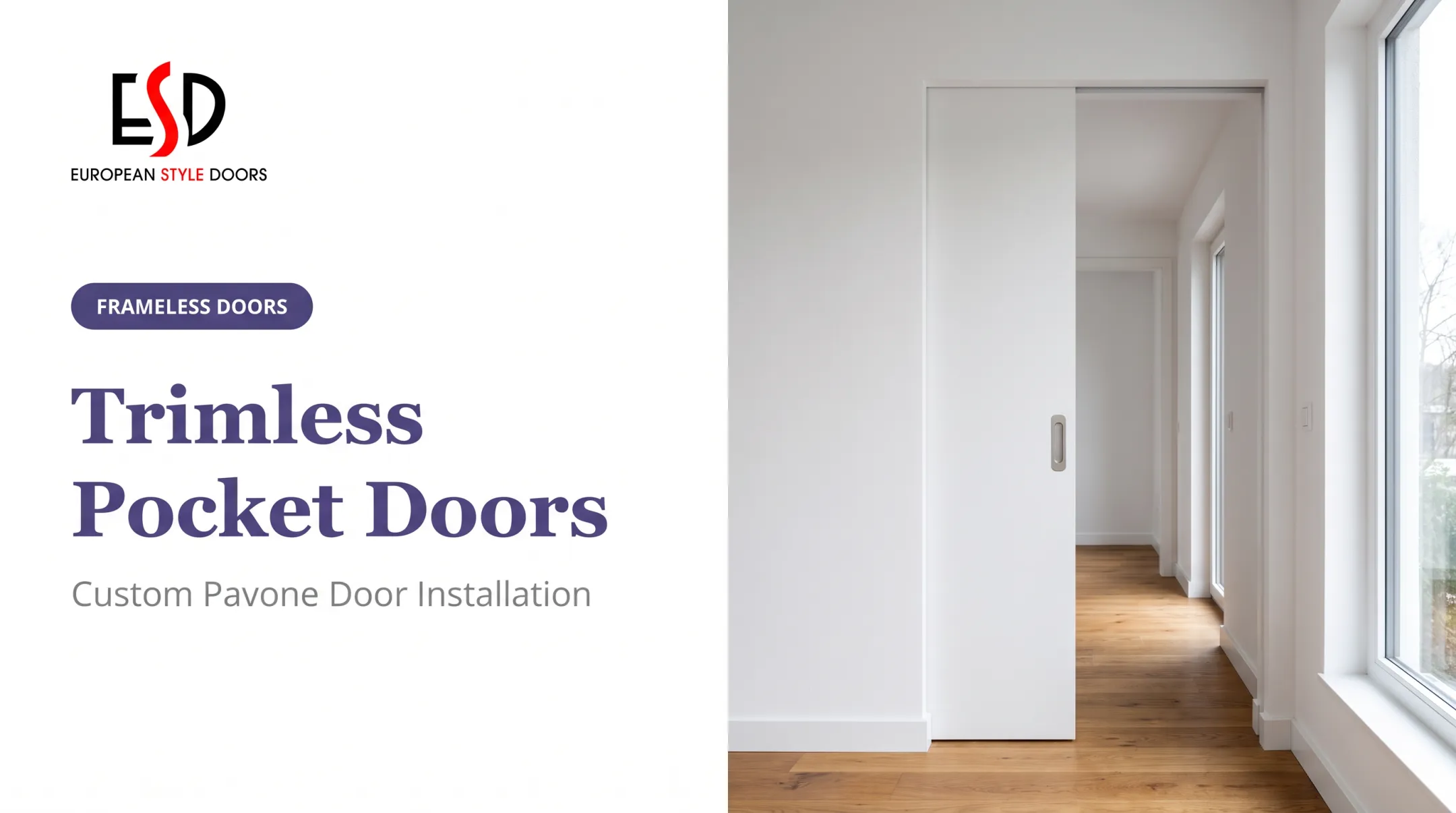

But the price tag swings widely depending on your project. Installing a pocket door during new construction, when the wall is already open, is a very different job from cutting one into a finished, load-bearing wall full of wiring and ductwork.
This guide covers current U.S. cost ranges, the biggest factors that move the price, how the installation actually happens, and how to figure out whether a pocket door is the right call for your space.
Key Takeaways
- A pocket door budget includes far more than the slab: frame, track, labor, wall repair, and hardware all factor in
- Installing during new construction costs less than retrofitting a finished wall, since no demolition is required
- Load-bearing walls, hidden utilities, and nonstandard sizes can significantly raise the scope of work
- A detailed quote should break out demolition, framing, drywall, trim, paint, disposal, and permits separately
How Much Does a Pocket Door Cost?
Nationally, Angi's 2026 cost guide puts the average installed pocket door at $1,050, with a typical range of $800 to $2,500. That's a guide estimate, not a contractor quote, and it varies by region, door size, and wall condition.
The bigger factor isn't the national average. It's whether you're building new or retrofitting.
New Construction vs. Retrofit Pricing
When a wall is already open, there's no demolition, no matching existing drywall texture, and no guessing what's hiding inside the studs. That keeps costs down substantially.
| Door type | New construction | Retrofit in existing wall |
|---|---|---|
| Single pocket door | $550–$1,850 | $1,550–$2,950 |
| Double pocket door | $800–$3,300 | $1,700–$4,200 |
| French-style pocket door | $750–$1,850 | $2,500–$7,000 |

Source: Angi, 2026 cost data
Notice the French-style door gap: a retrofit can run three to four times what the same style costs in new construction. That's because double and French configurations need a longer pocket cavity, meaning more wall to open up and rebuild.
What's Actually in the Price
A "complete pocket-door system" and a "total installed project" aren't the same thing. The system price covers the slab, frame, track, rollers, pulls, and jambs. The installed total adds:
- Demolition and framing labor
- Wall restoration (drywall, taping, texture matching)
- Trim, paint, and disposal
- Permits, where required
- Any electrical or plumbing relocation
When comparing quotes, confirm whether the number includes tax, delivery, and post-installation adjustments like door alignment and latch testing. A low headline price that skips finishing work isn't actually a lower price.
Material-Only vs. Installed Costs
Door material alone varies a lot by type, per Fixr's 2025 cost data:
- Hollow-core: $400–$600 material, $500–$800 installed
- Solid wood: $500–$2,000 material, $600–$2,200 installed
- Glass: $450–$2,000 material, $550–$2,200 installed
Custom sizes and double or French configurations push costs toward the top of these ranges, since they typically require nonstandard hardware and longer track systems.
What Affects Pocket Door Installation Cost?
Six factors drive most of the price swing between a budget install and a complicated one.
Door Material, Weight, and Size
Heavier doors (solid wood, glass-insert, oversized slabs) need beefier track systems and higher-capacity rollers. A standard hollow-core door and track handle lighter loads fine; a solid-wood or glass door pushes you toward commercial-grade hardware rated for more weight.
Custom widths and heights also mean custom-length pockets, which affects both material cost and labor time.
Wall Condition: Open vs. Finished
Cutting a pocket into a finished wall means:
- Removing existing drywall on both sides
- Widening the rough opening to double the door's width
- Removing or relocating studs
- Installing a new header
- Rebuilding the wall around the pocket cavity
None of that applies to new construction, which is why retrofit pricing runs so much higher across every door type.
Load-Bearing Walls Change Everything
Never assume a wall is non-load-bearing. If it is, the project may need:
- A structural assessment
- Temporary support during framing
- A properly sized header
- Permits and inspections
Fixr's structural engineer pricing guide puts a general assessment at $500 to $2,000, averaging around $1,200. That's not a pocket-door-specific fee, but it's a realistic add-on if your contractor flags structural concerns.
Hidden Utilities
Pocket cavities sometimes hide wiring, switches, plumbing, or HVAC ducting. According to HomeAdvisor's pocket door guide, relocating these systems adds trade-specific costs:
- Wall demolition: $1,200–$2,500
- Plumbing relocation: averages around $1,250
- Electrical work: $50–$130 per hour
- HVAC modification: $450–$2,200
Finishing Work Often Gets Left Out
Low estimates frequently skip:
- Drywall patching and taping
- Texture matching
- Primer and paint
- Casing and baseboard repair
- Debris removal
A whole-wall drywall replacement runs $500 to $1,600, and professional painting adds $70 to $130 per hour or $2 to $6 per square foot, based on HomeAdvisor's general repair benchmarks. These aren't pocket-door-specific numbers, but they illustrate how fast finishing adds up on a retrofit.

Hardware Quality
Soft-close mechanisms, steel split studs, and higher roller capacity cost more than basic hardware. Manufacturer spec sheets (like Johnson Hardware's pocket frame line) don't publish a standard dollar premium.
The practical rule: match hardware rating to door weight. Under-rated rollers on a heavy glass door will wear out and start sticking within a few years.
How Is a Pocket Door Installed?
Installation follows a clear sequence, whether you're building new or retrofitting an existing wall.
Planning and Inspection
Before anyone picks up a saw, confirm:
- Final door size and pocket direction (which way it slides)
- Wall thickness and available pocket-side wall length
- Nearby corners, openings, or fixtures that limit clearance
- Location of switches, outlets, and shelving that might conflict with the pocket
For retrofits, this stage also means checking whether the wall is load-bearing and locating any utilities before demolition starts.
Construction Sequence
- Protect the work area with drop cloths and dust barriers
- Open the wall and remove or modify the existing framing
- Reroute any obstructions, such as wiring or ductwork
- Install the header and pocket frame, setting the floor plate and split studs
- Secure the track, checking it's level and square before fastening
Fitting the Door and Finishing
Once the frame is in, hang the door slab on its rollers, set the guides, and fit the jambs, casing, and pulls. Adjust soft-close hardware at this stage if the kit includes it.
Wall restoration comes last: drywall, trim, and paint, then a final test. The door should glide smoothly, latch properly, and not scrape or drift out of alignment.

Timeline: HomeAdvisor estimates 6 to 12 hours of skilled labor for a straightforward install. Add structural work, plumbing, electrical relocation, or extensive drywall repair, and the project can stretch to several days.
Professional installation is usually the smarter call for finished-wall retrofits. Precision track alignment, code compliance, and hidden utilities are easy to get wrong on a first attempt, and a misaligned track means a door that sticks or drifts for years.
Are Pocket Doors Worth the Money?
It depends on what you're solving for.
The upside:
- Reclaimed floor space, no swing clearance needed
- Easier circulation in tight layouts
- Privacy without a door eating into the room
- Design flexibility for transitional spaces
The trade-offs:
- Retrofit complexity in finished walls
- Concealed hardware that's harder to access for repairs
- The pocket wall can't hold shelving, outlets, or fixtures
- Weaker sound sealing than a hinged door, because pocket cavities leave frame gaps
Pocket doors tend to shine in compact bathrooms, closets, utility rooms, home offices, and anywhere a swinging door would clip furniture or fixtures. They're a poor fit for walls crowded with plumbing or ductwork, walls too short for the pocket length, or rooms that need strong acoustic separation (a home theater, or a nursery next to a noisy hallway).
Compared to a standard hinged door, pocket doors cost more to install in a retrofit but use zero swing space. Angi's data shows hanging a standard door runs $150 to $200 in labor, versus $1,000 to $3,500 for an existing-wall pocket conversion, though these aren't directly comparable scopes.
Barn-style sliding doors sit in the middle: they mount on the wall surface rather than inside it, which skips the demolition but leaves the track and hardware exposed.
There's no solid evidence that a pocket door boosts resale value on its own. The decision comes down to whether space efficiency and layout flexibility matter more to you than the added retrofit cost.
How to Plan and Budget for Installation
Before requesting quotes, gather these details:
- Opening dimensions and wall thickness
- Pocket-side wall length available
- Door weight and preferred finish
- Pocket direction (left or right)
- Whether the wall is load-bearing
- Utility locations (wiring, plumbing, ducts)
- Desired hardware (soft-close, flush pulls, etc.)
Get itemized quotes from qualified installers, and compare identical scopes, not just the bottom-line total. Ask directly:
- Is demolition included in this price?
- Who handles electrical or plumbing relocation?
- Are permits required, and are they included?
- Does this cover drywall, texture matching, trim, paint, and disposal?
- Is delivery and final adjustment part of the quote?
Ways to control costs:
- Time the install with a wider remodel already in progress
- Choose a standard size instead of custom dimensions
- Pick a wall with fewer hidden obstructions
- Handle non-specialist finishing (like painting) yourself if you're comfortable doing so
When you're sourcing the door itself, ask suppliers what's actually included in the kit. Does it cover the frame, trim, and hardware pre-finished, or will you need separate painting and priming after installation?
European Style Doors, for example, supplies European-design interior doors with custom sizing and finishes as complete installation-ready kits, with nationwide delivery and optional professional installation. Comparing that kind of bundle against quotes that price the door, frame, and finishing separately keeps your budget realistic.
Before ordering, confirm measurements, product specs, finish options, delivery timelines, and installation requirements with your supplier. A quick call can clarify what's bundled into the price before you commit.
Frequently Asked Questions
How much does it cost to install a pocket door?
The U.S. average is around $1,050, with a typical range of $800 to $2,500. Product-only pricing runs $400–$2,000 depending on material, while new construction installs cost less than retrofits in finished walls.
How much does it cost to convert a regular door to a pocket door?
Converting an existing opening into a pocket door means creating a cavity inside the adjacent wall. Angi's retrofit estimate for a single door is $1,550 to $2,950, though structural work, utility relocation, and finishing can push costs higher.
Are pocket doors worth the money?
It depends on your need for space savings, the room's privacy requirements, and whether the wall is suitable for a pocket cavity. They save floor space and swing clearance but cost more to retrofit and offer weaker sound sealing than hinged doors.
Can I replace a pocket door with a regular door?
Yes, generally. It requires removing or disabling the pocket frame and track, rebuilding the opening, installing hinges and a jamb, and repairing the wall. Final cost depends on the existing construction and how much finish work is needed.