
Pet ownership makes this a bigger issue than most homeowners expect. APPA's 2025 report found that 95 million US households now have a pet, with 71 million owning a dog. That's a lot of paws near a lot of doors.
Here's the catch: "scratch-resistant" doesn't mean scratch-proof. It means a door can shrug off ordinary scuffs, light abrasion, and everyday contact without looking beat up after six months. No surface, laminate or wood, is immune to a sharp object or a determined dog.
This guide compares laminate, veneer, coated wood, engineered-core, and protective-plate options, so you know what to actually ask a supplier before you order.
Key Takeaways
- Laminate and factory-applied finishes typically hold up best in high-traffic, pet-heavy homes
- Solid construction, edge protection, and correct installation matter as much as the surface finish
- Verify manufacturer specs and request samples instead of trusting words like "durable" or "scratch-proof"
- Protective plates address concentrated pet damage that finish alone cannot prevent
- Custom sizing and professional installation help maintain consistency across multiple openings
Overview of Scratch-Resistant Doors in the US Interior Door Market
A scratch-resistant interior door uses surface materials, coatings, or construction choices that reduce visible damage from daily wear. That's different from a door that's simply well-made or expensive.
Most scratches come from predictable sources:
- Pet claws, especially near handles and lower panels
- Kids dragging toys, backpacks, or scooters
- Furniture and moving boxes bumping against the slab
- Repeated contact around hardware from daily use
- Aggressive cleaning with abrasive pads or harsh chemicals
Durability covers five separate properties. Treat them as distinct factors, not interchangeable marketing terms:
- Surface durability: resistance to light scuffs and marks
- Impact resistance: how well the door handles dents or sharp blows
- Moisture resistance: performance against humidity and spills
- Cleanability: whether marks wipe off without damaging the finish
- Repairability: can the surface be touched up, or does the whole door need replacing?
A laminate door might score well on surface durability and cleanability but can't be sanded and refinished like wood. A solid wood door might refinish beautifully but show every scuff until you do. Knowing which properties matter for your household drives the rest of this decision.

Best Scratch-Resistant Door Options
Before comparing products, judge any door against these criteria:
- Documented finish durability (not just brand claims)
- Ease of cleaning and visible wear patterns
- Repairability if the surface does get marked
- Design flexibility across rooms and styles
- Suitability for pets, kids, or heavy foot traffic
- Availability of real manufacturer specs, not just adjectives
European Style Doors: Custom Laminate and Veneer Doors
European Style Doors, the exclusive US distributor for Pavone-manufactured interior doors, builds its lineup around German and Indian laminate, wood veneer, tempered glass, and brushed-steel edge detailing.
The Elite collection pairs laminate or veneer facings with a steel edge bender. The California collection offers laminate finishes like Wolfram-Gray and White-Ash across standard and custom sizes.
What's useful for busy households:
- Custom sizing without altering the wall opening
- Doors arrive as complete kits (frame, moldings, hinges, handles, seals) ready to install
- No priming or painting needed after installation
- Optional professional installation for an added fee
Laminate selections like these tend to suit homeowners and contractors who want a consistent, easy-care surface across multiple doors. Ask for the specific collection's finish documentation before assuming any product is scratch-proof. No supplier, including this one, publishes a universal scratch rating across every finish they sell.
High-Pressure Laminate or Durable Decorative Laminate Doors
High-pressure laminate (HPL) is a strong candidate for busy interiors where wipe-clean maintenance and consistent appearance matter more than refinishing flexibility. Formica's technical data shows its Grade 10 laminate achieving a minimum 400 wear cycles under NEMA LD 3 testing, a figure that reflects abrasion resistance, not a standalone scratch score.
Compared with painted or stained wood:
- Laminate damage tends to show as surface chips rather than deep gouges
- Touch-ups are harder since laminate can't be spot-painted like wood
- Color and pattern stay consistent across replacement doors ordered later
- Painted wood can be sanded and recoated; laminate generally can't
Before buying, request the manufacturer's abrasion test results, warranty language, and edge treatment details. "Scratch-resistant" on a spec sheet should point to an actual test, not just a product description.
Painted, Lacquered, or Factory-Coated Doors
A professionally applied coating protects the substrate underneath while giving you far more color and gloss options than laminate typically offers. European Style Doors' Elegant collection, for example, uses a two-component polyurethane paint from ICA (Industria Chimica Adriatica) that forms a hard, elastic film with strong mechanical and chemical resistance.
One trade-off to know: high-gloss dark finishes show fine scratches more readily than matte or textured surfaces. If you're prone to worrying over every mark, a textured or mid-gloss finish hides more.
Check for:
- Coating type and cure process
- Edge coverage (a common weak point)
- Manufacturer-specific care instructions
- Any available finish-performance data
Engineered Wood or Solid-Core Doors with Protective Finishes
Solid-core and engineered construction give a door weight, sound dampening, and a sturdier feel around hinges and hardware. But construction isn't the same as scratch resistance. The finish, not the core, determines what you see when something scrapes across the surface.
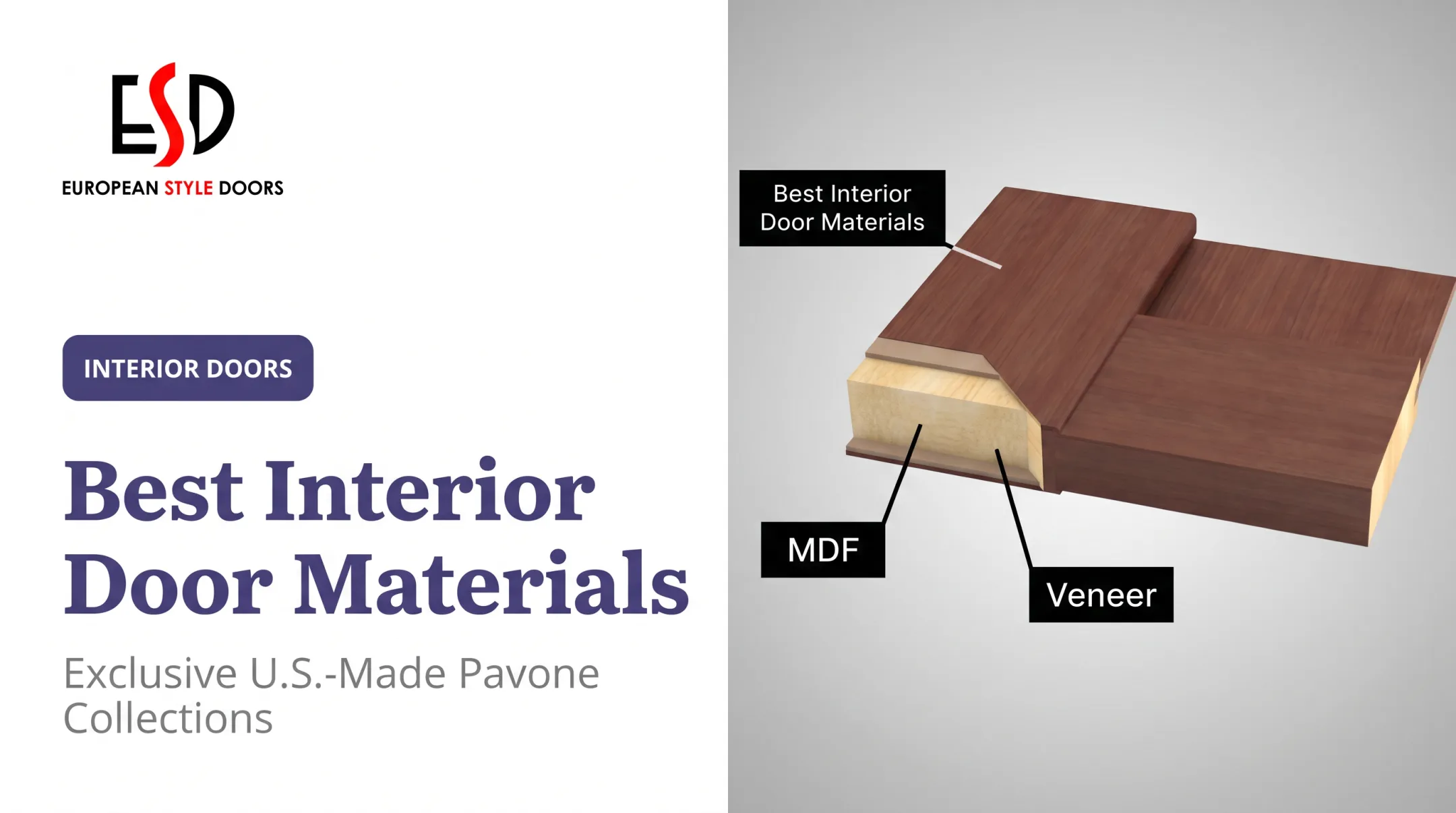
European Style Doors' re-glued wood and MDF base, for instance, is built for shock and moisture resistance, which supports longevity, but the visible wear still comes down to the applied veneer or laminate layer on top. Untreated or softly finished wood can mark faster than a well-coated laminate, despite being "solid."
If refinishing matters to you long-term, confirm the surface can actually be sanded and recoated before assuming that's an option.
Glass, Metal, or Doors with Targeted Protective Plates
Glass inserts and metal detailing (like brushed-steel edging) suit contemporary interiors or rooms where moisture resistance matters, such as bathrooms or laundry areas. These aren't scratch-resistant solutions on their own. They're design and durability features for specific use cases.
For pet owners, a kick plate or pet-scratch guard often makes more sense than replacing an entire door. Hager's protection plate catalog documents metal and plastic plate options designed to shield the lower push side from scuffs, installed with adhesive or screws.
Before adding one, confirm:
- Plate material and attachment method
- Compatibility with your existing door thickness
- Edge safety (no sharp corners near foot traffic)
- Whether it affects weatherstripping or seals

How We Chose the Best Scratch-Resistant Door Options
We prioritized verified specs over marketing copy. That meant separating routine scuffs from pet scratches, dents, moisture exposure, and heavy commercial use, since a door rated for one doesn't automatically perform well against another.
A few things we specifically checked:
- Manufacturer testing: wear cycles, abrasion classifications, or technical datasheets where available
- Construction quality: edge protection, hardware prep, and whether custom sizing is offered
- Repairability: can the finish be touched up without replacing the whole door?
- Maintenance demands: cleaning restrictions, finish-sample availability, long-term color consistency
Warranty language deserves a close read, too. One manufacturer's residential door warranty explicitly excludes normal wear and tear, meaning a scratch from daily use likely won't be covered regardless of how the door was marketed.
Common mistakes we see buyers make:
- Choosing a door by color alone, ignoring the actual finish spec
- Assuming "solid wood" automatically means scratch-resistant
- Overlooking edges and corners, where damage shows first
- Skipping pet or traffic considerations until after installation
- Ordering before confirming exact opening measurements
Before committing to a whole-house package, request physical finish samples and written specifications. A supplier that hesitates to provide either is one to question.
Conclusion
There's no single "best" scratch-resistant door. The right choice matches your household's actual wear pattern:
- Laminate for consistent everyday durability
- Coated or engineered doors for design flexibility
- Solid wood where refinishing matters
- A protective plate when damage is concentrated in one spot
For homeowners, designers, builders, and property managers juggling multiple openings, consistency across finish, sizing, and installation often matters as much as the material itself. European Style Doors offers custom European-design interior doors in laminate, veneer, and glass-insert finishes, delivered as installation-ready kits with optional professional installation nationwide.
Whatever you choose, ask for the finish specs, request a sample, and confirm measurements before ordering. If you're planning a door replacement project and want guidance on finish and sizing suited to your traffic level, European Style Doors offers free measurement and custom quotes to help you get it right the first time.
Frequently Asked Questions
What is the most durable door material?
Durability depends on core construction, surface finish, edge treatment, and the type of wear involved. Laminate, engineered wood, solid wood, and metal or glass all have strengths, so compare the specific finish rather than the material name alone.
What type of interior door is most resistant to scratches?
Factory-finished laminate with documented wear or abrasion testing is a common top pick for scratch resistance. Always confirm the specific product's test results and care instructions rather than relying on general claims.
Are laminate doors more scratch-resistant than wood doors?
Laminate often provides a more consistent protective surface right out of the box. Properly finished wood can be just as durable and offers the advantage of refinishing later, so compare the actual finish, not just the base material.
Are scratch-resistant doors completely scratch-proof?
No. Scratch-resistant doors reduce the likelihood and visibility of everyday damage, but sharp objects, heavy impact, abrasive cleaning, or repeated pet scratching can still mark them.
How can I protect an interior door from dog scratches?
Choose a durable factory finish, add a protective plate or pet-scratch guard near the lower panel, and check that any adhesive or hardware is compatible with your door before installing. Limiting access to the door, where practical, helps too.
How do you clean and maintain scratch-resistant doors?
Follow the manufacturer's cleaning guidance, use non-abrasive cloths and mild cleaners, and avoid harsh chemicals or scouring pads unless specifically approved. Check edges, hardware, and any protective plates periodically for wear.