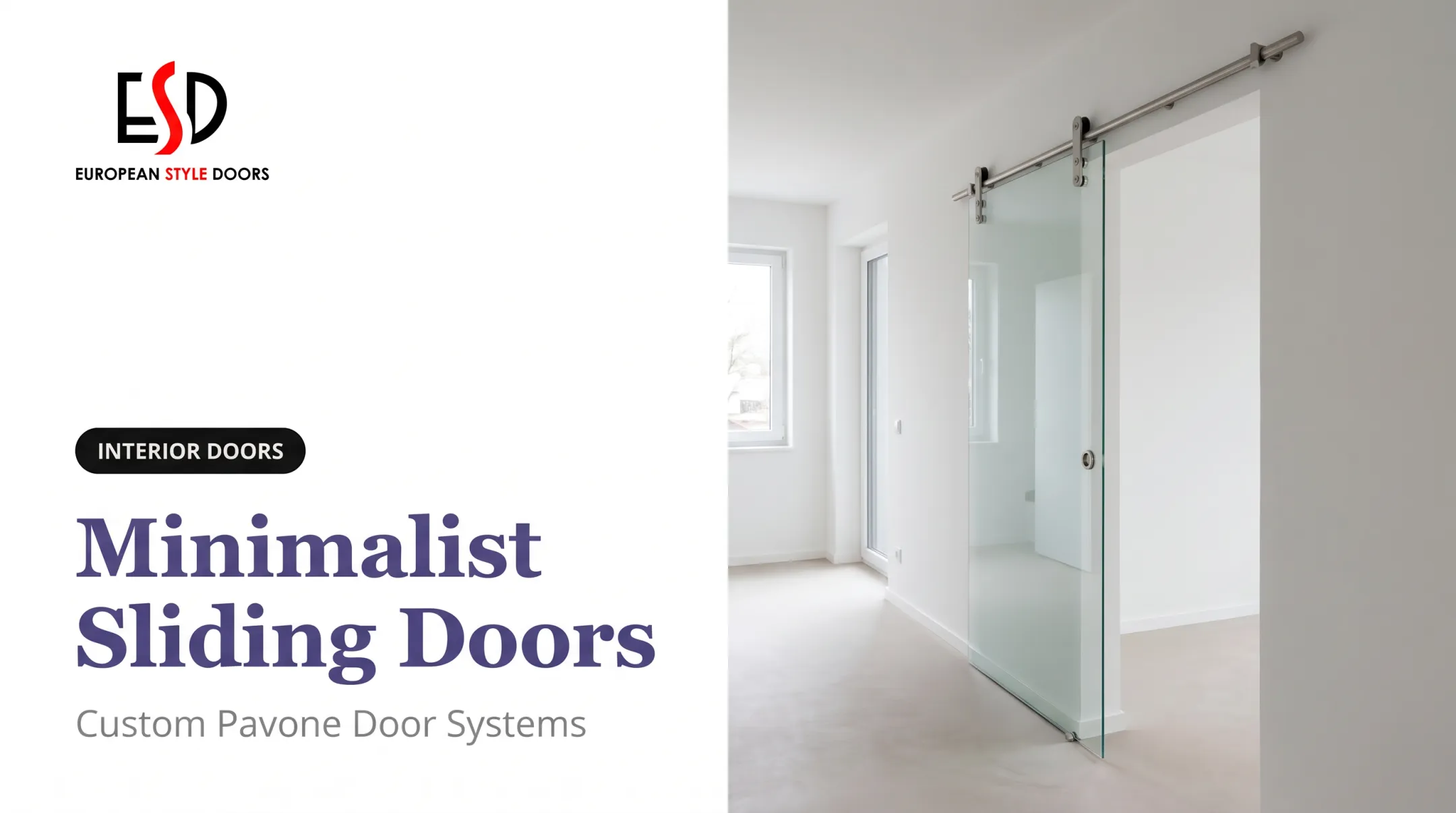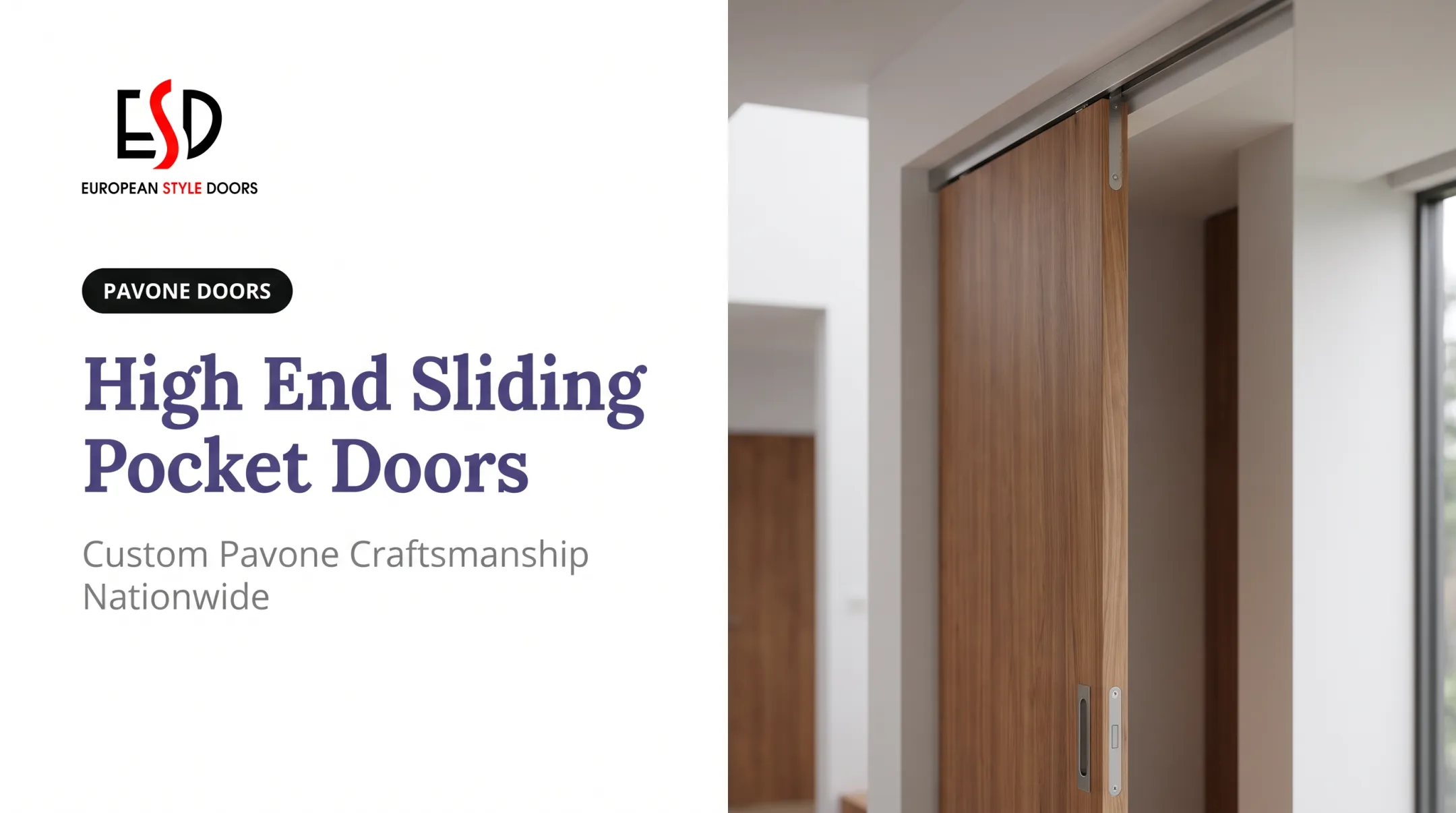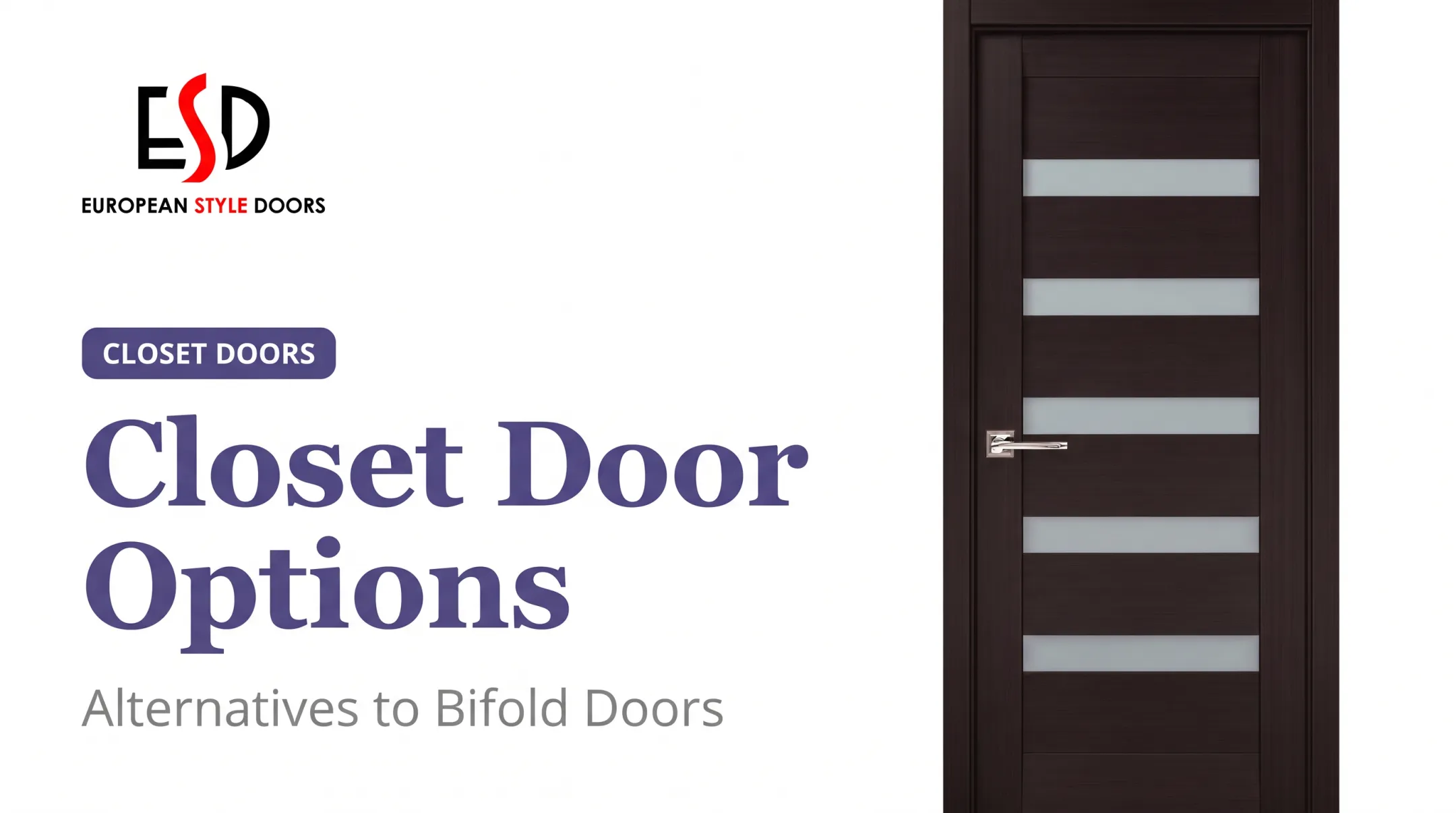

Whether a barn door still works for your space depends on a handful of specifics: the material and finish, the hardware proportions, the room's function, how much wall space you've got, and whether the look actually matches your home's architecture. A refined slab door on a slim track reads completely differently than a chunky faux-reclaimed panel with exposed cross-bracing.
This guide breaks down what's changed, where sliding doors still make sense, and where you're better off with a pocket door, French door, or clean hinged slab instead.
Key Takeaways
- Modern barn doors stay relevant when they solve a real space problem, not just chase a trend
- Distressed wood, oversized hardware, and forced farmhouse styling are aging fast
- Pocket doors, pivot doors, and European-style hinged doors often outperform barn doors in bedrooms and bathrooms
- Wall space, privacy needs, and sound control should drive your decision more than aesthetics alone
- A quick checklist later in this article helps you test whether a sliding door fits your project
Key Trend 1: Barn Doors Are Shifting From Rustic Statement to Refined Architectural Feature
Barn doors got their popularity from farmhouse design: exposed wood grain, visible bracing, and hardware that looked like it came off an actual barn. That styling made sense in a farmhouse.
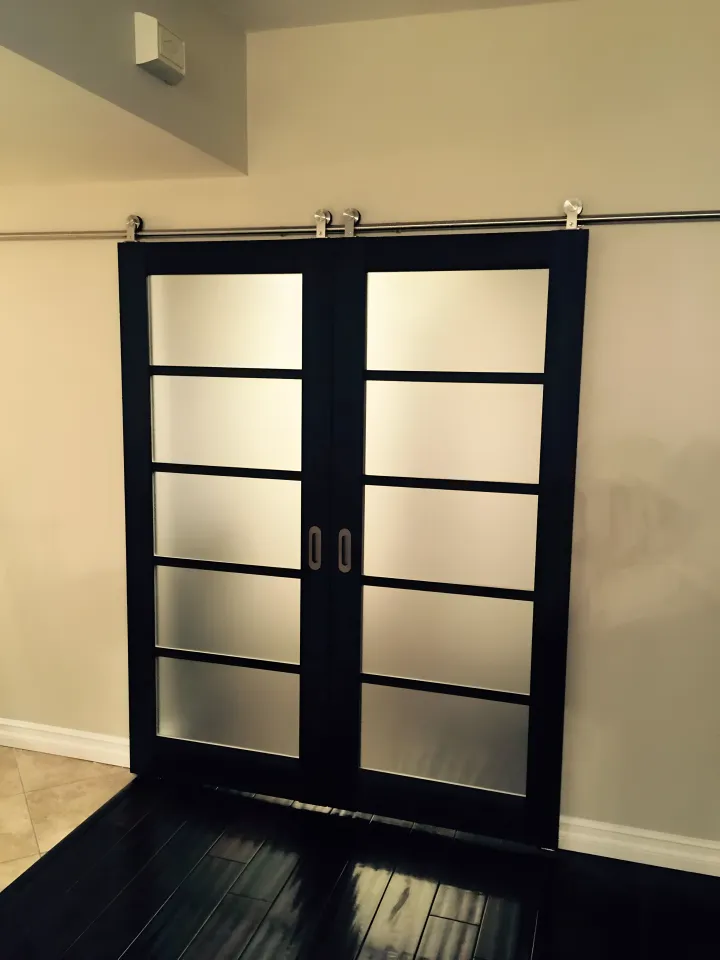
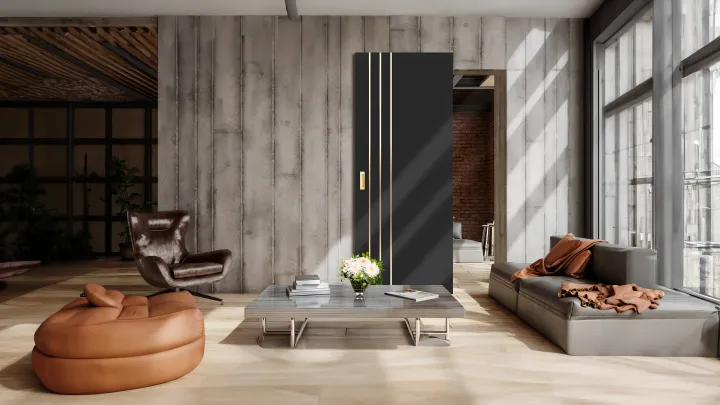
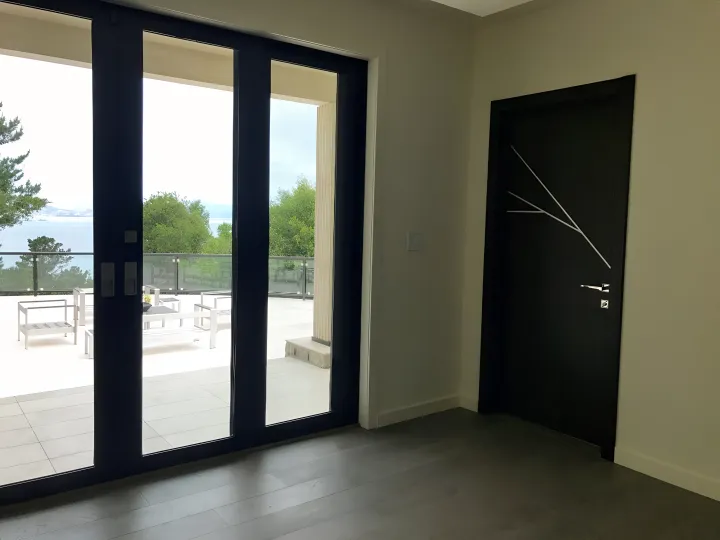
It makes a lot less sense bolted onto a mid-century ranch or a downtown condo, and designers have started saying so directly.
Interior designer Lauren Sullivan of Well by Design calls the pairing of barn doors and distressed finishes "overdone and overly staged" outside an authentic farmhouse context, according to Good Housekeeping's 2026 report.
That critique lands hardest when a door choice is driven by trend rather than architecture.
From Farmhouse Statement to Architectural Detail
Other designers push back on a blanket "out of style" verdict. Architect Devin Kimmel notes that barn doors can add refinement or rustic character depending entirely on execution and context, per Homes & Gardens. The door itself isn't the problem. The styling choices wrapped around it usually are.
What's replacing the rustic look in 2026:
- Clean slab profiles with subtle, consistent wood grain instead of faux-reclaimed texture
- Smooth or matte painted and laminate finishes
- Partial glass or frosted-glass panels for light transfer
- Slim, proportional hardware instead of oversized decorative straps
Panel and Hardware as One System
Here's the part people miss: the panel and the track aren't separate decisions. A clean modern slab paired with giant faux-antique hardware still reads as farmhouse kitsch.
Flip it around, and understated matte-black or brushed-steel hardware can make a distinctive wood panel feel current and intentional. Treat the door and track as one visual system, not two separate purchases.

Key Trend 2: Function and Room Suitability Matter More Than the Trend Label
Strip away the styling debate, and the sliding mechanism still has a genuine practical advantage: it moves parallel to the wall instead of swinging into the room. No swing radius means no fighting with furniture, no clearance issues near tight hallways, and no door slamming into a dresser you forgot was in the way.
Where Sliding Barn Doors Work
Sliding doors earn their keep in specific rooms:
- Pantries - frequent in-and-out traffic without a swinging door eating into kitchen floor space
- Laundry rooms - keeps the opening wide and accessible for carrying baskets
- Home offices - defines a workspace without a swing arc competing with a desk
- Closets - maximizes usable floor space in smaller bedrooms
- Flexible room dividers - splits an open floor plan without permanent construction
Where to Think Twice
Other rooms need more caution. Primary bedrooms, nurseries, shared bathrooms, and media rooms all depend on things a typical sliding door doesn't fully deliver: a tight seal, a secure latch, and real sound dampening.
According to ArchDaily's interior door guide, that gap comes from the perimeter air space around a sliding panel, compared with a hinged door that closes into a fitted frame.
Before installing one, check these:
- Clear wall space - is there enough flat wall beside the opening for the panel to slide?
- Mounting surface - can the wall structurally support the track and hardware?
- Overlap and floor guidance - does the panel overlap the frame enough to limit gaps?
- Handle clearance - will the handle clear trim, light switches, or adjacent fixtures?
A frosted or textured panel improves visual privacy while keeping light in the room. It still won't seal like a properly fitted hinged or pocket door.

Key Trend 3: Materials, Hardware, and Alternatives Are Expanding the 2026 Choice
The material conversation has moved well past "wood or not." Current options span several directions, each suited to a different goal:
- Wood veneer - warmth and grain variation without heavy distressing
- Painted or laminate finishes - clean, consistent color that fits modern and transitional interiors
- Clear or frosted glass - openness and light transfer, with frosted versions adding visual privacy
- Textured or mixed-material panels - visual weight for larger openings or statement walls
Hardware has evolved alongside the panels. Matte and brushed finishes have mostly replaced shiny oil-rubbed bronze. Track proportions now look intentional instead of oversized. Soft-close features and partially concealed hardware are increasingly common where budgets allow.
Barn Doors vs. the Alternatives
| Door Type | Wall Clearance Needed | Privacy/Seal | Best For |
|---|---|---|---|
| Sliding barn door | Adjacent wall space, no swing arc | Limited perimeter seal | Pantries, offices, closets |
| Pocket door | Wall cavity required | Moderate, depends on construction | Minimalist layouts, tight hallways |
| French doors | Swing arc on both leaves | Good with proper weatherstripping | Formal rooms, light-filled spaces |
| Hinged slab door | Swing arc, one side | Strong, fitted frame | Bedrooms, bathrooms |
| Pivot door | Swing zone behind axis | Depends on door spec | Statement entries, offices |
Pocket doors and concealed systems tend to win out in minimalist interiors where visible hardware competes with clean lines. French or glazed hinged doors make more sense where formality and natural light matter more than space-saving.
For a fully custom, installation-ready option without a visible sliding system, European Style Doors offers European-inspired interior door packages with custom sizing and finish choices that sit flush with the surrounding architecture.
What's Driving These Sliding Barn Door Trends and How They Impact Home Design
The bigger shift is quieter interiors overall: fewer decorative flourishes, more coordinated material palettes, and mechanisms that support the architecture instead of competing with it. Flush panels, hidden tracks, and concealed hinges all point the same direction.
Part of this is driven by how people actually use their homes now. Flexible rooms and dedicated office space have become a real priority.
66% of recent and prospective homebuyers say they want exactly one home office, according to NAHB's 2024 survey of more than 3,000 buyers nationally. That's demand for the room, not proof that everyone's installing a barn door to close it off, but it does explain why interior door choices are getting more thought upfront.

That extra thought shows up in how projects get planned:
- Doors get specified earlier, alongside framing decisions rather than as an afterthought
- Wall construction and hardware get coordinated together, especially for pocket or hidden-track systems
- Privacy and circulation needs get evaluated before anyone picks a finish
For builders, remodelers, and designers, this means accurate measurements and proper structural support matter more than ever. A door that's mislabeled, oversized for its hardware, or installed without correct wall backing will feel dated or flimsy regardless of what style it claims to be.
Quality of construction and installation drives how a door holds up over time, far more than whether it's marketed as "barn," "sliding," or "modern."
Future Signals for Sliding Barn Doors in the Next 1–3 Years
A few documented developments suggest where things are headed:
- Concealed and quieter hardware. Systems like the Sugatsune FD80, covered by Canadian Interiors, add two-way soft-close dampers and service-access track sections that ease hidden-track maintenance.
- Larger room-divider applications. Sliding panels are showing up as full room dividers in open floor plans, not just closet and pantry doors.
- Improved privacy glazing. Frosted, sandblasted, and textured glass options keep expanding the middle ground between fully open and fully closed.
- Flush-style sliding panels. More sliding doors now resemble a standard hinged slab when closed, blurring barn-door and modern-door looks.
Customization is likely to keep replacing one-size-fits-all farmhouse styling. Expect designers to keep selecting dimensions, finishes, glazing, and hardware based on the specific room rather than defaulting to a standard kit.
The likely split going forward:
- Barn doors stay strong in utility spaces and flexible layouts
- Refined statement versions continue in transitional and eclectic homes
- Concealed pocket systems gain ground where minimalism or strict privacy matters most
Conclusion
Sliding barn doors aren't automatically out of style in 2026. What's dated is the overly rustic styling, the mismatched oversized hardware, and placement that ignores a room's real privacy or sound needs.
The decision rule stays simple: pick the door that fits the room's function, your wall conditions, your home's architecture, and your long-term goals. Don't pick it just because it's trending.
If you're planning a door replacement, compare materials, finishes, measurements, and hardware before requesting a quote. European Style Doors offers free measurement and custom-sized interior door kits, pre-finished and ready to install, for homeowners and contractors working through exactly these decisions.
Frequently Asked Questions
Are barn doors out of style in 2026?
Not entirely. Modern, well-proportioned sliding barn doors with clean finishes and proportional hardware still look current. Distressed farmhouse styling, however, is increasingly seen as dated.
What are some trendy alternatives to sliding barn doors?
Pocket doors, concealed sliding systems, French doors, pivot doors, bi-fold doors, and clean-lined European-style hinged doors all offer different trade-offs in privacy, light, and wall clearance. The right pick depends on the room.
When should I not use a barn door?
Avoid barn doors where you need strong privacy, reliable sound control, a tight seal, or a secure latch, such as bedrooms, bathrooms, and nurseries. They're also a poor fit when there's not enough clear wall space for the panel to slide.
Are modern barn doors good for resale value?
It depends on quality, context, and styling rather than the door type alone. A well-installed, neutral, well-proportioned door tends to help; a dated or poorly fitted one can hurt. There's no guaranteed resale bump either way.
Do sliding barn doors provide enough privacy and sound control?
Typical sliding systems have perimeter gaps that limit both visual privacy and sound insulation compared with a fitted hinged door. Solid-core panels, frosted glass, overlap, and professional installation can improve performance, but they generally don't match a sealed hinged or pocket door.