
Introduction
A black interior door changes a room faster than almost any other single upgrade. It adds contrast, sharpens sightlines, and brings a European-inspired edge without touching the walls, floors, or furniture.
But the questions are predictable. Will it still look current in five years? Will it make a hallway feel tighter or a bedroom feel darker? Will fingerprints and scuffs show up faster than on a white door?
Designers featured in Architectural Digest describe black as nearly as versatile as white, pairing it confidently with wood and other neutrals across rooms of every size. This guide breaks down where black doors fit, which profiles and finishes make them look deliberate, and what to check before you order or repaint.
Key Takeaways
- Black doors suit modern, minimalist, industrial, transitional, and traditional interiors when the surrounding palette supports them
- Panel profile, sheen, hardware, and lighting shape the final look as much as the color itself
- Test physical finish samples against your walls, trim, and flooring before committing
- A factory-finished, custom-sized door often delivers more consistent results than repainting an existing one
Why Black Interior Doors Work in Modern Design
A Visual Anchor for Any Room
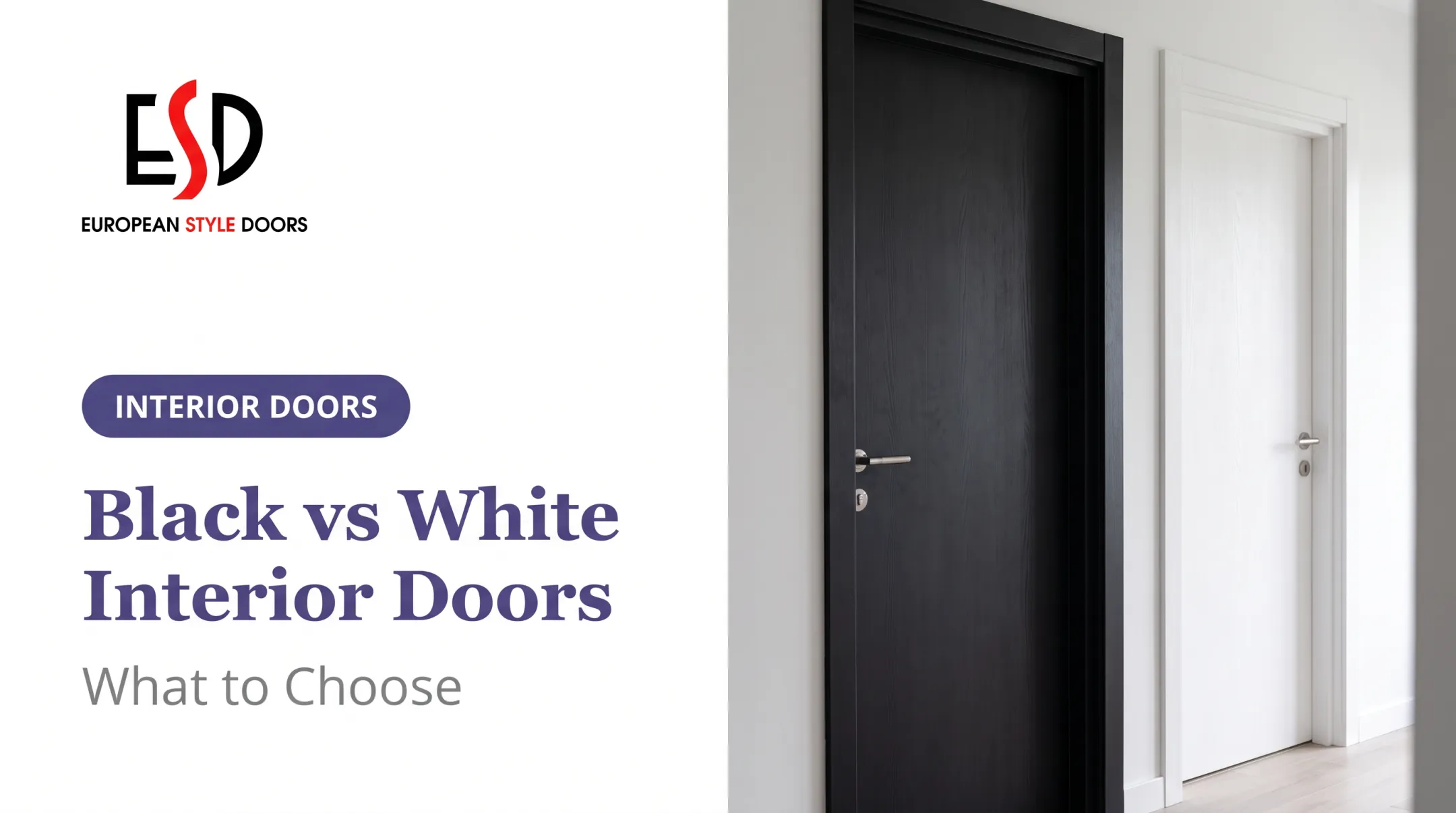
Black doors define an opening. In a hallway full of white trim, a black door becomes the destination point. In a bedroom or home office, it marks a clear boundary between spaces without needing a wall color change.
You don't need black walls or heavy dark decor to make it work. A single black door against white, cream, pale gray, muted green, or natural wood trim creates depth and architectural emphasis on its own.
Black as a Flexible Neutral
Black reads as a neutral, not a bold accent color. That's why it pairs easily with:
- Warm wood tones like oak or walnut flooring
- Natural stone or concrete surfaces
- Brass, bronze, or chrome metal fixtures
- Colorful artwork and textiles
- Both cool-toned and warm-toned paint palettes
Comparing Black to the Alternatives
Not every project calls for a fully black slab. Consider the options:
| Option | Effect |
|---|---|
| Full black door | Strongest contrast, most defined statement |
| White door, black hardware | Subtle edge without a dark visual block |
| Charcoal or off-black | Softer contrast, less stark than true black |
| Black-framed glass door | Adds definition while preserving light flow |
Small Rooms and Limited Light
A dark door in a narrow hallway or dim bedroom can go either way. Contrast adds definition and makes the opening feel intentional. But in a space with little natural light, a heavy black slab can visually dominate if nothing else balances it.
Pair dark doors with lighter walls, reflective surfaces like glass or mirrors, and adequate lighting fixtures. That combination keeps the room feeling open rather than closed in.
Design Choices That Make Black Doors Look Intentional
Door Profiles and Style
The profile does as much work as the color:
- Flush or slab doors suit minimalist interiors; European Style Doors' Modern collection includes a black slab with a tall, curved frosted-glass insert as a focal point
- Framed or paneled doors work in transitional and traditional rooms, including dark wood-grain laminate with recessed rectangular panels
- Glass-insert doors suit spaces where light transfer matters, such as a narrow frosted-glass strip that adds brightness without losing privacy
Finish and Sheen Comparison
Sheen changes how black reads in a room. Flat and matte finishes reflect little to no light and hide surface imperfections, while satin sits in the low-to-medium range. Semi-gloss and gloss reflect more light and are easier to wipe clean, according to Sherwin-Williams.

- Matte/flat: softest look, minimal glare, best at concealing texture
- Satin: balanced reflectance, common middle-ground choice
- Semi-gloss/gloss: more formal, more reflective, often simpler to clean at touch points
True Black vs. Charcoal vs. Off-Black
"Black" isn't one color. Deep laminate finishes with subtle irregular grain, or near-black veneers with fine horizontal texture, read differently than a flat true black.
Bring a physical sample home and view it next to your wall paint, flooring, and trim before you order. Lighting shifts undertones more than most people expect.
Hardware That Looks Deliberate
Hardware finish sets the room's temperature. According to Schlage's finish guide, matte black suits minimalist monochrome interiors, satin brass adds warmth on dark surfaces, and satin nickel stands out against black, navy, or gray.
- Match handles, hinges, and strike plates to one finish family
- Chrome and brushed nickel lean cooler and more contemporary
- Aged bronze suits traditional or Arts and Crafts-style rooms
How to Choose Black Interior Doors for Your Project
Repaint or Replace?
Repainting an existing door takes real prep: washing, degreasing, sanding, and priming before any topcoat goes on. Brush and roller marks are hard to avoid completely, and results vary door to door even in the same house.
Factory-finished doors skip that entire sequence. Pavone doors, distributed by European Style Doors, arrive as complete kits with finished moldings and jambs, so no priming or painting happens on-site. That consistency matters most on whole-house projects where every door needs to match.

Construction and Material
Match the build to the job:
- Solid-core: heavier, better sound management, suited to bedrooms and offices
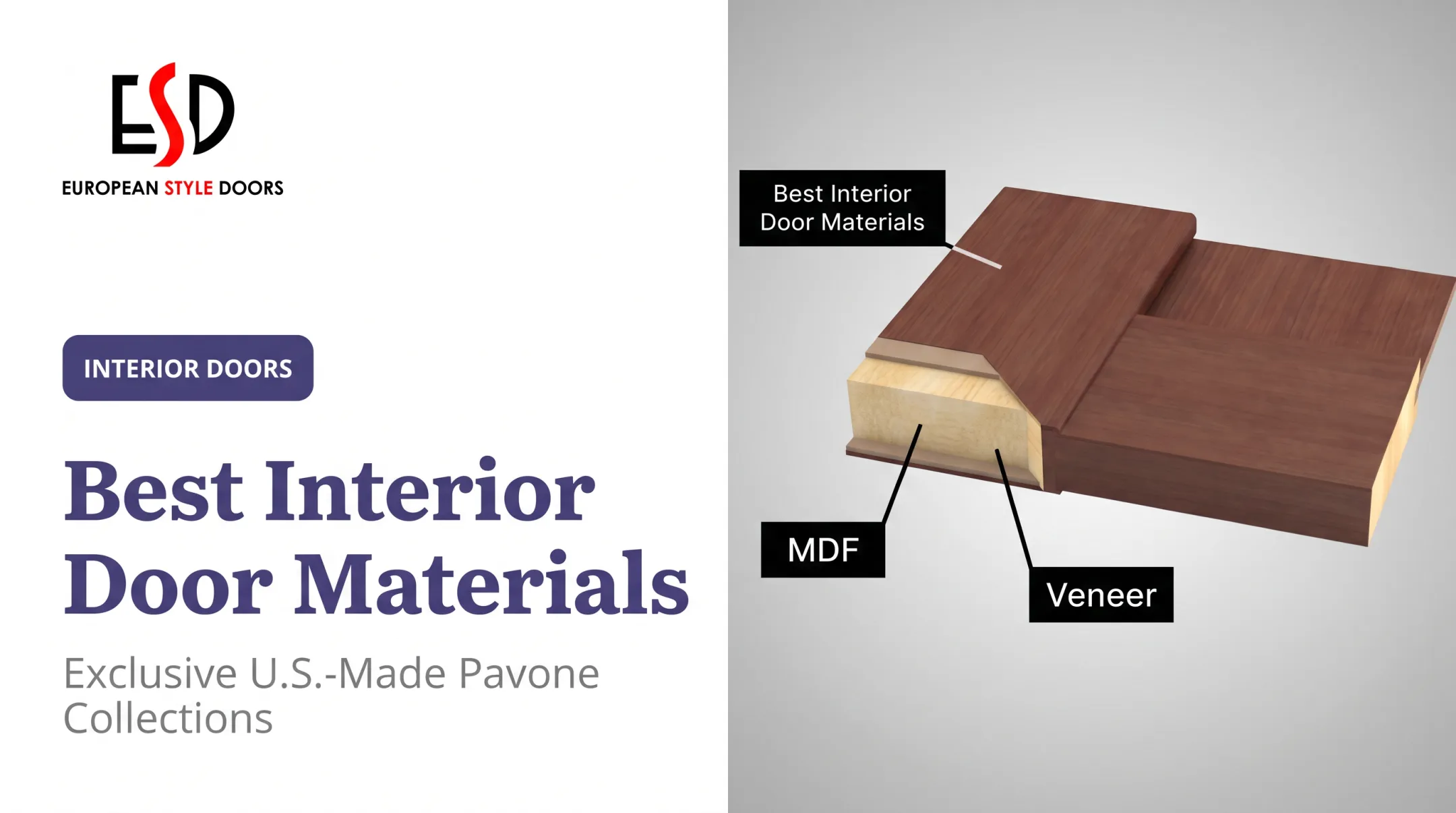
- Veneer or laminate surface: wood veneer for a natural look, laminate (including German and Indian laminate options) for durability and a wider color range
- Glass inserts: useful where light transfer outweighs full privacy
Room-by-Room Framework
| Room | Priority |
|---|---|
| Bedroom | Sound control, privacy |
| Bathroom | Moisture resistance |
| Home office | Sound separation |
| Laundry/pantry | Durability, frequent use |
| Hallways | Visual impact, traffic wear |
What to Measure Before Ordering
Accurate ordering information prevents install delays. Collect these specs before you order:
- Rough opening width and height
- Jamb depth
- Door handing (left or right)
- Wall thickness
- Hardware preparation
Masonite's measuring guide recommends measuring width and height at three points and recording the smallest figure.
Custom sizing matters most in renovations where you want a black door without reframing the opening. European Style Doors builds to custom dimensions. Free measurement is included in its design and sizing service, with typical turnaround of one to two weeks.
Practical Considerations Before Ordering or Installing
Setting Realistic Maintenance Expectations
Black surfaces can mask some dust, but they don't hide everything. Fingerprints, oils, and light scratches can still show, especially in higher-gloss finishes or under strong side lighting near handles.

Cleaning Without Damaging the Finish
Follow the manufacturer's cleaning instructions and test any product on an inconspicuous spot first. General door-care guidance from JELD-WEN recommends mild soap and water.
Skip products and habits that dull the finish:
- Vinegar-based cleaners
- Abrasive scrubbers
- Aggressive rubbing near handles and edges
Installation Planning
Before installation day:
- Re-verify opening measurements against the delivered unit
- Protect finished surfaces during surrounding construction work
- Check frame alignment before hanging
- Confirm hinges and hardware match the door's prep
Build a Simple Finish Schedule
For multi-room projects, record the door color, sheen, profile, casing, handles, and hinge finish for each space. That simple schedule keeps a whole-house remodel consistent instead of guessing room by room.
Frequently Asked Questions
Are black interior doors still in style?
Yes. Designers continue to use black on interior doors as a durable, versatile choice. How current it feels depends more on the profile, finish, and surrounding palette than the color alone.
Is black a good color for interior doors?
Black adds contrast, definition, and a more sophisticated feel to most rooms. Consider your room's lighting, wall color, and how much dark detailing already exists before committing.
Do black interior doors make a room look smaller?
Not automatically. Black creates stronger visual contrast, but pairing it with lighter walls and good lighting keeps compact rooms feeling open.
What hardware looks best with black interior doors?
Matte black creates a monochromatic look. Brass or bronze add warmth and contrast. Chrome, brushed nickel, or satin nickel feel cooler and more contemporary against black.
What is the best finish for black interior doors?
Matte hides texture and reduces glare. Gloss and semi-gloss reflect light and wipe clean more easily. Choose by room formality, daily use, and the manufacturer's care guidance.