
Homeowners and designers increasingly treat interior doors as design elements, not just functional hardware. Color choice now shapes how a hallway flows, how a room feels, and where the eye lands first. Houzz's 2025 report notes that design professionals are seeing more homeowners embrace bold choices, including painted doors.
For 2026, the direction is layered: warm neutrals, nature-inspired shades, expressive accents, and natural wood finishes are all gaining ground at once. This article breaks down the leading colors, what's driving them, how they play out room by room, and what to watch next.
Key Takeaways
- Warm whites, greige, stone gray, sage, charcoal, navy, and natural wood tones lead 2026 interior door color trends.
- Bold shades work best as intentional accents; coordinated neutrals and wood finishes build whole-home continuity.
- Evaluate door color against wall undertones, flooring, trim, hardware, lighting, and room function before committing.
- Custom sizing, factory-applied finishes, veneers, and installation-ready door systems turn a color plan into an install-ready project.
Key Trends in Interior Door Colors for 2026
Five directions stand out for interior doors this year. Some work across a whole house; others are better suited to a single statement opening.
Warm, Soft Neutrals
Stark cool white is giving way to softer, warmer neutrals: cloud white, ivory, warm greige, beige-gray, and stone-inspired tones. Sherwin-Williams named Universal Khaki SW 6150, a livable neutral with a slight yellow undertone, as its 2026 Color of the Year.
That direction fits doors well, since warm neutrals pair easily with white walls, cream trim, natural oak, and transitional or contemporary rooms.
How to choose the right shade:
- Match the wall color for a seamless, low-contrast look in open-plan spaces
- Go one or two shades deeper than the wall for subtle definition without heavy contrast
- Match the trim instead of the wall for whole-home consistency across multiple visible doorways
Dark, Architectural Colors
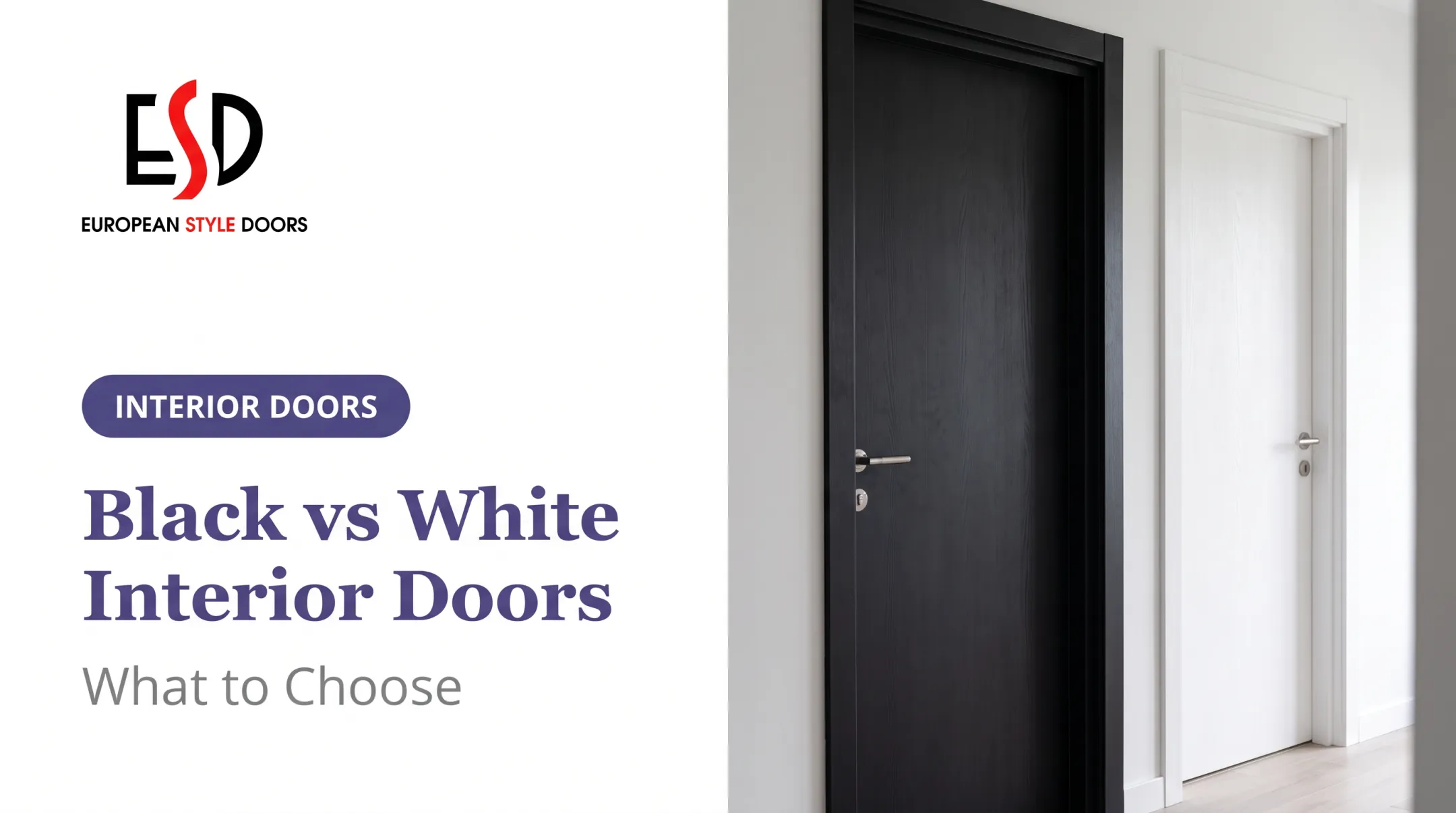
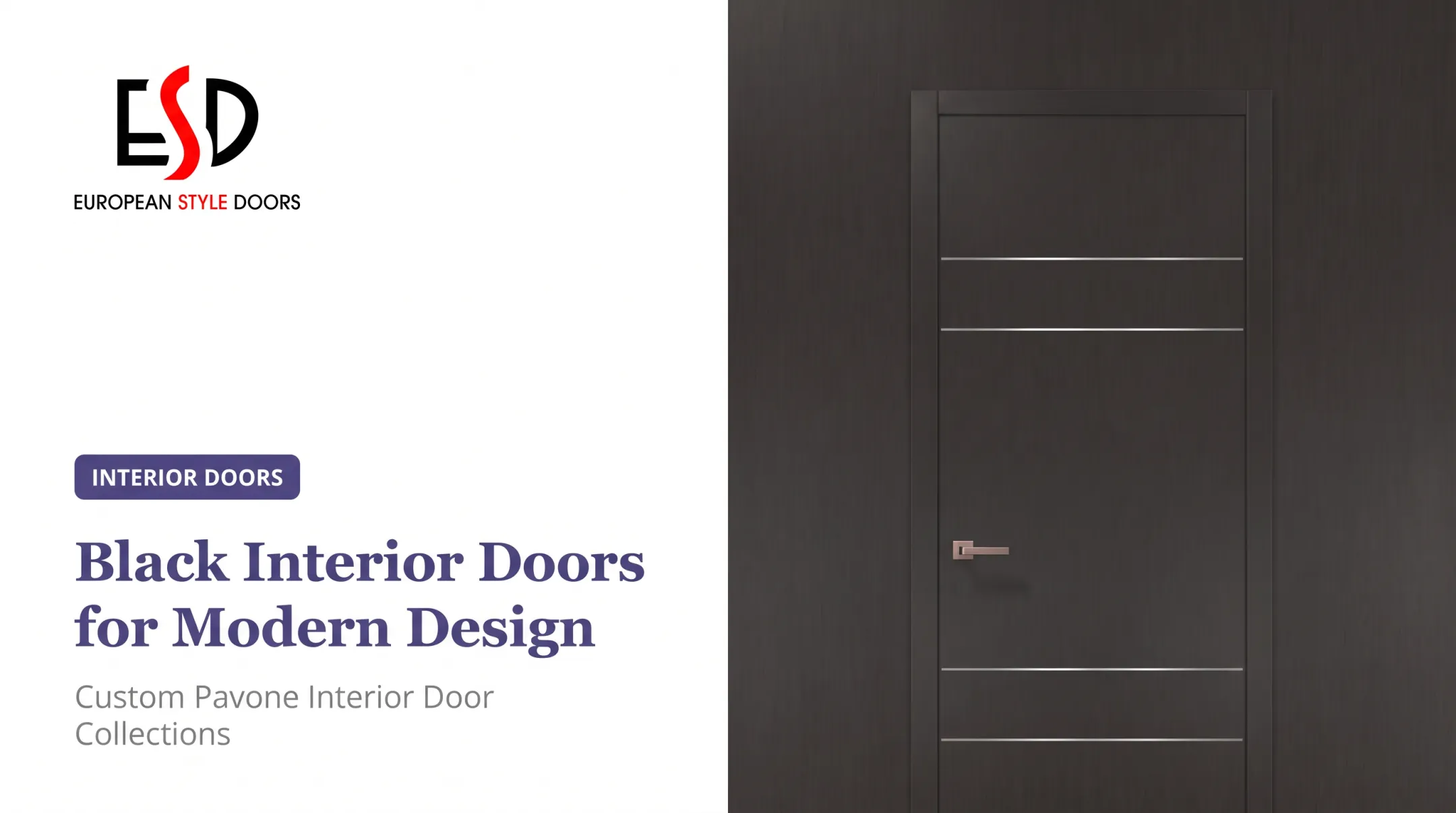
Charcoal, softened black, and deep navy continue as statement choices. Benjamin Moore's 2026 Color of the Year, Silhouette AF-655, is an espresso shade with charcoal undertones, reinforcing dark neutrals as a current direction.
Dark doors contrast well with pale walls, light floors, warm woods, and black or brass hardware. They work especially well in:
- Home offices and dens
- Primary bedrooms
- Hallways and entry transitions
- One or two selected living-area openings
A durable, consistent finish matters more on dark surfaces, since fingerprints and scuffs show differently depending on sheen. European Style Doors finishes its collections with ICA two-component polyurethane coatings designed for mechanical and chemical resistance, which matters most on frequently touched openings.
Even with a tough finish, use a dark door selectively; repeating it on every opening in a small home can feel heavy fast.
Botanical Greens and Earth-Inspired Accents
Sage, olive, moss, forest green, terracotta, burnt umber, burgundy, plum, and mustard are showing up as accent colors that connect doors to biophilic, organic interiors. Current paint forecasts lean toward smoky jade and deep olive tones for 2026, a continuation of the earthy direction that's been building for a few seasons.
These shades read differently depending on pairing:
- Sage or olive with natural wood and cream for a calm, grounded feel
- Forest green or plum with brass or black hardware for drama
- Terracotta or mustard with stone and muted metal for playful contrast
Most homeowners apply one of these colors to a single door, powder room, or office rather than the whole house. That gives personality without demanding a full palette commitment.
Natural Wood and Refined Veneers
Not every 2026 door trend involves paint. Light oak, ash, walnut, and medium brown tones remain strong alternatives, especially where visible grain and tactile finish matter more than flat color. Light woods suit Scandinavian, Japandi, and minimalist interiors, while richer walnut tones lean modern-classic or mid-century.
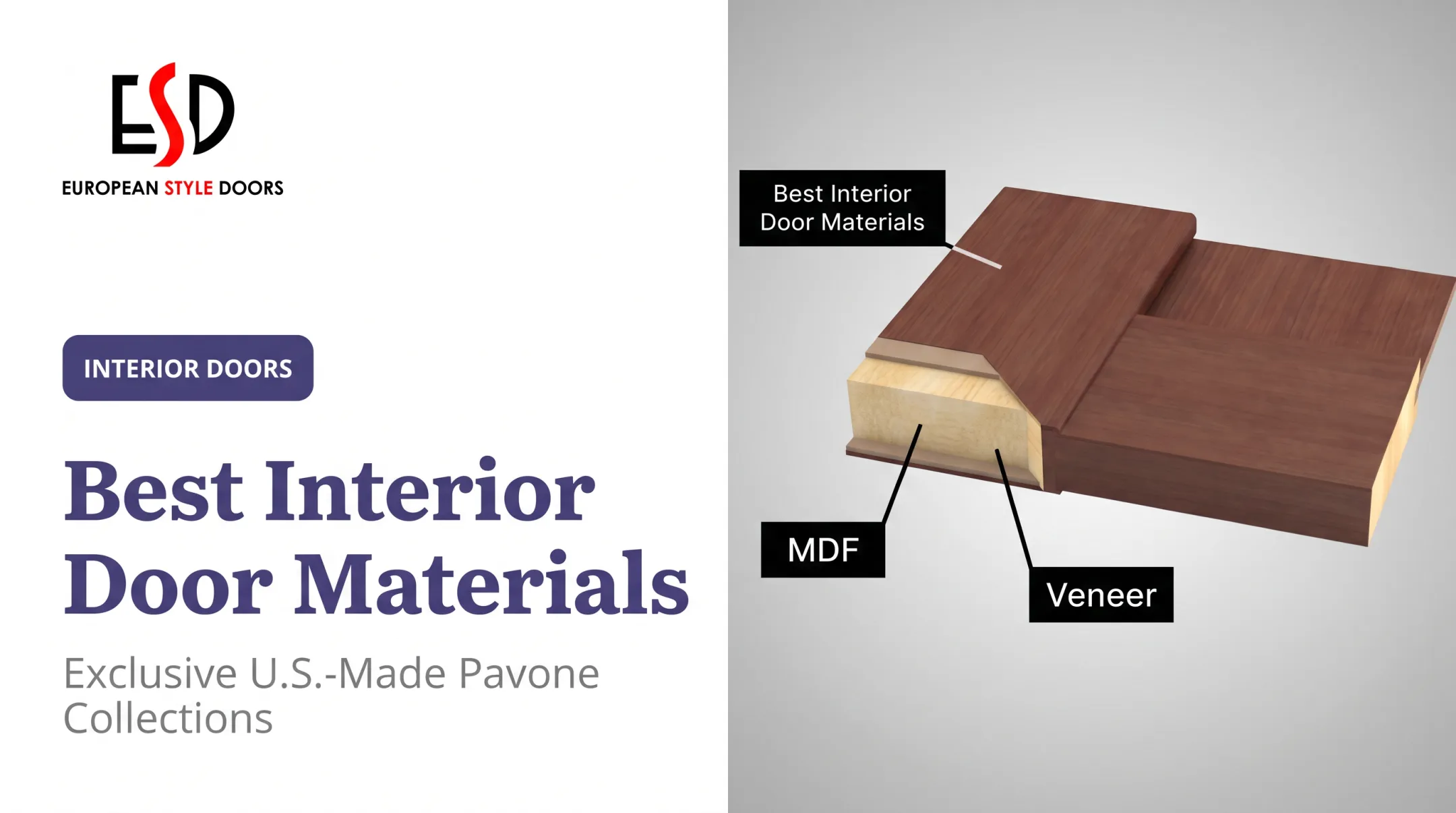
Painted surfaces, veneer, and laminate each behave differently under light. Veneer carries a genuine wood grain across the full door face, while laminate offers a consistent, repeatable pattern that holds up well across multiple units in a remodel.
European Style Doors' Elegant and Glamour collections offer veneer options including White-Oak, Silver-Oak, Silver Walnut, Wenge, and Ebony, while the California collection's laminate finishes include White-Ash, Wolfram-Gray, and Oak-Helinga-Dark. That range covers both the light, Scandinavian-leaning end and the deeper, richer tones across these collections.

Color as Part of a Complete Door Statement
Color rarely stands alone in 2026. Designers increasingly pair it with distinctive door profiles: fluted, flush, paneled, glass-insert, and oversized designs. Choosing color and profile together produces a more intentional result than picking either in isolation.
Hardware direction generally follows the palette:
- Black or bronze with light woods and soft neutrals
- Brass with deep greens or navy
- Restrained matte metals with minimalist, pale schemes
Casing, baseboards, and wall paneling either reinforce or soften a bold door color, so it's worth considering the full opening, not just the slab. Custom door styles, sizes, and finishes make it easier to coordinate a statement color with a home's existing architectural character, rather than forcing a stock size to fit.
What's Driving These Interior Door Color Trends
A few forces are converging to push doors into the design spotlight rather than keeping them in the background.
- Demand for personalization. Homeowners want spaces that feel specific to them, not generic. Houzz's research points to a broader shift toward individuality and bold detailing in American homes.
- Warmer, more layered interiors. The move away from stark white walls naturally extends to doors and trim.
- Renewed interest in natural materials. Wood grain, veneer, and tactile finishes are competing directly with flat paint.
Manufacturing also plays a role. Factory finishing, engineered construction, and automated quality control make it realistic to specify one color across a dozen doors and get a consistent result.
European Style Doors builds its door leaves around overpasted pine blocks and MDF layers with veneer or laminate decoration. That construction supports the same color and finish across a whole-house project.
Practical pressures matter too:
- Replacing dated or inconsistent builder-grade doors
- Needing custom sizing for older homes with nonstandard openings
- Keeping project timelines tight during a renovation
- Reducing cleaning and touch-up demands over time
Design influence is coming from European-inspired minimalism, biophilic interiors, and designer specification sheets as much as social media.
Sustainability is part of the conversation too. Some manufacturers reference low-emission certifications such as GREENGUARD or FSC chain-of-custody sourcing. Confirm those claims on the specific product line rather than assuming a whole collection qualifies.
How These Trends Are Impacting Interior Door Decisions
A trending color only works if it holds up against the home's actual light, layout, and daily use. That reality shapes decisions differently depending on who's making them.
Operational Impact
A single, well-chosen color plan simplifies ordering, measuring, and installation, especially across a whole house, condo building, or multi-unit project. Fewer variables mean fewer mistakes during install.
Always review a physical sample in the actual room before finalizing. Daylight, artificial lighting, wall undertone, and flooring can all shift how a color reads once it's on a full-size door rather than a swatch.

Business and Project Impact
Designers, builders, and property investors benefit from a repeatable palette, usually a core neutral, a wood tone, and one accent color, that creates a recognizable look across units while still allowing room-by-room flexibility.
Custom sizing and installation-ready components matter most when a project also involves swapping out dated or mismatched doors. European Style Doors supplies US-manufactured, European-design doors with custom sizing, a broad range of finishes, and nationwide delivery. Installation is available when a color plan needs to stay consistent from one opening to the next. Confirm the exact collection and service availability before finalizing project specs.
Homeowner and User Impact
A simple room-by-room framework helps narrow choices fast:
- Bedrooms: calming neutrals or muted sage
- Bathrooms: light-reflective, durable finishes
- Living areas: statement colors or natural wood
- Hallways and offices: stronger contrast for definition
For the match-walls-versus-match-trim question, there's no single right answer:
- Matching walls creates flow in open layouts
- Matching trim builds consistency where multiple doors are visible at once
- Contrast works when a door should read as a focal point
Trend appeal should be weighed against practicality, too. Bold colors need occasional touch-ups and can date faster than neutrals, while wood tones and factory-finished doors tend to hold their look longer with less maintenance.
Future Signals for Interior Door Colors in 2026 and Beyond
Door color direction will keep shifting over the next one to three years. Rather than chasing social-media trends, track more durable signals:
- Annual forecasts from major paint companies and color authorities
- Professional design surveys covering remodeling and renovation behavior
- New material and finish launches from door and hardware manufacturers
- Expanding manufacturer collections that signal where the market is heading
Expect continued overlap between door color and adjacent architectural elements: wall paneling, built-ins, cabinetry, and minimalist hardware systems. Warm neutrals will likely stay foundational, while natural wood, deeper greens, blue tones, and limited high-impact accents gain ground around them.

For whole-home projects or high-traffic openings, prioritize a durable, well-coordinated finish over a color that might feel dated in three years.
Conclusion
2026 interior door trends center on warmer neutrals, nature-inspired greens and earth tones, dark architectural accents, natural wood, and more expressive statement doors. These elements often work together rather than compete for attention.
The right choice always comes back to the relationship between color, material, finish, hardware, lighting, and the rest of the home's palette. No single shade works everywhere.
Before committing, pull physical samples, confirm finish and sizing specifications, and consider custom door options when a consistent, installation-ready result matters across multiple openings.
Frequently Asked Questions
What are the interior color trends for 2026?
Warm whites, greige, and stone neutrals lead alongside charcoal, navy, sage, and earth-toned accents like terracotta and olive. Natural wood finishes remain strong too. Check current paint-company forecasts before treating any single shade as the definitive leader.
What doors are in style in 2026?
Statement-colored doors, natural wood or veneer doors, and textured or fluted profiles are all trending. Minimalist flush doors and space-saving sliding or pocket configurations also remain popular for practical layouts.
Should interior doors match the walls or trim?
Matching walls creates a seamless look in open-plan spaces, while matching trim builds consistency across multiple visible doorways. Deliberate contrast works when a door should act as a focal point. Consider the whole-home sightline before deciding.
Are dark interior doors difficult to maintain?
Maintenance depends more on finish quality and traffic than color alone. Factory-finished, laminate, or veneer surfaces generally hold up differently than site-painted doors, so it's worth comparing finish type rather than assuming all dark doors behave the same.
Can different rooms have different interior door colors?
Yes, as long as hardware, casing, and finish stay coordinated across the home. Sticking to one or two accent colors, paired with a consistent neutral base, keeps variation from feeling random.