
A modern bedroom door does more than close off a room. It controls privacy, muffles sound from the hallway, and sets the tone the moment you walk in. Many homeowners struggle with doors that feel mismatched to a freshly renovated bedroom, or that simply don't fit a tight floor plan.
Design preferences are shifting too. Designers surveyed in the 2025 Houzz trends report note that more homeowners are choosing bold painted doors and playful patterns instead of default white slabs.
This guide covers five modern bedroom door directions: custom European-style doors, flush and frameless designs, wood veneer and laminate finishes, sliding and pocket systems, and glass-insert doors. Each solves a different combination of space, privacy, and style needs.
Key Takeaways
- Room layout, privacy needs, sound control, and finish all shape which door style works best
- Flush and frameless doors suit minimalist bedrooms by removing visible trim and hardware
- Sliding and pocket doors free up floor space where furniture blocks a standard swing
- Glass inserts add light but need the right opacity level for bedroom privacy
- Custom European-style door kits simplify installation with pre-finished, complete units
Overview of Modern Bedroom Door Designs in the US Market
"Modern" doesn't mean one look. It can mean a flush slab with hidden hardware, a warm wood veneer with visible grain, or a bold matte-painted panel. What ties these together is clean lines and a departure from heavy ornamentation.
Before picking a style, US homeowners typically weigh a handful of practical factors:
- Configuration – swinging, sliding, pocket, or bifold
- Material and core – solid wood, veneer, laminate, or glass insert
- Privacy level – fully opaque versus partially translucent
- Sound control – solid-core construction and sealed edges
- Finish and hardware – matched or contrasting colors, lever style
- Clearance – available swing space or wall length for sliding tracks
- Project type – new construction or a replacement in an existing opening
With those factors in mind, the following five directions represent the most practical and visually current options for a bedroom door today. Each one balances looks with real-world performance, whether you're renovating a primary suite or outfitting a new build.

Best Modern Bedroom Door Designs
The designs below were selected for visual simplicity, privacy performance, space efficiency, finish flexibility, and how easily they fit into standard or custom installations.
Custom Contemporary Doors from European Style Doors
For homeowners, designers, and contractors who want a coordinated, US-manufactured door with European-inspired styling, European Style Doors (ESD) offers a direct path. ESD is the exclusive distributor of Pavone-manufactured doors, sold directly to homeowners, architects, and builders nationwide.
Its collections, including California, Elite, Modern, Glamour, and Elegant, span wood veneer, German and Indian laminate, tempered glass or Plexiglas inserts, and brushed-steel detailing.
Confirm the veneer color, laminate type, and glass option for your chosen model before ordering.
Customers can also submit their own design when the standard catalog doesn't match a project's vision, with custom sizing handled without altering existing wall framing.
Orders ship as a complete kit:
- Doors arrive pre-finished with frame, moldings, extension pieces, hinges, handles, and seals included
- No additional painting or priming is required before installation
- Free measurement is offered as part of the Custom Door Design & Sizing service
- Professional installation is available for an additional fee
- Nationwide delivery is offered, with free delivery available on orders of two or more doors or within the Los Angeles area
Custom orders typically take one to two weeks to produce, based on the specific design and sizing requirements submitted.
Flush or Frameless Bedroom Doors
A smooth, flush door reduces the visual noise of trim, panel lines, and hardware, which suits a minimalist bedroom. Architects often achieve this by concealing the frame within the wall or aligning it flush with the drywall surface, according to ArchDaily's door design guide.
ESD's Frameless line follows a similar principle, built with an invisible metal frame, hidden hinges, and noise-preventive sealant. It's available as a finished product or in paint-grade form for custom color matching.
Matching finish versus contrast finish changes how the door reads in the room:
- A door matched to the wall color disappears, keeping the room visually calm
- A contrasting wood tone or dark laminate turns the doorway into a focal point
Before specifying a flush or frameless design, confirm these practical details:
- Wall thickness – ESD's installation kits accommodate walls from 4½ to 8 inches
- Swing direction and clearance – measure furniture placement against the door's arc
- Hinge and latch alignment – flush systems require tighter construction tolerances
- Installation scope – a true frameless look often needs more careful coordination than a standard pre-hung unit
Wood Veneer, Laminate, and Matte-Finish Doors
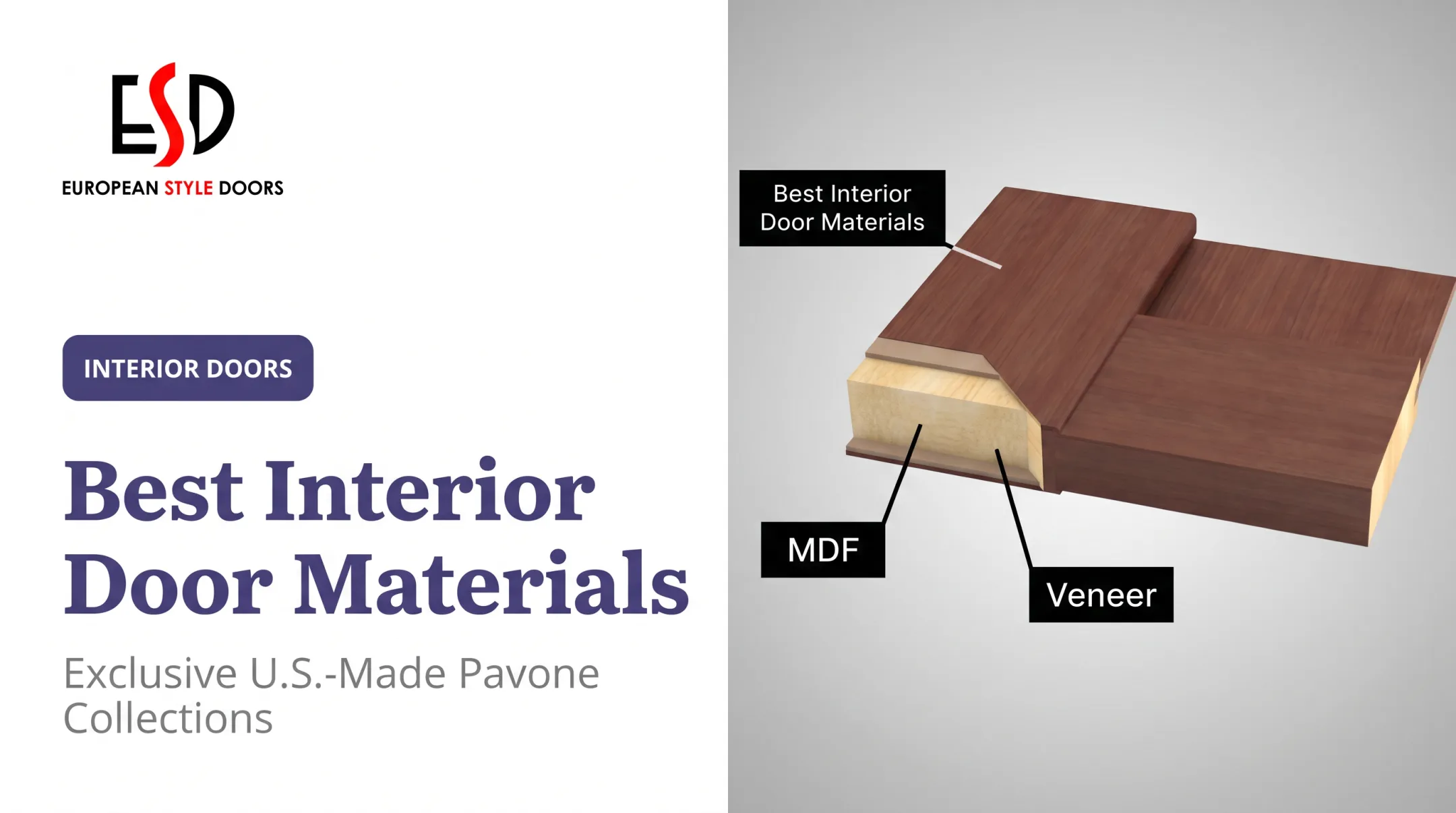
Veneer, laminate, and painted finishes each bring a different character to a bedroom door. Veneer shows genuine wood grain variation, which pairs well with natural flooring and cabinetry. Laminate offers more consistent color and pattern across units, useful when matching several doors throughout a home. Matte and painted surfaces lean toward a cleaner, more architectural look.
| Finish type | Visual character | Best paired with |
|---|---|---|
| Wood veneer | Natural grain, subtle variation | Hardwood floors, warm wood furniture |
| Laminate | Uniform color, consistent texture | Contemporary cabinetry, mixed-material interiors |
| Painted/matte | Smooth, solid tone | Minimalist or monochrome bedrooms |
You don't need ornate carving to get a modern feel. Several current designs achieve it through texture and geometry instead:
- Vertical grain patterns that run the full height of the slab
- Fluted or ribbed channel detailing, as seen in zebrano-style wood finishes
- Horizontal metal inlays set across a recessed panel
- Two-tone surfaces combining laminate with a contrasting accent strip
ESD's veneer options include tones such as Wash-B.-Oak, Silver Walnut, Wenge, Ebony, and White-Oak, while its Elite laminate line offers colors like Wolfram-Gray, Okasha-Black, and White-Ash.
Always request a physical sample before committing. Screen colors rarely match the finished product, so confirm final material specs with the supplier. Choose a finish that relates to your existing flooring, trim, and hardware rather than picking it in isolation.
Sliding and Pocket Bedroom Doors
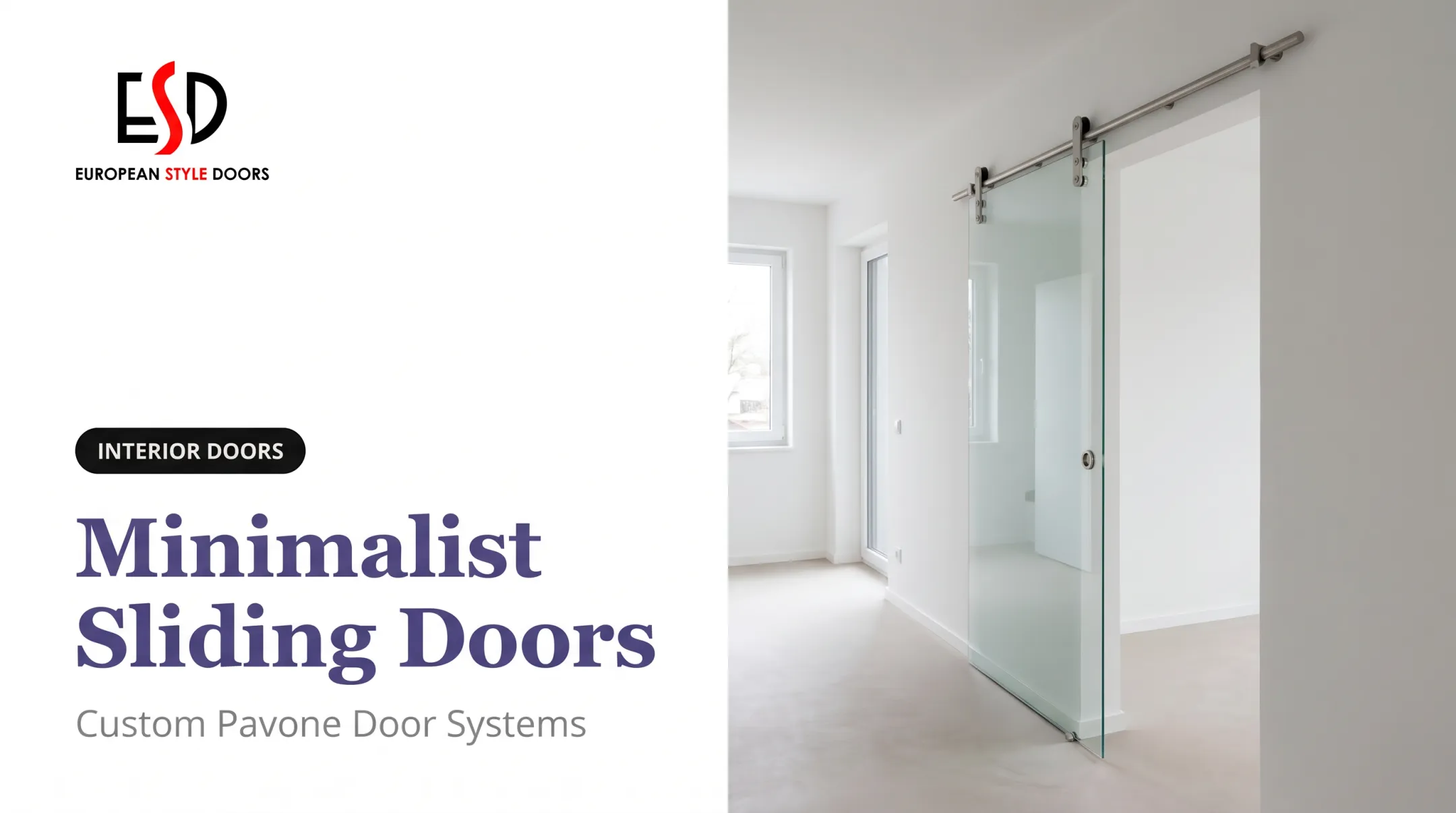
When a bed, wardrobe, or desk sits close to the doorway, a standard swinging door can be impractical. Sliding and pocket systems solve this by removing the swing arc entirely.
The two mechanisms work differently:
- Wall-mounted sliding doors stay visible when open and run along a track mounted to the wall surface. They need wall length equal to the door's width for the panel to slide into.
- Pocket doors retract fully into a cavity built inside the wall, which requires suitable wall construction and careful coordination during a remodel.
Both come with trade-offs worth weighing before committing to a remodel:
- Sliding tracks typically leave a perimeter air gap, which can reduce sound sealing compared to a swinging door
- Pocket doors remove the visible hardware but make future repairs inside the wall cavity more difficult
- Soft-close hardware is available on many modern track systems and reduces slam noise
- Floor-level clearance and track alignment affect how smoothly the door operates long-term

Modern variations include solid wood slabs, concealed-track panels that hide the hardware, and frosted or textured glass. ESD's CA01 and CA06 models, for instance, use narrow vertical frosted-glass inserts. If privacy matters, confirm glass opacity before you finalize the design.
Wood-and-Glass, Frosted-Glass, or Patterned-Glass Doors
Glass inserts bring borrowed light into a bedroom without sacrificing structure, especially when framed in wood or metal. The trade-off is privacy, which varies significantly depending on the glass type chosen.
- Clear glass offers the highest light transmission but no visual privacy
- Frosted or satin glass diffuses light while obscuring clear sightlines, available in finishes such as colorless, bronze, or graphite satin
- Sandblasted or patterned glass adds decorative texture while still reducing visibility
- Black triplex or opaque glass provides a bold look with minimal light transmission
Bedroom doors carry different privacy demands depending on their use. A primary bedroom or guest room typically calls for a more opaque option, while an office-bedroom or dressing area might tolerate more translucency. Also consider hallway sightlines, nighttime glare from interior lighting, and sound transmission through the glass panel.
For rooms needing stronger separation, pair glass with a solid lower section rather than using full-height transparency. ESD's CA15 model, for example, uses stacked frosted panels separated by horizontal rails for diffused light with added privacy layers. Always confirm safety-glazing requirements apply to your specific installation before ordering.
How We Chose the Best Modern Bedroom Door Designs
Each design direction above was evaluated against the same criteria:
- Appearance, privacy, and sound-management potential
- Space efficiency and installation complexity
- Material and finish flexibility, plus customization range
- Maintenance demands and hardware quality
Common mistakes to avoid:
- Choosing a door style before measuring the actual opening
- Overlooking furniture clearance for a swinging door's arc
- Selecting clear glass for a room that needs real privacy
- Assuming any wall can accommodate a pocket door without structural checks
Before finalizing any door, understand the basic configuration options. Masonite's buying guide distinguishes a slab, the door panel alone with no hardware, from a pre-hung unit, which includes the slab, frame, and hinges already attached.
Measure the rough opening in multiple spots and record the smallest measurement. Common jamb depths run 4 9/16, 5 1/4, or 6 9/16 inches depending on wall thickness.
Also confirm:
- Door thickness and core type (solid versus hollow)
- Frame and trim compatibility with existing walls
- Swing direction relative to furniture and foot traffic
- Full scope of installation, including who handles drywall patching if needed
Before ordering, request physical samples, product specifications, warranty terms, and a written quote that separates door cost, hardware, delivery, measurement, and installation into distinct line items. European Style Doors kits, for instance, include a 3-year warranty as part of the complete unit.

Conclusion
The best modern bedroom door balances your desired style with real privacy, sound control, daily usability, and room dimensions, not just how it looks in a photo.
Start by answering one question: do you need a standard swinging door, a space-saving sliding or pocket system, a fully opaque privacy solution, or a custom statement design? That single decision narrows the field considerably.
If you're ready to compare contemporary and custom European-inspired options, European Style Doors offers a range of finishes, custom sizing, nationwide delivery, and installation support for homeowners, designers, builders, and contractors alike.
Frequently Asked Questions
What is the best door design for a bedroom?
It depends on your privacy needs, room layout, sound-control priorities, décor, and budget. A solid flush or wood door offers the most privacy and sound blocking, while sliding, pocket, or glass-insert designs trade some privacy for space savings or added light.
What is the current trend for interior doors?
Current directions include flush or frameless doors, natural wood and matte finishes, concealed hardware, textured or patterned glass, and space-saving sliding or pocket mechanisms. Bold painted colors are also gaining popularity over traditional white.
What can I use instead of a bedroom door?
Common alternatives include pocket doors, sliding panels, barn-style doors, folding doors, curtains, or room dividers. Each offers a different balance of privacy, sound control, and security, so weigh those trade-offs against your bedroom's specific needs.
What are some good door options for a small bedroom?
Pocket, sliding, bifold, or compact-swing doors all work well in tight layouts. Before choosing, check furniture clearance, wall suitability for a pocket cavity, privacy level, and whether the wall has room for a sliding track.
How to style a bedroom door?
Coordinate the door's finish with your flooring, furniture, and wall color rather than choosing it in isolation. Contrasting paint or laminate, modern lever hardware, wall-matched trim, or a glass accent panel can all add a current, intentional look.