
Introduction
A pocket door looks simple: push it, and it vanishes into the wall. But a cheap system can stick, rattle, or fail early. A high-end version is a small engineering system, not just a slab of wood.
The frame, track, rollers, soft-close mechanism, pulls, and wall preparation all affect how the door feels day to day.
Space is often the bigger constraint. A hinged door typically needs roughly 9 to 11 square feet of swing clearance, according to ECLISSE's space-saving estimate, which is exactly what a pocket door eliminates.
This guide covers where pocket doors work (and where they don't), what separates a premium system from a builder-grade one, material and hardware choices, installation requirements, and a practical process for selecting the right door for your project.
Key Takeaways
- Evaluate pocket doors as a complete door-and-hardware system, not just a visible slab
- Solid-core construction, rated hardware, stable framing, and soft-close function define premium performance
- Plumbing, wiring, and wall thickness must be checked before ordering, not after
- Custom sizing and complete installation kits reduce coordination headaches on high-end projects
- Acoustic sealing and accessibility have real limits, so set expectations early
Why Choose a High End Sliding Pocket Door?
A hinged door needs an arc of empty floor to swing through. In a small bathroom, a tight hallway, or a closet entrance, that arc eats usable space and can block furniture placement entirely. A pocket door removes the arc completely.

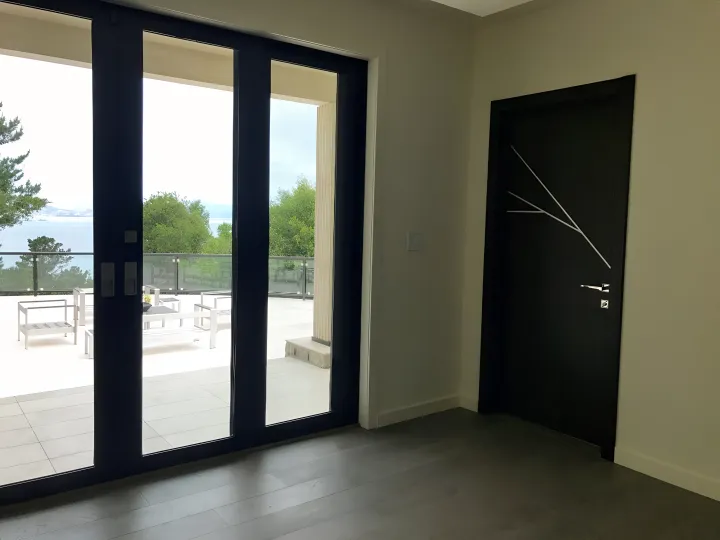
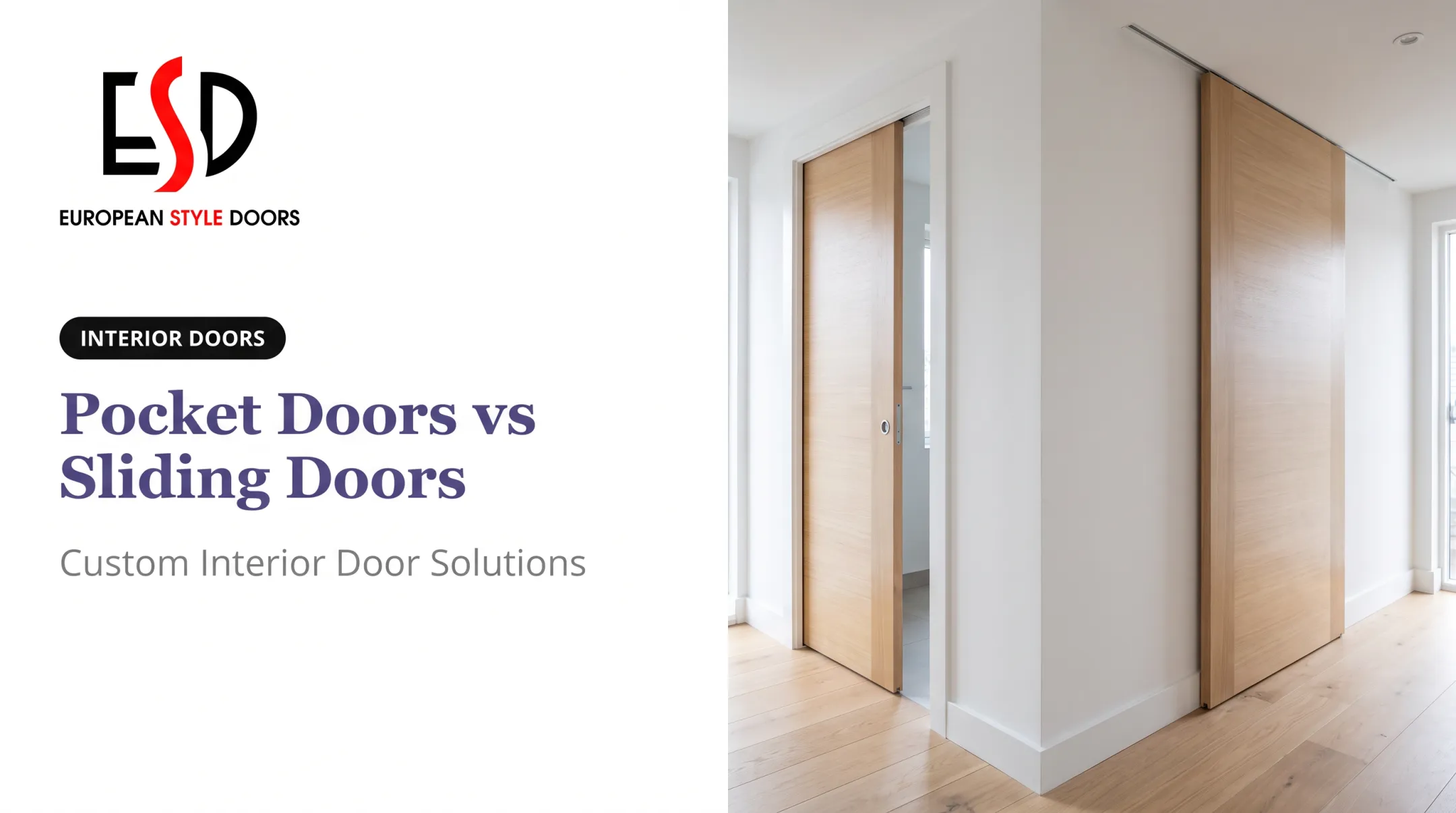
The slab slides sideways into a cavity built inside the wall, so the opening stays fully clear whether the door is open, closed, or somewhere in between.
The visual payoff matters just as much as the functional one. When the door disappears, sightlines stay clean. Two rooms can read as one continuous space, or snap back into separate rooms, without a slab hanging in the middle of the view.
What Separates Premium From Builder-Grade
Standard builder-grade pocket door kits are notorious for one thing: they're often loose, noisy, and prone to derailing within a few years. A high-end system addresses this through:
- Smoother-running carriages that stay quiet over thousands of cycles
- Tighter, more stable framing that resists sag and misalignment
- Finish coordination between the slab, trim, and hardware
- Greater customization in size, veneer, and hardware finish
The real value is daily functionality paired with design continuity across the whole home.
European Style Doors distributes US-manufactured Pavone interior doors in custom European-inspired designs. Packages are built for architects, high-end housing developers, contractors, and homeowners who want a slab, frame, and hardware set that matches the rest of a renovation rather than looking bolted on afterward.
Where High End Pocket Doors Work Best—and Where They Do Not
Pocket doors earn their keep in rooms where a swinging door creates friction. Strong candidates include:
- Luxury bathrooms and ensuite dressing rooms
- Walk-in closets and wardrobe entries
- Home offices and libraries
- Primary suites connecting to a bath or closet
- Pantry entrances
- Open-plan transitions between kitchen, dining, and living areas
Paired or oversized pocket doors can also widen an opening dramatically, turning two separate rooms into one flexible entertaining space. That said, wall length, slab weight, and hardware capacity all need verification by your project team before you commit to the layout.
When a Pocket Door Isn't the Right Call
Not every wall can take a pocket cavity. Avoid the approach, or plan carefully around it, when:
- The wall contains plumbing, ductwork, electrical runs, or a fireplace flue
- The wall is load-bearing and would require structural review
- You're retrofitting an existing wall where opening it up isn't practical
Set realistic expectations, too. Track-mounted pocket doors don't seal as tightly as a hinged door with full perimeter weatherstripping, according to Houzz's design commentary.
That means acoustic privacy and moisture control are generally weaker than a solid hinged door, even with gasketed, acoustic-rated assemblies. High-frequency, heavy-traffic doorways and spaces needing airtight sealing may be better served by a hinged or alternative sliding system.

What Makes a Sliding Pocket Door High End?
The visible slab is only part of the story. A premium pocket door is a coordinated system: pocket frame, door construction, track and carriage, closing control, and hardware all working together.
Door Slab Construction
Core material, thickness, and weight drive how the door handles and how compatible it is with your chosen hardware. Heavier, denser slabs feel solid when you push them, but they also demand correctly rated carriages. Dimensional stability matters too; a slab that warps slightly will bind in the pocket.
Track, Carriage, and Soft-Close Systems
Look for these performance traits:
- Smooth-running carriages and durable tracks
- Anti-jump protection
- Mechanisms you can service without tearing into drywall
Weight ratings vary by component, not just by door. According to Johnson Hardware's specifications, the 200PD track hardware carries up to 400 lb per door, while its compatible soft closer is rated for 330 lb. The 1500SC frame kit supports soft-close on solid-core doors up to 165 lb, and bidirectional soft-close needs a minimum 28-inch width.

That gap between track capacity and damper rating is easy to miss. Confirm both numbers against your actual slab weight before finalizing hardware.
Hardware and Finish Coordination
Flush pulls, edge pulls, privacy locks, and passage hardware all need to be available in your selected finish, visible and concealed components alike. A mismatched pull on an otherwise beautiful door undercuts the whole effect. Before finalizing a spec, confirm weight limits, warranty terms, and replacement-part availability directly with the manufacturer rather than relying on general assumptions.
Premium Materials, Finishes, and Hardware
Material choice shapes how a pocket door looks, weighs, and performs over time.
| Material | Visual character | Maintenance consideration |
|---|---|---|
| Natural wood veneer | Warm, grain-driven, premium feel | Avoid excessive moisture and direct water exposure |
| Painted or lacquered surface | Clean, monochromatic, blends with walls | Soft cloth cleaning; avoid abrasives |
| German or Indian laminate | Durable, consistent color, lower maintenance | Prefinished; no future surface treatment needed |
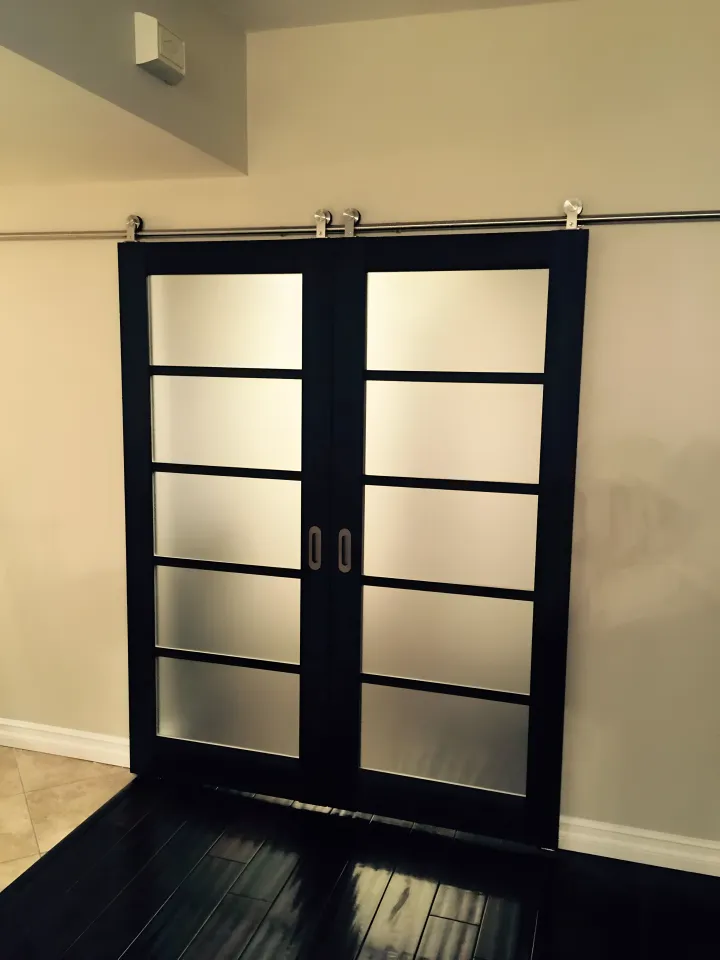
| Glass panels | Light-filtering, modern, can feel less private | Panel weight and glazing safety vary by product |
Finish coordination goes beyond the slab. The edge, frame, trim, wall color, cabinetry, and flooring all need to relate. In open transitions, each side of the door may need to match a different room.
Flush, Frameless, and Minimalist Installations
Flush and trimless pocket doors look effortless, but they demand accurate framing, perfectly square openings, and careful drywall work. There's no trim to hide a crooked reveal. Tolerances matter more here than on a standard hinged door.
Material and finish options for these installations span several European Style Doors collections:
- Elite Collection: German or Indian laminate, brushed-steel edge banding, tempered glass or Plexiglas inserts, with veneer options
- Modern Collection: Handmade doors in wood veneer with tempered glass accents, available in finishes like Wenge, Ebony, and White Oak
- California Collection: Laminate finishes such as Wolfram Gray, Oak Helinga Dark, and White Ash
Specify a complete hardware package rather than mixing components from different systems. Track, carriages, guides, pulls, locks, and soft-close units are engineered to work together. A mismatched part from another brand often brings back the noise and misalignment premium systems are built to avoid.
Planning and Installing a High End Pocket Door
Pocket doors need to be decided during design and framing, not after drywall goes up. Once trim, cabinetry, plumbing, and electrical runs are in place, moving a pocket cavity becomes a demolition project instead of a planning conversation.
Information to Gather Before Ordering
- Rough opening and finished opening dimensions
- Slab dimensions and wall thickness
- Pocket depth and header height
- Floor conditions and trim requirements
- Clearance needed for your selected hardware
Electrical, plumbing, and low-voltage runs need to route around the pocket cavity, not through it, according to Cavity Sliders' coordination guidance. That single requirement is why early planning saves so much rework later.

New Construction Versus Retrofit
New construction gives you a clean slate: frame the pocket to spec and move on. Retrofit projects into existing walls are a different animal entirely. They may involve demolition, utility relocation, structural review, and finish repairs, plus more complicated access to concealed components once the wall is closed back up.
Installation-quality checkpoints to verify:
- A straight, stable pocket cavity with no bowing
- Level track and accurately positioned guides
- Correctly adjusted stops for smooth, controlled travel
- Consistent reveals and aligned trim at the finished opening
- Clean transitions where the wall meets the door
If accessibility is a requirement, ADA guidelines call for a minimum 32-inch clear passage, hardware operable without tight grasping, and a maximum 5 lbf opening force, per the ADA Standards for accessible design. Confirm which standards apply to your specific project with your local code official.
With framing and clearances set, installation-ready kits simplify the rest of the process. European Style Doors supplies each door as a complete, pre-finished kit with frame, moldings, hardware, handles, and seals. No additional painting or priming is required.
Free measurement and optional professional installation are available, and typical turnaround runs 1 to 2 weeks once an order is confirmed.
How to Choose the Right High End Pocket Door
Work through the decision in order rather than jumping straight to finishes.
- Define the room's purpose. Is space-saving or visual concealment the priority?
- Inspect the wall. Confirm it's free of plumbing, wiring, and structural obstructions.
- Establish the opening size. Measure rough opening, wall thickness, and available pocket depth.
- Identify privacy and accessibility needs. Lock type, acoustic expectations, and clearance requirements all shape hardware selection.
- Match slab and hardware to usage. Frequency of use, door weight, and desired movement all need manufacturer confirmation before final specification.
Choosing the Visual Package
Pick a finish and profile direction that fits the room:
- Wood or laminate that reads as a design feature
- Painted slab that blends into the wall
- Flush or trimless profile with coordinated pulls or locks
Comparing Suppliers
Evaluate potential suppliers on:
- Custom sizing and finish range
- Component completeness (no mix-and-match hardware)
- Technical documentation and warranty coverage
- Installation support and delivery timelines
- Experience with high-end residential or design-led projects
Before requesting a quote, have ready:
- Plans or measurements
- Photographs of the opening
- Wall construction details
- Slab and finish preferences
- Hardware requirements
- Installation timing and delivery location
- Whether you need professional installation
Frequently Asked Questions
Are high end pocket doors a good idea?
Yes, when the wall conditions support it and you want space savings with design continuity. Smooth operation and quality finishes depend on a compatible wall and professional installation, so verify feasibility before committing.
What type of door works best for a pocket door?
Solid-core or manufacturer-approved slabs generally perform best, but weight, thickness, and dimensions must match your hardware's rated capacity. Always confirm compatibility with the hardware manufacturer before ordering.
What are the best high end pocket doors?
The best choice depends on the complete system: slab construction, frame stability, track and roller quality, soft-close function, finish, and supplier support. No single component determines quality on its own.
How much wall space is needed for a high end pocket door?
Required wall length and depth depend on door width, slab thickness, framing, trim, and hardware clearance. Project-specific drawings should confirm exact dimensions before construction begins.
Are pocket doors difficult to maintain?
Routine care is minimal: occasional cleaning and periodic hardware adjustment. Choosing a system with accessible components and available replacement parts makes future servicing far easier.
Can a pocket door be installed in an existing wall?
Retrofit installation is often possible, but the wall needs inspection first for utilities, structural elements, and sufficient length. Expect some demolition and finish repair as part of the process.