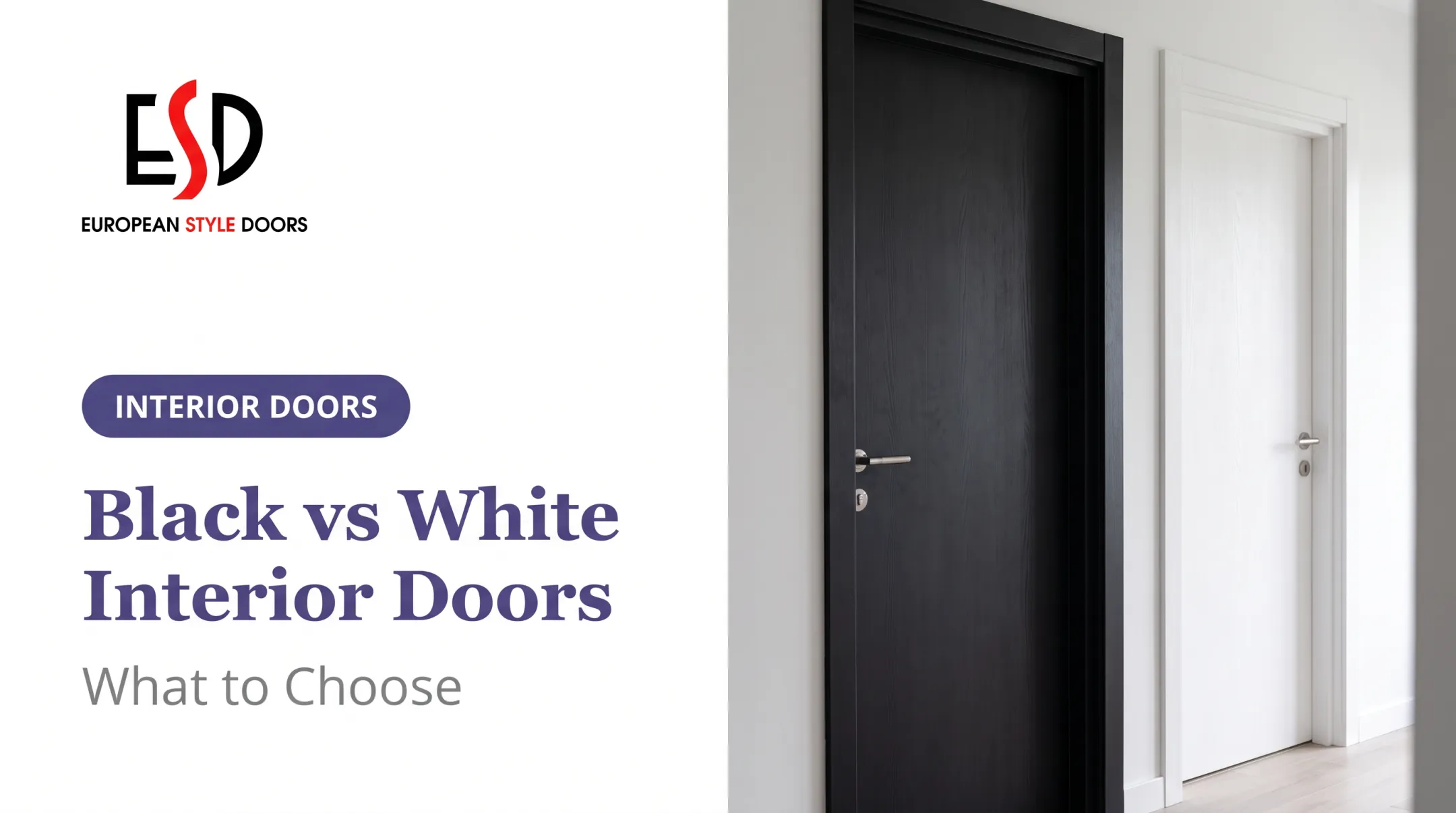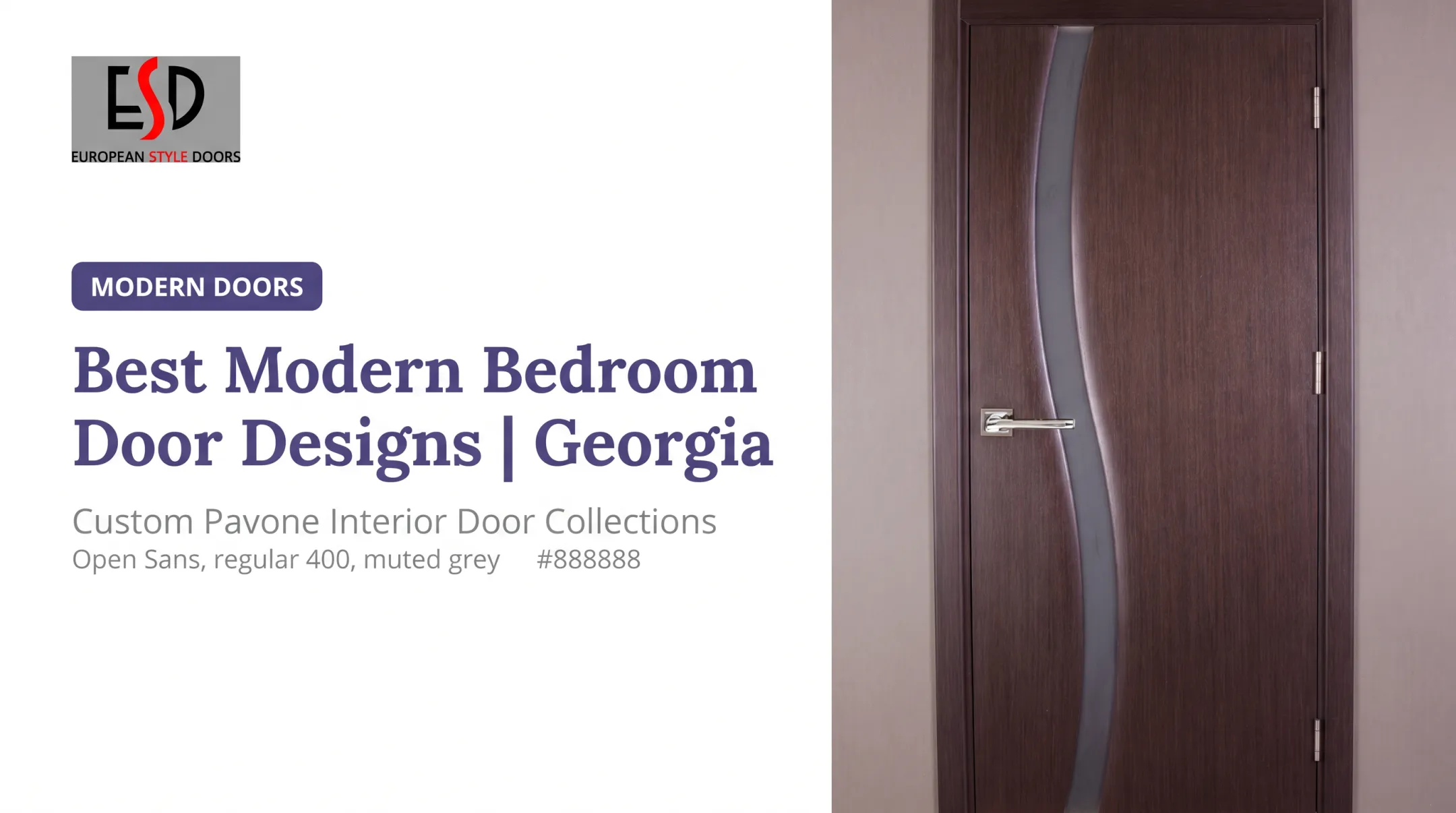

This decision matters beyond aesthetics. Homeowners, designers, builders, and renovation teams often need to pick one finish across an entire house, apartment complex, or office build-out. Getting it wrong means mismatched doors, premature wear, or maintenance headaches down the line.
Remodeling activity remains strong nationally. Over half of U.S. homeowners undertook renovation projects in 2025, according to Houzz's 2026 study, with a similar share planning projects for 2026. Door finishes are a recurring part of that work.
This guide walks through composition, appearance, durability, maintenance, repairability, cost, and long-term value, so you can match the right finish to the right room.
Key Takeaways
- Laminate suits consistent design, easy cleaning, and predictable project budgets.
- Wood veneer delivers authentic grain, warmth, and premium natural character.
- Traffic levels, humidity, and maintenance habits should drive your decision, not price alone.
- Always evaluate the full door specification: core, edges, finish, hardware, and installation.
- Mixing finishes often works best: veneer for focal rooms, laminate for high-use areas.
Laminate vs Wood Veneer Doors: Quick Comparison
Here's how the two finishes stack up on the factors that matter most:
| Factor | Laminate | Wood Veneer |
|---|---|---|
| Cost | More budget-friendly; varies by grade, core, and hardware | Higher; driven by wood species, grain matching, and finishing |
| Composition | Decorative paper bonded with resin over a substrate | Thin real-wood layer on an engineered or wood-based core |
| Appearance | Consistent color and pattern, including wood-look designs | Natural grain variation, warmth, and potential patina |
| Moisture tolerance | Resists everyday moisture when sealed; not waterproof | Sensitive to standing water and humidity swings without proper finishing |
| Maintenance | Wipe-clean routine | Finish-specific cleaning and periodic care |
| Repairability | Deep chips are hard to blend invisibly | Minor damage may be sandable or refinishable, depending on thickness |
Appearance and Design Flexibility
Veneer brings something laminate can't fully replicate: genuine variation from panel to panel. No two veneer doors look identical, which is exactly the appeal for design-led interiors.
Laminate, by contrast, offers:
- Matte, high-gloss, and textured finish options
- Wood-look patterns that mimic oak, walnut, or ash
- Solid colors for modern, minimalist schemes
- Repeatable results across dozens of doors
European Style Doors' Elegant line, for example, offers ten named veneer finishes, including White-Oak, Ebony, and Wenge-504, while its California collection lists five laminate colors ranging from Wolfram-Gray to Oak Helinga Dark. Always view physical samples in the room's actual lighting before committing. A laminate that looks warm under showroom halogens can read cool and flat under daylight.
Durability and Moisture Performance
Neither finish is waterproof. That is the most common misconception in this comparison.
High-pressure laminate generally resists scratches, stains, and fingerprints better than lower-pressure alternatives, according to manufacturer comparisons from Formica. Wood veneer doors need tighter humidity control.
TruStile's instructions call for maintaining 25% to 55% relative humidity around wood doors during storage, installation, and daily use. Extremes can cause cracking or finish checking, per TruStile's care instructions.
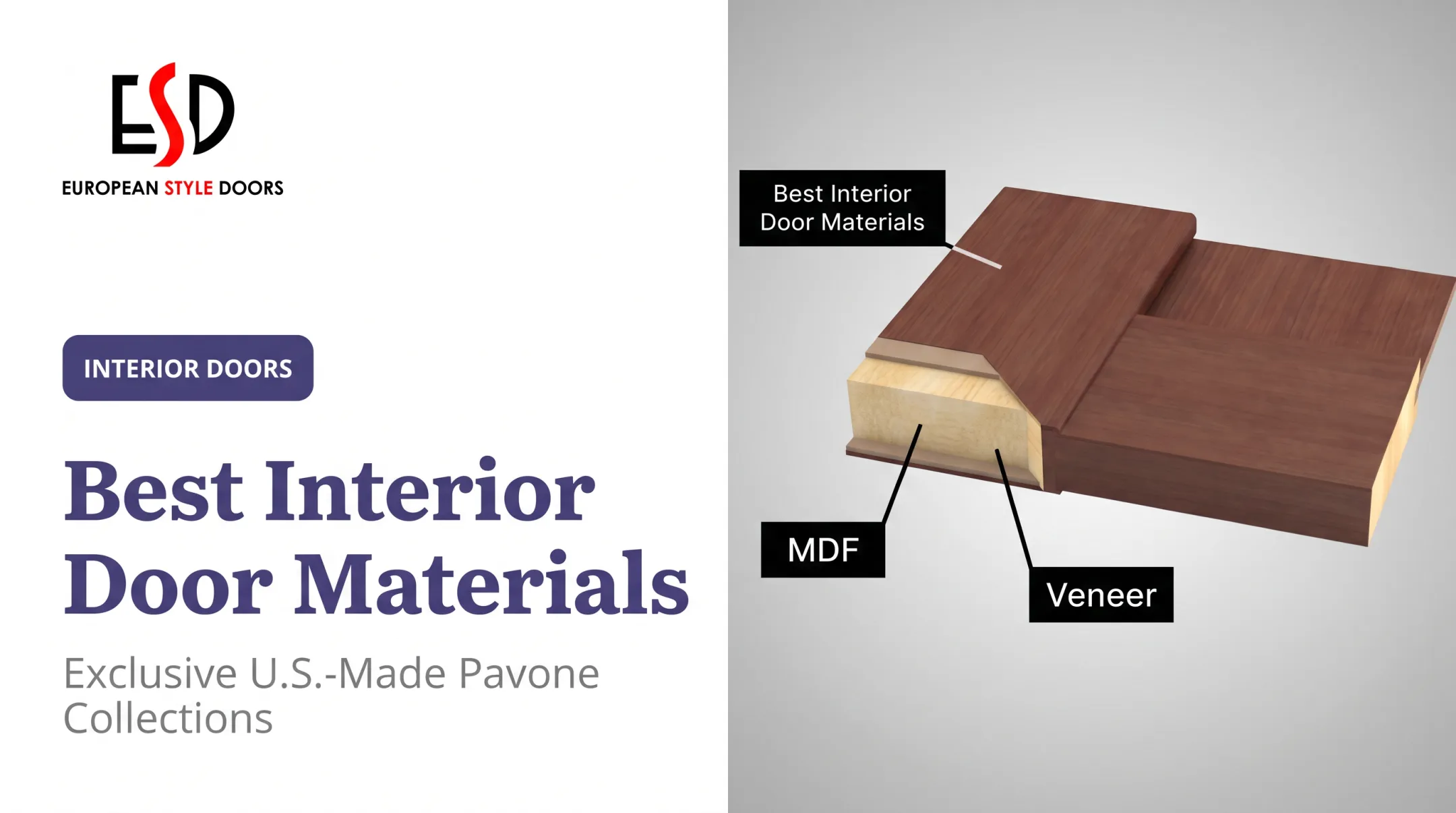
For bathrooms, laundry rooms, and kitchens, performance depends heavily on edge sealing and construction quality. ESD's doors, for instance, use a 3mm MDF layer under natural veneer decoration, with MDF noted for resilience against moisture absorption and shock, but that's a construction detail, not a waterproofing claim.

Maintenance and Repair
Laminate wins on simplicity. A damp cloth handles most daily grime, and the surface resists household cleaners reasonably well.
Veneer needs a gentler touch:
- Avoid harsh or abrasive cleaners that strip the finish
- Wipe spills promptly to prevent moisture from reaching the wood layer
- Expect occasional touch-ups to maintain sheen and color
The repair story flips depending on damage depth. Laminate chips that expose the substrate are nearly impossible to disguise, often requiring panel replacement. Veneer, when thick enough and finished with a refinishable topcoat, can sometimes be sanded and touched up. Thin veneer or factory-sealed finishes limit that option, so ask your supplier directly.
Best-Fit Applications
- Laminate works well in: children's rooms, hallways, rental units, offices, and multi-door projects needing uniform appearance
- Wood veneer works well in: living rooms, primary bedrooms, executive offices, custom homes, and any space where the door functions as a design feature
What Is Laminate for Interior Doors?
Laminate is a manufactured decorative surface, not a standalone product. It's applied over a door substrate using adhesive, then typically sealed with a protective finish. The term describes the surface, not the door's entire construction.
A complete laminate door specification includes:
- Substrate - often MDF or a similar engineered core
- Adhesive layer - bonds the laminate to the substrate
- Decorative surface - printed paper or solid-color sheet
- Edge treatment - seals exposed edges against moisture and wear
- Protective finish - adds scuff and chemical resistance
Common variations include high-pressure laminate (HPL), which uses resin-treated paper layers fused under heat and pressure, and lower-pressure systems sometimes marketed as TFL or LPL.
Formica describes HPL as offering higher scratch, wear, and impact resistance than thinner-film alternatives. Terminology varies by manufacturer, so confirm specs with your supplier.
ESD's Elite collection pairs German or Indian laminate with a brushed steel edge bender for moisture and shock resistance. Practical upsides across laminate systems include:
- Consistent appearance across dozens of doors
- Easier routine cleaning
- Less need for future refinishing
Best Use Cases for Laminate Doors
Laminate performs best in spaces that see constant contact:
- Children's bedrooms and playrooms
- Busy hallways and corridors
- Rental and multifamily renovations
- Offices, clinics, and professional work environments
VT Industries supplied 1,168 doors across 14 floors for the University of Iowa Stead Family Children's Hospital, using Wilsonart laminate finishes in both non-rated and fire-rated configurations, according to a VT Industries hospital project profile. That kind of large-scale, high-traffic job is where laminate's repeatability pays off.

Limitations to know:
- Deep chips rarely blend invisibly
- Poorly sealed edges undermine moisture resistance
- Budget-grade laminate won't match premium system performance
Quality still varies by manufacturer.
What Is Wood Veneer for Interior Doors?
Wood veneer is a thin slice of real wood bonded to a core, usually engineered rather than solid lumber. The species, cut direction, grain matching, and finish all shape the final look. A veneer door is genuine wood on the surface, but it's not a solid wood door, and buyers sometimes assume otherwise.
Two main categories exist:
- Natural veneer - sliced directly from a tree trunk or flitch, preserving authentic grain variation between panels
- Reconstituted or engineered veneer - built from multiple wood slices laminated into a block, then re-sliced for a more consistent, repeatable pattern
ESD's door leaves, for example, use overpasted pine blocks with a 3mm MDF layer and natural veneer decoration. Finishes use two-component polyurethane coatings from ICA in Italy for added mechanical and chemical resistance.
Collections like Glamour and Elegant include White-Oak, Silver Walnut, Fir, and Wenge-504, each showing the grain pattern unique to natural wood.
The appeal goes beyond looks. Veneer lets designers coordinate wood tones across doors, cabinetry, and millwork in a way printed laminate can't quite match.
Best Use Cases for Wood Veneer Doors
Veneer tends to shine where the door itself is part of the design statement:
- Custom homes and high-end remodels
- Living rooms, libraries, and primary suites
- Executive offices and hospitality-style interiors
- Projects needing wood-tone continuity across multiple surfaces
Limitations to know: Veneer is more sensitive to scratches, dents, and inconsistent cleaning habits. Repairability depends on veneer thickness and finish type. Thin veneers or factory-sealed finishes limit how much sanding or touch-up is realistic, so confirm with the manufacturer before assuming a scratch is fixable.
Laminate vs Wood Veneer: What Is Better?
Neither finish wins outright. The better choice depends on how the door will actually be used.

Factors to Weigh Before Deciding
- Traffic and occupants - Frequent contact from kids, pets, or moving equipment favors laminate's scratch tolerance
- Appearance priorities - Authentic grain variation calls for veneer; repeatable color and pattern calls for laminate
- Maintenance tolerance - Laminate suits a wipe-and-go routine; veneer rewards gentler, finish-specific care
- Repair expectations - Veneer may allow sanding or refinishing in some cases; badly damaged laminate often means replacing the panel
- Total installed cost - Compare core construction, custom sizing, hardware, delivery, and installation, not just the surface price
Situational Recommendations
Use this as a quick filter:
- Choose laminate when durability, consistent appearance, easy cleaning, or controlled project costs top your list
- Choose wood veneer when natural material character, custom grain presentation, or matching existing woodwork matters most
- Combine both by specifying veneer for feature rooms and laminate for hallways, rentals, or high-traffic children's spaces
Questions to Ask Before You Order
Before signing off on a whole-house order, ask your supplier:
- What's the door core, and how does it handle moisture or impact?
- What edge treatment and finish system are used?
- Are there moisture limitations for bathrooms or laundry rooms?
- What repair options exist if the surface gets damaged?
- What's the warranty term, and what does it actually cover?
- Can I see physical samples in daylight and artificial light?
Confirm exact opening measurements, door handing, swing direction, and whether you're ordering a pre-hung unit or a slab. Check the finish against your flooring, trim, and cabinetry before approving the full order.
Custom Doors from European Style Doors
If you're comparing laminate and veneer across an entire project, working with one supplier for the whole order simplifies things considerably. European Style Doors distributes Pavone-manufactured interior doors in custom European-inspired styles, offering wood veneer, German laminate, and Indian laminate finishes across collections like California, Elite, Elegant, and Modern.
Each door kit typically includes:
- Custom sizing without requiring wall modifications
- Matching frame, casing, jamb, and hardware in one package
- Pre-finished components, so no priming or post-installation painting is needed
- Nationwide delivery, with free measurement included in the custom design service
If you're weighing laminate against veneer for your next project, contact European Style Doors to walk through your room-by-room priorities, measurements, and installation timeline before placing an order.
Conclusion
Laminate remains the practical pick when consistency, easy cleaning, and predictable budgets matter most, especially across rentals, offices, and high-traffic family spaces. Wood veneer earns its premium when natural grain, warmth, and design continuity with existing woodwork take priority. Neither finish is universally "better," and the right answer depends on the room, the traffic it sees, and how much maintenance you're willing to do.
Don't stop at the surface finish, either. The door's core, edge construction, hardware, sizing, and installation quality determine how well it performs over years, not just how it looks on day one. Compare physical samples under real lighting, request complete specifications from your supplier, and weigh total installed cost rather than surface price alone before placing a whole-project order.
Frequently Asked Questions
Which is better for doors: veneer or laminate?
Laminate generally suits high-use, low-maintenance applications, while veneer suits buyers who want authentic wood character. Room conditions and project priorities determine which option actually works better for you.
Which is more expensive for doors: veneer or laminate?
Wood veneer is often more expensive, but actual cost depends on wood species, grade, construction, customization, hardware, and installation. Always compare total installed quotes rather than surface price alone.
Are laminate doors more durable than wood veneer doors?
Laminate typically resists scratches, stains, and daily wear better than veneer in high-contact areas. Construction quality and manufacturer specifications still affect real-world performance for both options.
Can wood veneer doors be used in humid rooms?
Veneer can work in humid spaces with proper sealing and careful moisture management, but it's not automatically suited to every wet room. Check the manufacturer's humidity guidance before specifying veneer for bathrooms or laundry rooms.
Are laminate doors easier to maintain than veneer doors?
Yes, laminate generally supports simpler wipe-clean routines, while veneer needs finish-specific cleaning and occasional touch-ups. Veneer's long-term upkeep depends on the protective finish applied at manufacturing.
Can scratches or damage be repaired on laminate and veneer doors?
Minor veneer damage may be sandable or refinishable depending on thickness and finish type. Deep laminate damage is harder to blend invisibly and often requires replacing the affected panel.